Somewhere in every fantasy reader's origin story is the moment a well-meaning friend hands them a paperback the size of a phone book, tells them it's "the good stuff," and watches their face fall. Fantasy has an image problem it mostly earned honestly: sprawling ten-book sagas, appendices with invented alphabets, family trees that need their own family tree, and a map folded into the front cover you're apparently supposed to consult like a road atlas mid-chapter. None of that is required to love the genre. It's just the loudest, most visible corner of it — the corner that gets memed, the corner bookstores put face-out, the corner that makes people who'd actually enjoy fantasy write off the whole genre before they've read a page.
- Top pickThe Hobbit, by J.R.R. Tolkien~$9
- Worth the splurgeThe House in the Cerulean Sea, by TJ Klune~$15
This is a list for the people who got scared off. Every book here is a real, beloved, critically respected fantasy novel — not a watered-down "fantasy-adjacent" cop-out — and every one was chosen specifically because it doesn't ask for the usual toll: no thousand-page commitment, no glossary to memorize before chapter three, no fourteen points of view to track on a whiteboard. Read one of these in a weekend, decide you actually like fantasy, and then — if you want — go find out what the fuss over the big series is about.
Barrier one: the sheer size of the thing
The most obvious wall is length, and it's not a small one. A lot of foundational fantasy comes in trilogies where each individual book runs 700–1,000 pages, and the whole series doesn't resolve anything until book three. That's a genuinely huge ask from someone who isn't sure they even like the genre yet — it's asking for a wedding-level commitment on a first date. Every pick on this list is a true standalone or reads as a complete, satisfying story on its own, even the ones with technical sequels. You finish it in days, not months, and you're never left holding an unresolved cliffhanger as your reward for finishing 900 pages.
Barrier two: the invented-vocabulary homework
The second wall is quieter but just as real — the feeling that you need a running glossary to keep up. Made-up currencies, made-up months, made-up political factions with names that all start with the same three letters. Good gateway fantasy sidesteps this almost entirely by keeping one foot in a world you already recognize. Several of the books below are set in something close to our actual world, with the fantastical elements dropped in rather than requiring you to learn an entire invented cosmology from page one. You're never re-reading a paragraph because you forgot which kingdom is at war with which.
The picks: real fantasy, none of the homework
These are standalone or short, minimal-worldbuilding-homework, and genuinely great — not "great for beginners," just great, full stop. A few are technically part of a loose series, but each one below closes its own story completely.


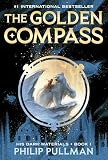
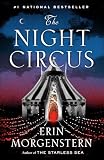
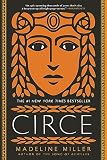
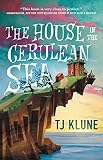
If one of these hooks you, then try the big series
The whole point of starting small is that it's a bridge, not a ceiling. If Circe made you want more mythology retellings with teeth, Madeline Miller's own The Song of Achilles is the obvious next stop, and it's still just one book. If The Hobbit went down easy and you're curious what all the fuss over The Lord of the Rings actually is, you now have the emotional context — the Shire, the ring, Bilbo — to walk into that trilogy without feeling lost on page one, which is most of what makes it intimidating the first time. If The Night Circus scratched an itch for lush, atmospheric worldbuilding, that's the exact itch a longer, denser book is built to scratch at ten times the length — but now you're choosing that length on purpose, as a reward, instead of being handed it as a prerequisite.
That's really the whole strategy: use a short, contained book to find out which flavor of fantasy actually appeals to you — quiet and eerie, epic and mythic, cozy and low-stakes — before you gamble three months of reading time on a series in that flavor. Skeptics who start with the doorstop have no idea yet what they even like about the genre. Skeptics who start here do.
What to skip, at least for now
The single worst way to find out whether you like fantasy is to start with a five-book epic that was written for readers who already love the genre and want more of it, in greater volume, with more names to keep straight. That kind of series is extraordinary once you're hooked, and genuinely rough as a first date — it assumes a reader who already has the patience for long political digressions and a dozen point-of-view characters, because that patience is exactly what long-time fantasy readers show up wanting more of. None of that is a flaw in those books. It's just the wrong on-ramp for someone who isn't sure yet whether the genre is for them.
Also worth skipping, at least for a first try: anything marketed primarily on the size of its map. A gorgeous, detailed map in the front cover is usually a signal that the book expects you to reference it, which means it expects you to track geography across multiple kingdoms and factions — exactly the kind of homework this whole list is built to avoid. Save the map-heavy epics for after you already know you're the kind of reader who enjoys that particular kind of immersion.
One extra note: narration matters more in this genre
If you're considering the audiobook version of any of these, it's worth knowing that narration carries unusually heavy weight in fantasy specifically, because a good narrator does real work distinguishing invented names and keeping character voices consistent across a plot that already asks a little more of your attention than a contemporary novel does. A flat or rushed narrator can make even a short, simple fantasy book feel more confusing than it actually is on the page. If you go the audio route, it's worth checking a sample chapter first rather than assuming any narrator will do — a few extra minutes there can be the difference between finishing the book and giving up at the halfway point.
FAQs
What's genuinely the easiest fantasy book to start with on this list?
The Ocean at the End of the Lane, hands down. It's under 200 pages, set in the real world with one strange element dropped in, and Neil Gaiman's prose is plain and readable rather than dense. It's the closest thing on this list to fantasy for people who've never read fantasy and aren't sure they will.
Do I need to have read The Lord of the Rings before The Hobbit?
No — it's the opposite. The Hobbit was written and published years before The Lord of the Rings and works completely on its own. It's actually the better entry point of the two precisely because it doesn't assume any prior context, which is why it's on this list and the trilogy isn't.
Are these books "watered down" or less serious than epic fantasy?
No. Every book on this list has been critically acclaimed, several have won major genre awards, and none of them are simplified or dumbed-down versions of "real" fantasy. They're just shorter and self-contained by design, which is a structural choice, not a quality one.
Why do so many big fantasy series feel impossible to start?
Mostly because they're written for an audience that already loves the genre and wants a lot more of what they love — more characters, more political factions, more history to track. That's a completely reasonable thing for those books to do, but it makes them a rough first experience for someone who isn't sure yet whether they even like fantasy.
Is it worth trying the audiobook version instead of reading?
Yes, with one caveat: sample the narrator first. Fantasy audiobooks lean more heavily on a narrator's skill than most genres, since invented names and multiple character voices are easier to lose track of by ear than on the page. A great narrator can make a good fantasy book even better; a mediocre one can make a great book feel confusing.
Which of these should I read if I don't like magic systems with a lot of rules?
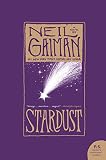
The Ocean at the End of the Lane and Stardust both keep their magic loose and folkloric rather than rule-based — nothing to learn, nothing that behaves like a system with mechanics. If you want a touch more structure without a full magic system to study, The House in the Cerulean Sea is the next step up.
What should I read next if I finish all of these and want more?
Go back to the bridge section above — pick whichever one of these you liked best, and follow that author or that flavor of fantasy to something longer. That's a much better way to choose your first big series than picking whichever one is most famous.