If someone has already told you you'd love science fiction and you've already tried and bounced off something dense and exposition-heavy, I understand the skepticism. A lot of sci-fi is written for sci-fi readers — people who enjoy reading about orbital mechanics, or want to spend the first 40 pages learning the political structure of six alien civilizations before anything happens. That's a real genre convention, and it is genuinely not for everyone.
- Top pickThe Martian by Andy Weir~$10–16
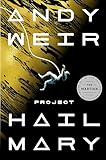
- Worth the splurgeProject Hail Mary by Andy Weir~$14–18
But there's another vein of sci-fi that's basically just really good fiction that happens to involve space, or robots, or a strange premise — where the science is in the background and the actual story is about a person you become deeply invested in. These are books for people who loved The Martian movie but never thought to pick up the book, or who binged Severance and want something that gives them that same feeling.
Start here: the two that convert everyone
If you are new to sci-fi, start with Andy Weir. He writes accessible, funny, engineering-problem-solving stories with intensely likable protagonists. The Martian is about one astronaut stranded on Mars, figuring out how to survive using math and botany and sarcasm. It's funny — genuinely funny — in a way that most bestselling fiction isn't.

Project Hail Mary is the one people press into their friends' hands. Same Weir voice, same propulsive readability, but the emotional payoff is significantly higher. The premise is best experienced cold — just know the opening chapter has a hook that makes it almost impossible to stop.
If you want it to feel like literary fiction
Becky Chambers writes sci-fi the way some novelists write about small towns — slowly, warmly, with enormous affection for her characters. The Long Way to a Small, Angry Planet is about a crew of people traveling across space in a tunneling ship, and the plot is mostly: they travel, they talk, they cook, they deal with their complicated feelings about each other. The book is warm in a way that's increasingly rare in fiction.
For people who love a robot protagonist
Martha Wells' All Systems Red (the first Murderbot Diaries novella) features one of the most compelling narrators in recent genre fiction. Murderbot is a part-organic, part-mechanical security robot who has hacked its own behavior control module and now mainly wants to be left alone to watch television serials. It has profound social anxiety. It is extremely good at its job when forced. If you've ever hidden in a bathroom at a social event you didn't want to attend, Murderbot is your person.
What to skip (a real guide, not a hedge)
What I'd steer a non-sci-fi reader away from, at least initially: Dune — brilliant, dense, the first 150 pages are a real commitment. Foundation — important sci-fi history, not a character-first read. Hard sci-fi where the science is the main attraction over character. The pattern: skip books where the world or the system is the main attraction. Start with books where a specific person is the main attraction.
I bounced off Dune. Does that mean sci-fi isn't for me?
No. Dune is genuinely difficult to enter even for people who love sci-fi. It's dense political world-building with a slow first act. Start with The Martian or Project Hail Mary — both are completely different in tone, pacing, and accessibility.
What's the difference between sci-fi and speculative fiction?
Speculative fiction is the broader umbrella — any story set in a world that differs from our own, including sci-fi, fantasy, and magical realism. The distinction matters less than whether the book has a character you care about.
Is Project Hail Mary appropriate for teenagers?
Yes, comfortably. It's clean, the protagonist is an adult but the adventure is accessible to younger readers, and the themes — collaboration, sacrifice, curiosity — are broadly appealing across ages.
Do I need to read the Murderbot Diaries in order?
Yes, but each book is short (novellas mostly run 150–180 pages) so committing to the series is less daunting than it sounds. Start with All Systems Red (#1).
Are any of these books part of a long series I'd have to commit to?
The Murderbot Diaries is a series, but each book stands alone well enough. The Martian, Project Hail Mary, and The Midnight Library are all standalones. No cliffhangers required.
What if I want something darker or more literary?
Kazuo Ishiguro's Never Let Me Go sits in that exact lane — deeply literary, subtly speculative, devastating. Ted Chiang's Stories of Your Life and Others is a short story collection that reads like rigorous fiction that happens to be sci-fi.