Your cat is not being spiteful. That's the first thing to get out of your head, because it changes everything about how you fix this. Scratching is not a behavior problem to punish out of existence — it's a physical need, as automatic as stretching, and it's not going away no matter how many times you say "no" in your sternest voice. The couch arm is just collateral damage from a cat doing something completely normal in the one spot you'd rather they didn't.
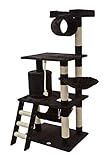
- Top pickGo Pet Club 62-inch Cat Tree~$80
- Best budgetOXO Good Grips POP Container 3.4qt~$16
The fix isn't suppression, it's redirection: give your cat something better than the couch, put it exactly where the couch currently is (or close to it), and make the couch itself less appealing for a few weeks while the new habit sets in. That's the whole playbook. Here's how to actually execute it, with real products that work and a few popular ones that don't.
Why cats scratch (and why yelling never works)
Scratching does three things for a cat: it sheds the dead outer layer of their claw sheaths, it stretches the muscles in their shoulders and back in a way that mimics a full-body wake-up stretch, and it deposits scent from glands in their paw pads, which is a form of territory marking they find genuinely satisfying. None of that is negotiable behavior. A cat that can't scratch anything is a cat with sore, overgrown claws and no way to mark what's theirs.
This is also why yelling, spray bottles, or nose-tapping don't work long-term. You're not removing the urge, you're just teaching your cat to scratch when you're not in the room — which, for most households, means the couch arm at 2am. The only strategy with a real track record is making a better surface more available and more attractive than the one you're trying to protect.
Give them something better before you take something away
Redirect training only works in this order: install the good scratching surface first, let your cat find and use it for a week or two, and only then start making the couch less appealing. Do it backwards — block the couch before the alternative exists — and your cat just finds a different piece of furniture to scratch instead. Rugs, wood chair legs, and the other end of the couch are all fair game once the current spot is off-limits.
A tall sisal-wrapped cat tree is the single best all-purpose scratching surface you can buy, because it does double duty: vertical scratching post plus elevated perch, which covers both the scratching urge and the need for safe high ground. Put it within a few feet of the couch corner your cat currently prefers — not across the room, not in a spare bedroom nobody uses. Location relative to the crime scene matters more than almost anything else on this list.
Sisal vs. carpet vs. cardboard: what surface actually wins
Not all scratching posts are created equal, and this is where a lot of well-meaning cat owners waste money. Carpet-wrapped posts are the worst option for redirecting couch scratching, for a simple reason: carpet feels almost exactly like the upholstery on most couches. You're not giving your cat an alternative texture, you're giving them a smaller version of the exact thing you're trying to stop. Cats will often ignore a carpet post entirely and keep scratching the couch, because the couch is bigger and closer to where they already hang out.
Sisal rope is the material that actually works. It's rough, fibrous, and gives real resistance when clawed — the texture cats seem to find most satisfying, and it's different enough from most upholstery that your cat learns to associate that specific feel with "this is my scratching spot." Sisal also holds up far longer than carpet before it mats down and stops being interesting.
Cardboard scratcher pads are the underrated third option, especially as a second surface near the floor. Cats like the shredding sound and texture, they're cheap enough to replace monthly, and a lot of cats prefer scratching at an angle (a flat pad on the floor) over the vertical scratching a post requires. Two well-known cardboard options worth looking for by name: the SmartCat Scratch Sheet (a flat corrugated pad that mounts on walls or lies flat) and the Pioneer Pet SmartCat Bootie Scratcher, an inclined ramp shape that a lot of cats prefer over a straight vertical post. Neither has a verified link here, but both are widely available and well reviewed — worth a look if your cat turns out to be a floor-scratcher rather than a wall-scratcher.
The practical takeaway: buy sisal for the primary vertical surface, and keep a cheap cardboard pad on the floor near it as a backup texture. Skip carpet-wrapped anything.
Placement: it has to be where the crime is happening
This is the step people skip and then wonder why the expensive scratching post is gathering dust in the corner while the couch keeps getting shredded. Cats don't generalize the way we'd like — a scratching post ten feet away in a different sightline might as well not exist. The post needs to be within arm's reach of the couch corner your cat currently prefers, ideally between the cat and the spot they're scratching, so it physically intercepts the habit.
If your living room can't fit a full-size tree next to the couch, build vertical real estate instead. A short run of floating shelves staggered up the nearby wall gives your cat somewhere to climb and scratch that takes up zero floor space, and redirects the climbing-and-clawing energy that often shows up as couch-scratching in cats who are bored or under-stimulated. Add a small sisal-wrapped step or a cardboard pad at the base of the shelf run and you've covered both the vertical itch and the scratching itch in one setup.

Stability: a wobbly post gets abandoned for the couch, every time
This is the detail nobody warns you about, and it quietly sabotages more redirect-training attempts than bad material choice does. Cats put real force into a scratch — a full-body pull, back legs braced, front claws dug in and dragged down. If the post wobbles even slightly under that force, most cats abandon it within days and go back to the couch, which doesn't move no matter how hard they pull. A scratching post has to feel more stable than the furniture it's competing with, or it loses.
The fix is boring but effective: check that every bolt on the tree base is actually tight (manufacturers routinely under-tighten these at the factory), and if the tree still rocks on hardwood or a thin rug, add furniture risers under the base. It sounds like overkill for a cat tree, but a wider, elevated, non-slip base is the difference between a post your cat commits to and one they write off after one wobbly scratch.

Deterrents and protecting the couch during retraining
While the new scratching surface is settling in as the habit, it helps to make the couch itself less appealing for a couple of weeks. Two well-known products handle this without any chemicals or punishment involved. Sticky Paws is a widely sold double-sided tape made specifically for furniture — cats dislike the tacky feel on their paws and typically stop scratching a taped spot within days. It's not permanent; you use it during the retraining window, not forever. Feliway is a pheromone spray or plug-in diffuser that mimics a cat's own calming facial pheromones, and it can reduce scratching that's driven by stress or territory-marking rather than claw maintenance — worth trying if the scratching seems to spike around new pets, guests, or moving furniture. Neither of these has a verified link here, but both are genuine, well-established products sold under those exact names at most pet retailers.
For the couch itself, a simple washable throw over the arm does a lot of quiet work during the retraining period — it changes the texture your cat feels when they go for the old spot, and it means any exploratory scratches land on something you can toss in the wash instead of the upholstery underneath.

Training: treats, consistency, and a little patience
Once the new post is in place and stable, spend a week actively rewarding your cat for using it. Keep a stash of small treats right next to the post, and drop one on it (or hand-feed one while your cat has a paw on the sisal) every time you catch them near it. Consistency matters more than quantity here — a tiny treat every single time beats a big treat occasionally. Most cats form the new association within one to two weeks if the post is in the right spot and the treats show up reliably.
Keep the treats somewhere sealed and easy to grab, because you'll be reaching for them multiple times a day during this window, and cats are shockingly good at working open a flimsy bag left on the counter.

What to skip
A few popular "solutions" are either ineffective or make things worse, and it's worth knowing which ones before you spend money on them.
- Declawing. Not a scratch solution, an amputation — it removes the last bone of each toe. It's banned or restricted in a growing number of places for good reason and it doesn't stop the underlying urge to scratch, it just removes the ability, which can lead to biting or litter box issues instead.
- Carpet-wrapped posts. Covered above, but worth repeating: texture too similar to a couch, mats down fast, one of the most common reasons a "cat tree" gets ignored in favor of the furniture right next to it.
- Punishment of any kind. Spray bottles, loud noises, yelling. These teach a cat to avoid scratching in front of you, not to stop scratching the couch. You end up with a cat who's more anxious and just as destructive when you're not watching.
- Plastic nail caps as a first move. They can work as a temporary bridge, but they need reapplication every 4 to 6 weeks, some cats find them irritating enough to chew off, and they don't address the actual behavior — the moment they fall off, the couch scratching resumes exactly where it left off. Treat them as a stopgap, not a solution.
- One scratching post for multiple cats. Cats don't reliably share a single scratching spot the way they might share a room. Multi-cat households need at least one post or pad per cat, plus one extra, placed in different areas.
Frequently asked questions
How long does it take to redirect a cat from the couch to a scratching post?
Most cats show real progress within one to two weeks if the post is sisal, stable, and placed right next to the spot they currently scratch, with treats reinforcing every use. Older, more set-in-their-ways cats can take three to four weeks. The timeline mostly depends on placement — a post across the room rarely works no matter how long you wait.
Will double-sided tape actually stop my cat from scratching the couch?
For most cats, yes, at least for the spot it's applied to. Products like Sticky Paws use a texture cats find unpleasant underpaw, and most cats stop attempting a taped area within a few days. It's meant as a temporary deterrent during retraining, not a permanent fix, and it works best paired with an appealing alternative post nearby.
My cat has a scratching post already — why do they still scratch the couch?
Almost always one of three reasons: the post is carpet instead of sisal, it's in the wrong location (not near where the cat actually hangs out), or it wobbles. Check all three before assuming your cat just prefers the couch. Moving an existing post six feet closer to the couch, or swapping a carpet post for a sisal one, fixes this more often than people expect.
Is scratching a sign my cat is stressed?
Sometimes. Scratching is normal maintenance behavior on its own, but a sudden increase, especially around doorways, near windows facing outdoor cats, or after a household change, can be a stress or territory-marking response. If scratching spikes suddenly, a pheromone product like Feliway alongside your usual redirect setup is worth trying.
Do nail caps work as a scratch solution?
They stop damage temporarily but don't change the underlying behavior. They need reapplying every 4 to 6 weeks, some cats chew or pick them off, and the couch scratching picks right back up the moment they fall off. Best used as a short bridge while you get a proper sisal post and placement sorted, not as the whole plan.
Can I train an older cat to stop scratching furniture, or is it too late?
It's never too late — the same redirect principles apply at any age, though older cats can take a bit longer to adopt a new habit. Keep the new post low-effort to reach (older cats jump less), sisal-wrapped, stable, and reinforced with treats, and most senior cats do adapt within three to four weeks.
Is it better to buy one big cat tree or several smaller posts?
For pure scratch redirection, several smaller sisal posts or pads placed at each spot your cat currently scratches usually work better than one large tree in a single location. The tree is great for vertical territory and can be one of those spots, but multi-location households with more than one problem area do best with more than one surface.