Here's a thing that should not need explaining but somehow still does: you should not be limping by 3pm on a Tuesday. Workwear shoes have spent decades cosplaying as professional footwear while secretly being instruments of foot torture — narrow toe boxes, zero arch support, heels that are just tall enough to wreck your posture without being tall enough to look intentional. The people who designed them were not thinking about your feet. They were thinking about a silhouette.
The good news is that the gap between "looks like an adult" and "my feet don't hate me" has closed dramatically in the last few years. There are now real options that read as polished from the knee down and are secretly doing supportive, ergonomic things to your foot while you're in back-to-back meetings. This guide is those options — plus the styles to skip, and the one honest warning you need before you buy anything.
The honest warning first
Most foot pain from shoes is not a shoe problem — it's a fit problem. The single highest-impact thing you can do before buying any new work shoes is measure your feet. Not once in 1998 when you were fourteen. Now, as an adult. Feet change. They get wider, they get longer, arches fall, and most people have been wearing the wrong size for years. Measure both feet (they're almost always different sizes), and buy for the larger one. Everything else in this article assumes you've done this.
Also: break shoes in at home before wearing them to the office. Even the most comfortable pair needs two or three wears to conform to your foot. Wear them around the house on a Saturday. You'll know by Sunday whether they're going to work.
The best all-day walking shoe that doesn't look like a sneaker
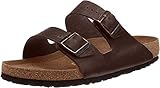
The Birkenstock Arizona sandal is the Trojan horse of comfortable footwear. It looks like a sandal that belongs in a hiking catalog, and it is, but it also has more foot support than most "professional" shoes costing three times more. The cork-latex footbed is molded to your arch, the straps are adjustable, and after a few wears the footbed takes on the exact shape of your foot. People who work in jobs where they're on their feet for hours — nurses, teachers, architects doing site visits — have been wearing these as off-duty recovery shoes for decades. And in 2026, they read as style, not an afterthought.
The caveat: they are sandals. If your office requires closed-toe shoes, or you're in a region with weather, these are a warm-months option or a commute shoe. But for the offices, coffee shops, and creative spaces where the dress code has loosened to "pulled together," Birkenstocks are fully work-appropriate and genuinely good for your feet.
The load-bearing accessory: a bag that doesn't destroy your shoulder
Foot pain and shoulder/back pain are usually the same problem: bad weight distribution. If you're carrying a heavy bag on one shoulder all day, you're compensating with your posture, and that compensation goes all the way down to how your feet hit the ground. This is why the right workbag belongs in a foot-pain article.
The Baggu Nylon Crescent Bag is a crossbody that distributes weight across your chest and back evenly, keeps your hands free, and is lightweight enough that it doesn't add to the load. It doesn't look like an ergonomic product. It looks like something an art director would carry. Both things are true simultaneously, which is the ideal outcome.

When you need a bag for everything: the backpack that goes from commute to client meeting
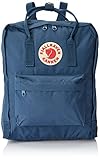
If you're carrying a laptop, a lunch, and the ambient chaos of a working adult, a backpack is the ergonomically correct choice — weight on both shoulders, neutral spine, no compensatory lean. The Fjallraven Kanken is the one that bridges the gap between "looks like you just graduated" and "looks like you have your life together." It's structured enough to not look sloppy, the fabric is water-resistant, and unlike most backpacks marketed as professional, it doesn't have twenty unnecessary pockets that create a treasure hunt every time you need your keys.
The 16L classic is the right size for most commutes. If you carry a 15" laptop, go for the Laptop 15" version specifically — the main compartment is designed for it and you won't spend your commute annoyed by the fit.
What to skip: the shoe styles that always hurt
Some styles are structurally incompatible with comfortable all-day wear, and no brand or price point fixes the underlying geometry. Knowing what to avoid saves you a lot of money spent on shoes that looked promising and weren't.
- Pointed-toe flats under $80. The toe box on most budget pointed-toe shoes is narrow enough that your toes are actively compressed for eight hours. The more expensive versions use softer leather that gives; the cheap versions don't. If you love the pointed-toe look, spend more on the shoe or go square-toe instead.
- Block heels with no cushioning. A two-inch block heel looks stable and feels stable for about three hours, at which point the complete absence of impact cushioning makes itself known. The silhouette is fine; the execution requires either a memory foam insole (which you can add) or a brand that builds padding in from the start.
- Mules with no strap. Backless shoes require constant low-grade gripping from your toes to keep the shoe on. After a full day, that tension adds up. If you love mules, look for versions with an ankle strap or a slight heel cup that keeps the shoe in place.
- Fashion sneakers masquerading as walking shoes. Chunky sneakers with a "retro" sole look like they should be comfortable and often aren't — the sole is frequently decorative rather than functional. Real walking cushioning is made with foam compounds that spring back; fashion sneaker soles are often hard EVA that doesn't compress.
The honest criteria for a work shoe that doesn't hurt
When you're evaluating any new shoe for all-day work wear, four things matter more than anything else. First: toe box width. Your toes should not be touching the sides. Stand in the shoe, wiggle your toes, and confirm you have lateral space. Second: heel counter rigidity. The back of the shoe should hold your heel in place without collapsing. Soft heel counters feel comfortable in the store and cause blisters by the afternoon. Third: insole material. Memory foam feels incredible on day one and compresses flat by day thirty. Look for EVA or polyurethane — denser, longer-lasting, holds its cushioning. Fourth: outsole flexibility. Bend the shoe from toe to heel with your hands. It should flex at the ball of the foot (where your foot naturally bends) and nowhere else. If it's stiff throughout or flops completely flat, neither extreme is right.
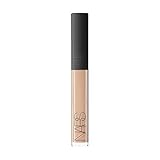
On the accessories front: if you're putting effort into how you look at work, a concealer that doesn't crease or cake during a long day is the same category of "unglamorous thing that makes everything else work." The NARS Radiant Creamy Concealer is the product that shows up on every makeup artist's kit list because it covers, blends, and stays put without settling into lines by the second meeting of the day.
FAQs
Can comfortable work shoes actually look professional?
Yes, and the gap has closed significantly in the past few years. Brands that were previously associated with medical or orthopedic footwear (Birkenstock, Dansko, Clarks, Cole Haan) have all invested in designs that read as intentional and current rather than clinical. The strategy is to buy from brands that build comfort in from the architecture of the shoe, not as an afterthought, and to prioritize quality materials that soften with wear.
How much should I spend on work shoes I'll wear every day?
The math on daily-wear shoes is different from occasional-wear shoes. A $150 shoe you wear 200 days a year costs $0.75 per wear. A $40 shoe you replace every four months because it falls apart costs more and hurts more. For shoes you'll wear most days, the $100–180 range is where the quality-to-price ratio makes sense. Below that, corners are being cut on materials that directly affect comfort and durability.
Do insoles help if my work shoes hurt?
Yes, significantly — but they don't fix a shoe with a structurally bad fit. If the shoe is compressing your toes or cutting into your heel, insoles won't solve that. If the shoe fits but lacks cushioning or arch support, a good insole (Superfeet Green, Powerstep Pinnacle) can transform it. Add insoles after you've confirmed the shoe fits correctly, not instead of buying the right size.
Are Birkenstocks appropriate for professional settings?
It depends on the office. In creative agencies, tech companies, education, healthcare, hospitality, and retail — yes, comfortably. In legal, finance, or traditional corporate settings, it depends on the dress code and how you're wearing them. A black leather Birkenstock Arizona with wide-leg trousers reads differently than a suede one with shorts. Know your room, but don't assume they're categorically unprofessional — the category has shifted a lot.
What's the best shoe for someone on their feet all day?
It depends on the environment. For standing on hard floors (retail, kitchens, warehouses), a shoe with substantial midsole cushioning and anti-fatigue properties — Dansko clogs or HOKA work-appropriate styles. For office environments with a mix of sitting and walking, a supportive flat or low-heeled shoe with a wide toe box. For a lot of walking between locations, an actual walking shoe with a proper last — not a fashion shoe pretending to be one.
How do I break in new work shoes without wrecking my feet?
Three stages: wear them around the house for an hour for two or three days. Then wear them for a half-day at work with a backup pair in your bag. Then commit to a full day. At each stage you're looking for hot spots (early warning of blisters) and checking whether the pressure points ease or worsen. If a shoe still hurts after five full wears, it's not going to get better — return it or resell it.
Does bag choice actually affect foot and back pain?
Yes — more than most people expect. A heavy shoulder bag worn on one side creates asymmetrical load, which shifts your posture, which changes how your feet strike the ground. Switching from a single-shoulder bag to a backpack or crossbody distributes weight evenly across your spine. If you're treating foot or back pain and haven't looked at your bag, look at your bag.