Weighted blankets have a legitimacy problem — not because they don't work, but because the market is clogged with cheap knockoffs that feel like sleeping under a gravel driveway. The science is real: deep-pressure stimulation reduces cortisol, increases serotonin, and helps a lot of people fall asleep faster and stay asleep longer. The problem is that most weighted blankets are either too heavy, filled with pellets that shift into uncomfortable lumps, or fall apart in the wash after four months. This guide separates what's actually good from what's just heavy.
- Top pickBearaby Cotton Napper Weighted Blanket~$199
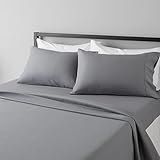
- Best budgetAmazon Basics Microfiber Sheet Set~$28
What weight should you actually buy?
The classic rule is 10% of your body weight, which turns out to be pretty accurate in practice. A 150-pound person wants roughly 15 pounds. Go lighter and you lose the pressure effect. Go heavier and you feel trapped. A few caveats: if you sleep hot, go lighter — added weight retains heat. If you share with a partner, buy for the lighter person. Kids should use blankets under 10 pounds and only with pediatric guidance. The 15–20lb range covers most adults and is where the best options cluster.
Fill matters as much as weight
There are three filler types in most weighted blankets:
- Glass beads — the gold standard. Dense, small, don't shift, and the blanket drapes naturally. High-quality glass bead blankets feel like a weighted hug rather than a bag of rocks. This is what most premium brands use.
- Plastic poly pellets — cheaper, bulkier, and more likely to migrate into uneven clumps. Fine in budget options but the tactile difference is real.
- Knit/no-fill designs (like Bearaby) — woven from layers of chunky knit fabric that create weight through density, not pellets. No fill to shift, no internal structure to worry about, dramatically more breathable. The Bearaby is the best-known example.
If you sleep warm, glass beads in a cotton or bamboo shell beat pellets every time — they're smaller and allow more airflow between them.
The star pick: Bearaby Weighted Blanket
The Bearaby is the weighted blanket that converts skeptics. It's a chunky-knit blanket made from layers of organic cotton that achieves its weight through the density of the knit — no pellets, no fill, no inner structure. This means it breathes, it drapes like a real blanket instead of a vest, it's machine washable, and it looks beautiful enough to leave on a couch without hiding it. Available in 15, 20, and 25 pounds. The 15-pound is the right starting point for most people.
Yes, $180–199 is real money. But it's also a blanket that will last a decade and doesn't shed beads or develop hot spots. The people who own one stop talking about it like a product and start talking about it like a ritual.
Best glass-bead option under $100: YnM Weighted Blanket
The YnM is the workhorse pick. It uses 7-layer construction with glass beads stitched into individual pockets to prevent shifting, has a cotton outer shell, and costs under $60 for a 15-pound queen. At this price point, the bead quality and stitching quality are good — not Bearaby good, but genuinely functional. The cold-wash-only instruction is real: follow it. The YnM is the answer when someone wants to try a weighted blanket without a $200 experiment.
For hot sleepers: think breathable materials first
Most weighted blankets make you warmer — added mass retains heat. If you sleep warm, you need a blanket with a cooling outer shell (bamboo lyocell or cotton) and glass beads rather than poly pellets. The Bearaby's open-knit construction makes it the most naturally breathable by design — air literally moves through the knit, so heat escapes rather than building up. Pair with cotton sheets and a cooler bedroom and the weight stops feeling stifling.
The complete sleep setup: pair it right
A weighted blanket works better in a dark, cool room. If you're investing in better sleep, it makes sense to close the rest of the loop. Good blackout curtains eliminate the early-morning light that shortcuts your sleep cycle. Good sheets mean the surface you're sleeping on isn't fighting the blanket.
For storage between seasons: vacuum bags
A 20-pound weighted blanket takes up significant closet space when not in use. Vacuum storage bags compress bulky items by up to 80% — a heavy knit blanket or thick weighted insert folds down to a fraction of its usual volume for seasonal storage. The Spacesaver bags are the ones that maintain their seal over time; cheap vacuum bags lose compression within weeks.
What to skip
Anything under $40 claiming to be a quality weighted blanket. At that price point, the bead pockets are large and poorly stitched — the beads shift, bunch up in corners, and you end up sleeping on an uneven surface. The weight is there but the pressure distribution isn't. The whole point of a weighted blanket is even deep-pressure stimulation. If the beads migrate to one end, you've bought a heavy blanket, not a therapeutic one.
Very heavy blankets for first-timers. If you've never used a weighted blanket, don't start at 20+ pounds. It can feel claustrophobic, especially if you move around in your sleep. Start at 15 pounds, live with it for a month, then decide if you want more weight.
Non-washable weighted blankets. A blanket you can't wash is a hygiene problem. Any weighted blanket worth buying should be machine washable at minimum — ideally the whole blanket, not just a removable cover. Check before buying.
Weighted blankets marketed for anxiety with bold medical claims. The evidence for sleep improvement is solid. The evidence that weighted blankets treat clinical anxiety disorders as a standalone intervention is much thinner. Blankets marketed most aggressively on medical claims tend to be the lowest quality. Buy for better sleep; any other benefits are a bonus.
What weight weighted blanket should I buy?
The general guideline is 10% of your body weight, and it holds up in practice. A 150-pound person does well with a 15-pound blanket. Go lighter and you lose the deep-pressure effect; go heavier and it starts to feel restrictive rather than calming. If you're buying for a couple with a significant weight difference, size down to the lighter person's recommendation — it's easier to add weight than to sleep under too much of it.
Do weighted blankets actually help with sleep?
The research is genuinely supportive for sleep onset and sleep quality, particularly for people with anxiety, insomnia, or sensory sensitivities. The mechanism is deep-pressure stimulation, which activates the parasympathetic nervous system — essentially signaling to your body that it's safe to rest. It's not a cure for serious sleep disorders, but for most people who try one, the effect is noticeable within the first week.
What's the difference between glass bead and poly pellet fill?
Glass beads are denser and smaller, so they distribute more evenly and allow more airflow between them. Poly pellets are plastic, cheaper, larger, and more likely to shift into clumps. In practice, a glass bead blanket feels like smooth, even pressure — a poly pellet blanket can develop uneven spots. Glass beads also tend to stay quieter when you move. They're worth the slight price premium.
Are weighted blankets too hot to sleep under?
They run warmer than a regular blanket — the mass retains heat. If you sleep warm, look for a cotton or bamboo shell, not polyester; glass beads rather than poly pellets; and consider the Bearaby's open-knit design, where air moves through the structure rather than being trapped. A cool room at 65–68°F also helps significantly.
Can kids use weighted blankets?
With caveats. Most occupational therapists recommend keeping blankets for children under 5–10 pounds and ensuring the child can remove the blanket independently. Always consult a pediatrician or OT before using a weighted blanket with a child under 3. For school-age kids with sensory sensitivities, they can be a genuinely useful tool when used appropriately.
How do I wash a weighted blanket?
Check the care label first. Most glass-bead blankets are machine washable on cold, gentle cycle with a small amount of detergent — no fabric softener, which breaks down the bead pockets over time. Dry on low heat or air dry. The Bearaby knit washes the same way. Cheaper weighted blankets sometimes specify dry clean only — if that's a dealbreaker (it should be), check before you buy.