Every few years someone tries to convince you that the shoe that looks good is different from the shoe that feels good is different from the shoe that works for a cobblestone street, a dinner reservation, and a Saturday farmer's market. That person is wrong. The gap between "presentable" and "I walked 14,000 steps in these" has never been smaller — but you have to know what you're actually looking for.
What actually makes a walking shoe versatile
Sole thickness and rocker geometry. A zero-drop flat sole will wreck your feet on anything longer than a few blocks. You want 20–30mm of stack height with a slight rocker curve at the toe — this rolls your foot forward naturally instead of forcing you to push off with tired calf muscles. HOKA pioneered this and every other brand is quietly copying it.
Toe box width. Fashion sneakers narrow to a point because it photographs better. Your foot doesn't taper to a point. A toe box that lets your toes spread slightly makes an enormous difference after mile four. New Balance and Birkenstock understand this. Most Italian fashion houses do not.
Colorways that work with a wardrobe. Bone/cream, black, sand/tan, or a muted gum-sole neutral. The bright colorways are fun for a season and then they're wearing you. When in doubt: the shoe that looks like it belongs in an archival catalog from 1987 is probably right.
Upper material. Leather and nubuck age well and can be dressed up. Mesh breathes better but signals "athletic." The best all-around answer: a leather or suede-adjacent upper on a technical midsole — the look of a dress shoe and the function of a running shoe.
The sneaker picks
New Balance 990v6. In continuous production since 1982 because it keeps being right. The ENCAP midsole provides genuine all-day cushioning. Made-in-USA grey goes with literally everything. Runs around $185 — real money, but these last 3–5 years with normal rotation.
New Balance 550. The cleaner, flatter sibling. Started as a basketball shoe in 1989, became the it-shoe of anyone who wanted "vintage sports" without aggressive branding. About $90, which makes it the easiest entry point on this list.
HOKA Clifton 9. 34mm of stack height, full-length EVA foam, weighs almost nothing for a maximalist shoe. The "Shifting Sand" and "Blanc de Blanc" colorways read as fashion rather than running gear. If you're doing serious miles — vacation walking, a long city day, a job that keeps you on your feet — the Clifton is the honest answer.
On Running Cloud 5. The CloudTec pods compress on impact and spring back, which makes the shoe feel live under your foot. All-white or all-black colorways work with denim, chinos, or a casual suit. On's sizing runs narrow — try before buying or order two sizes and return one.
Allbirds Tree Runner. Made from eucalyptus fiber, machine washable, produces dramatically less carbon than a conventional sneaker. Comfortable for a full day, muted earthy tones that are always current, and at ~$125 you're not sacrificing much for a lighter footprint.
The sandal pick: Birkenstocks are the answer
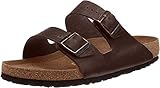
Everyone owns Birkenstocks. They're owned by everyone because they work. The contoured cork footbed is actually ergonomic — not in a marketing way, in a "your podiatrist would approve" way. The arch support, heel cup, and toe grip built into the footbed do what a $50 orthotic insert tries to do, but they're part of the shoe.
For walking: the Arizona is best on days when the weather cooperates and the activity is casual to moderate. This is a "walked eight miles around a European city and my feet felt better than my friends who wore sneakers" sandal — which is a real phenomenon among Birkenstock owners. The suede and oiled leather uppers age into something beautiful. Best colors for versatility: Taupe, Sandcastle, or classic Birko-Flor black.
What to skip
Fashion sneakers with leather soles. They're meant for restaurant to restaurant with a car in between — not for a day of actual movement. If you love the silhouette, buy it from a brand that uses a real rubber outsole.
Fashion brands charging for the name. Balenciaga's Triple S looks supportive and provides moderate cushioning — at $895 you're mostly paying for the logo. Do not buy believing it will out-walk a $185 New Balance 990.
Slide sandals without footbeds. A flat foam slide is a shower sandal that escaped. Without arch support and a defined heel cup, your plantar fascia does all the stabilizing work. After a few hours you'll feel it.
Pure fashion sneakers with aggressively pointed toe boxes. Many designer collaborations taper toward a pointed toe because it photographs like a dress shoe. Your foot is not shaped that way. Anything that crowds your pinky toe on the first wear will be unwearable at hour five.
The "dinner reservation and 10 miles" standard
The real benchmark. If you're traveling, or living in a city, or want to own fewer shoes, you need something that does a long walk in the morning and doesn't look embarrassing at a nice dinner that evening. The short list that passes:
- New Balance 990 in grey — reads as a considered choice, not a default sneaker
- HOKA Clifton in Shifting Sand or Blanc de Blanc — works wherever "smart casual" is the dress code
- Birkenstock Arizona in leather or oiled nubuck — clears the bar in European and coastal cities and any restaurant that doesn't require a jacket
- On Cloud 5 in all-white or all-black — clean minimalism that reads as deliberate
The rule of thumb: if a shoe looks like it was chosen, not defaulted to, it will work at dinner. The shoes that fail this test are the ones that shout their intended use — reflective strips, exaggerated mesh panels, aggressive branding.
The bag that completes the walking day
If you're doing city walking or travel days, a bag that doesn't kill your shoulders matters as much as the shoes. The Baggu Crescent Bag is the lightweight one-bag option for shorter walks where you're not carrying much — light enough that you forget you're wearing it.

What's the most comfortable walking shoe for all-day use?
For all-day walking, the HOKA Clifton 9 is the most objectively cushioned option. The 34mm stack height and rocker geometry make it easier on your feet over long distances than anything else on this list. If you're not willing to go full HOKA, the New Balance 990 is the best balance of cushion and visual restraint. The Birkenstock Arizona is surprisingly competitive for moderate distances.
Are Birkenstocks actually good for walking?
Yes, with a caveat. The contoured cork footbed provides genuine arch support and a heel cup — it's functional design, not marketing. They're excellent for walking 6–10 miles on relatively flat terrain. They're not designed for trails or significant elevation. They do require a break-in period of about two weeks where the cork molds to your foot — push through it.
How do I find a walking shoe that doesn't look like a walking shoe?
Look for: heritage silhouette (design predates the "performance" era), neutral/muted colorways, leather or suede-adjacent upper, and a midsole that's substantial but not cartoonish. Avoid anything with visible air units, aggressive geometry, or branding bigger than an inch.
What should I look for in a walking shoe for travel?
Travel rewards: lightweight construction (feet swell on flights), a sole that handles cobblestones (rocker toe helps enormously), and a silhouette that works from sightseeing to dinner. The HOKA Clifton and On Cloud 5 are both excellent travel shoes. The Allbirds Tree Runner is machine washable, which matters more than you think after a 10-day trip.
Is there a walking shoe that works for wide feet?
New Balance is the standard answer — most NB styles come in 2E and 4E widths, and the 990 is generous even in standard width. Birkenstock's footbed accommodates wide feet better than most enclosed shoes because the straps adjust across the full width. Avoid On Running (consistently narrow) and most fashion-forward sneakers where silhouette is prioritized over fit.
How much should I spend on a good walking shoe?
The sweet spot is $110–$185. Below $80, you're generally getting a compromised midsole that compresses out after 200–300 miles (3–6 months of regular use). The New Balance 550 at $90 is the exception. Above $200, you're mostly paying for materials and branding — the functional improvement above $185 is marginal for most walkers.