The skincare aisle has done a remarkable job of turning a simple molecule into a $200 luxury product. L-ascorbic acid — the active form of Vitamin C — is one of the most studied topical ingredients in dermatology. It brightens, fades hyperpigmentation, protects against UV damage, and stimulates collagen production. None of that requires a celebrity-endorsed glass bottle. What it requires is a stable formulation at the right concentration, stored properly, and applied consistently. Everything else is marketing.
- Top pickBagsmart Toiletry Bag~$25
- Best budgetTravel Bottle Set (TSA-Compliant)~$15
- Worth the splurgeBearaby Cotton Napper Weighted Blanket~$199
I've spent the better part of two years testing serums across every price tier, watching them oxidize, comparing ingredient lists, and reading actual clinical literature instead of brand press releases. Here's what I found.
Why most Vitamin C serums fail before you open them
L-ascorbic acid is notoriously unstable. It oxidizes on contact with light, air, and heat, turning from clear or pale yellow to orange to brown — and once it's orange or brown, it's done. You're applying expensive colored water that will actually irritate your skin more than help it. The signs of a well-formulated serum: opaque or amber glass packaging (keeps light out), pump or dropper dispenser (limits air exposure), and a pH between 2.5 and 3.5 (L-ascorbic acid only penetrates skin effectively at low pH). If a serum comes in a clear glass bottle with a wide-mouth cap, it'll oxidize within weeks of opening regardless of what it cost.
Some brands use Vitamin C derivatives — ascorbyl glucoside, sodium ascorbyl phosphate, magnesium ascorbyl phosphate — which are more stable but convert to active L-ascorbic acid in the skin less efficiently. They're still useful, especially for sensitive skin that can't tolerate pure L-ascorbic acid, but they're working harder for the same result. Know which form you're buying.
The drugstore tier: good enough that it's hard to justify more
The honest case for drugstore Vitamin C is strong. At 10–15% L-ascorbic acid with a pH under 3.5, you're getting clinically effective concentrations at a fraction of luxury prices. The packaging matters more at this tier — you're more likely to get a clear bottle or a jar — so buy smaller sizes and use them up within 30–60 days of opening.
TruSkin Vitamin C Serum is the Amazon bestseller in this category for a reason. 20% L-ascorbic acid, stable at the time of purchase, includes hyaluronic acid and vitamin E (which helps stabilize C and works synergistically). It comes in an amber bottle with a pump. At around $20 for 1oz, it's the entry point I'd hand anyone starting out. It's not subtle — the 20% concentration will tingle on sensitive skin — so if you're new to C serums, patch test on your inner arm first.
L'Oreal Revitalift 10% Vitamin C Serum is the gentler alternative. 10% concentration, fragrance-free, dermatologist-tested, and formulated with neurosensine to reduce irritation. The lower concentration makes it appropriate for sensitive or reactive skin. It's in a frosted glass dropper bottle (better than clear, worse than amber) and costs around $22. Available at every drugstore on the planet.
The mid-range picks: where formulation quality actually improves
Between $30 and $60, you start seeing serums where the formulation team spent real money on stability and delivery. The packaging gets better (amber glass or BPA-free opaque packaging is standard), the pH is calibrated more precisely, and the supporting cast of ingredients is more thoughtfully assembled.
Paula's Choice C15 Super Booster is the pick I've recommended more than any other. 15% L-ascorbic acid, pH 3.0, packaged in a pump bottle designed specifically to limit air exposure. Paula's Choice publishes their ingredient lists and formulation rationale in full — rare in this industry. The C15 also includes tocopherol (Vitamin E) and ferulic acid, the gold-standard combination that both stabilizes L-ascorbic acid and significantly amplifies its antioxidant effects. You get more out of 15% C with ferulic acid than you'd get from 20% C without it. At around $48 for 0.67oz, it's genuinely value-efficient per dose — you use 3–4 drops per application.
Timeless 20% Vitamin C + E Ferulic Acid Serum deserves a mention because it's the formulation that made the ferulic acid combination accessible. It was reverse-engineered from SkinCeuticals CE Ferulic (the $166 industry reference standard) and landed within a few percentage points of equivalent performance. $25 for 1oz. The trade-off: it comes in a clear glass dropper bottle, so you should store it in the fridge and use it within 60–90 days. If you'll be disciplined about storage, it's the best value in the entire category by a significant margin.
The splurge tier: when the premium is actually earned
I'll say the quiet part loud: most serums above $80 are not meaningfully better than the mid-range options above. You're paying for packaging, brand equity, and the feeling of treating yourself — which has real value, but it's not a skincare value, it's an experience value. That said, two products in the premium tier earn their price honestly.
SkinCeuticals CE Ferulic at $166 is the gold standard that everyone else is benchmarking against. 15% L-ascorbic acid, 1% alpha tocopherol, 0.5% ferulic acid, patented delivery system. Multiple peer-reviewed clinical trials. If you're serious about the research and want the reference product, this is it. I don't recommend it to most people because the Timeless serum above comes this close at 15% of the price — but if you have the budget and want to know you're using what the studies used, this is your answer.
Drunk Elephant C-Firma Fresh (~$78) is the premium pick that I'd call uniquely justified. It has a clever two-chamber design where the powder and serum are mixed fresh before each use, which completely sidesteps the oxidation problem. Your serum is always fresh. The trade-off is a 5-second prep ritual — you press the two chambers together, shake, and use within 10 days. For people who've struggled with serums oxidizing before they're finished, this is the solution. It's also formulated with L-ascorbic acid plus pumpkin ferment and pomegranate extract, which adds exfoliation and texture benefits beyond basic C.
How to use Vitamin C serum so it actually works
Timing and layering matter as much as the product you buy. Vitamin C serum is best applied in the morning — its UV-damage-mitigating properties work in concert with sunscreen, not instead of it. Apply it after cleansing and before moisturizer, allow it to absorb for 60 seconds, then apply SPF 30 or higher. This pairing (C + SPF) has significantly more clinical evidence behind it than either product alone.
What to avoid layering with: niacinamide (neutralizes L-ascorbic acid effectiveness and can cause flushing at high concentrations when combined), AHAs and BHAs in the same step (too much acid disrupts the skin barrier — alternate mornings and evenings instead), and benzoyl peroxide (oxidizes C immediately). Retinol is fine, but use it in the evening separately.
One more thing nobody mentions: consistency beats concentration. A 10% serum used every morning for six months produces better results than a 20% serum used three times a week when you remember. Buy something you'll actually use and build the habit first. The visible brightening that makes people converts usually appears at 8–12 weeks of consistent use — not sooner.
What belongs in your broader morning routine
A Vitamin C serum is most effective as part of a consistent morning ritual. The basics: cleanser, Vitamin C serum, moisturizer, SPF. Beyond that, a few supporting purchases make it easier to stay consistent — and "easier to stay consistent" is basically the entire game in skincare.
First: travel-proof your routine. If you travel even occasionally and you have to decant your serum into a random container, you'll either skip it or waste half the bottle. A proper travel bottle set in the right sizes means your morning routine survives a work trip.
Second: your skin's results depend heavily on sleep quality. This isn't woo — skin cell turnover peaks at night, and the repair processes that make Vitamin C's collagen-stimulation work visible happen while you sleep. A weighted blanket isn't skincare, but if you're sleeping badly, your skin will show it regardless of your serum. The Bearaby Cotton Napper has become the weighted blanket I recommend to people who've tried cheaper ones and found them hot — the open-knit cotton construction breathes, which is the thing most weighted blankets fail at.
Third: hydration. L-ascorbic acid serums can be mildly dehydrating, especially the 15–20% formulations. Drinking enough water is unglamorous skincare advice, but it visibly affects how your skin responds to actives. A 40oz tumbler that you actually refill and carry is worth more to your skin than a second serum.
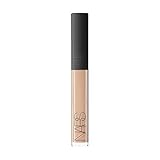
And finally: your morning routine is only as good as your ability to remember it. A concealer that you love applying afterward — the reward at the end of your routine — genuinely helps with habit formation. NARS Radiant Creamy Concealer covers well, doesn't crease into dry skin (a real problem if your skin is still adjusting to the low pH of a C serum), and the finish makes your whole skincare routine feel worth it.
The FAQ: questions I get every time I recommend a serum
What percentage of Vitamin C should I start with?
10% if you have sensitive or reactive skin. 15–20% if you've used actives before and your skin tolerates acids well. Start lower and build up — stinging that lasts more than 30 seconds, redness that persists for hours, or visible peeling means you've started too high. Drop the concentration or frequency before you drop the product entirely. Most irritation with C serums is a calibration issue, not an incompatibility issue.
How do I know if my Vitamin C serum has oxidized?
Pale yellow to clear: fresh and active. Dark yellow or orange: starting to oxidize, still has some activity. Orange-brown or brown: fully oxidized, no longer effective, can actually irritate skin. A serum that smells different than when you opened it — usually a slightly hot or rancid smell — is also a sign of oxidation even if the color hasn't changed yet. Store serums in a cool, dark place (a bathroom cabinet, not the shelf by the window) and refrigerate if possible. Use within 60–90 days of opening.
Can I use Vitamin C serum every day?
Yes, and consistency is where the results come from. Daily morning use for 8–12 weeks is what produces the visible brightening that converts people. That said, if your skin is newly adjusting to L-ascorbic acid, start with every other day for the first two weeks. Once your skin has calibrated to the pH, daily use is well-tolerated by most people, even those with moderately sensitive skin.
Is Vitamin C serum safe during pregnancy?
L-ascorbic acid itself is considered safe during pregnancy — it's a vitamin applied topically, not a retinoid or chemical sunscreen. That said, always check with your OB or midwife before starting any new skincare product during pregnancy, because some supporting ingredients (certain essential oils, high concentrations of acids) may warrant more caution. A fragrance-free, simple formulation is the safest pick during this period.
Do I still need sunscreen if I use Vitamin C serum?
Yes. Vitamin C serum doesn't replace SPF — it amplifies it. C serum neutralizes some free radical damage from UV exposure, but it doesn't block UV rays. Without SPF, Vitamin C serum is doing cleanup work on damage that was preventable. With SPF, the two work together: the sunscreen blocks the rays, the Vitamin C neutralizes the oxidative stress that gets through anyway. Skip SPF and the serum is doing a fraction of the work it could.
Why is SkinCeuticals CE Ferulic so expensive?
Part of it is the patent on their specific delivery system and the clinical research they've funded — real costs. Part of it is brand positioning in dermatologist offices and medical spas, where a $166 serum signals seriousness. Part of it is pure price anchoring. The formula itself — 15% L-ascorbic acid, 1% vitamin E, 0.5% ferulic acid at pH 2.5 — can be reverse-engineered closely (Timeless does this for $25). The clinical research on that specific formulation is what you're partially paying for. Whether that's worth $141 more than Timeless is a question only you can answer.