There's a specific kind of person at airport security who makes the whole line move faster just by existing: bin loaded before it's their turn, liquids already out in one clear bag, laptop free of its sleeve, shoes half off before the belt starts moving. Nobody taught them this in a class. They just got tired of being the reason the line stalled, and they built a system — the bottles, the bag, the lock, and the organizer that turn "please step aside for additional screening" into a distant memory.
- Top pickBagsmart Hanging Toiletry Bag with TSA Pouch~$25
- Best budgetMaster Lock TSA-Accepted Combination Lock~$10
- Worth the splurgeApple AirTag 4-Pack~$99
None of this is complicated. The TSA's liquids rule hasn't changed in years — containers of 3.4 ounces (100 ml) or less, all fitting into a single quart-size clear bag, one bag per passenger. What trips people up is the execution: bottles that leak, locks that aren't the TSA-recognized kind, bags packed so haphazardly a screener has to hand-search them. Fix those and security stops being a variable in your travel day.
The liquids bag that clears security without a scavenger hunt
Most people's "liquids bag" is a gallon freezer bag dug out of a kitchen drawer, holding whatever half-used travel bottles survived the last trip, half of them leaking a little onto everything else. It works, technically. It's also the reason that person in front of you is still digging through their backpack after everyone else has already collected their bins.
The underrated feature isn't the security speed, though that's real — it's that a dedicated toiletry bag keeps your liquids in one place all trip long, so you're not repacking a plastic bag from scratch every morning of a multi-city itinerary. Pack it once at home, unzip the TSA pouch at the checkpoint, zip it back in, done.
TSA-compliant bottles: decant once, stop rebuying travel minis
The 3.4-ounce rule is non-negotiable, but how you get your actual shampoo, conditioner, and moisturizer into that size range is where most people overpay and under-plan. Single-use travel minis are expensive per ounce, they run out mid-trip, and half of them are formulated differently than what you actually use at home. The fix is a reusable bottle set you fill from your own products before every trip.
Fill these the night before a trip, not the morning of — silicone bottles can weep a little air-lock burp of product if you cap them while they're still settling, and you don't want that happening inside your suitcase at 30,000 feet. A few minutes of prep the night before means zero surprises when you unzip the bag later.
Locks TSA can actually open — and won't have to cut off
Regular padlocks and TSA do not mix. If your checked bag gets flagged for a physical search and the lock isn't one of the TSA-recognized kind, a screener will cut it off, no questions asked, no reimbursement offered. You'll get your bag back unlocked, missing a lock, and possibly slightly annoyed that you paid for one in the first place. The fix is buying a lock that's specifically built for this.
Set your own combination before the trip, not while standing at the ticket counter with a line behind you, and write it down somewhere that isn't taped to the lock itself. It sounds obvious until you're the person re-locking a bag from memory at 5 a.m. and drawing a total blank.
Pack it so the bin doesn't fight you back
Bag organization matters at two different moments: getting through security, and getting through the rest of your trip without your suitcase turning into a compression experiment gone wrong. The goal is a bag where nothing needs to be dug for — laptop accessible without unpacking half your clothes, clean clothes separated from worn ones, and everything compressed enough that the bag actually closes without you sitting on it.
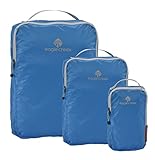
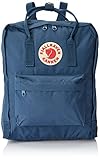
The combination of compressed, categorized checked luggage and a simple, single-compartment personal item solves both halves of the packing problem: your suitcase closes without a fight, and your carry-on doesn't require an archaeological dig every time an agent asks you to remove your laptop.
Past the checkpoint: bags that find their own way home
Getting through security fast is one problem. Not losing track of your bag once you're on the other side of it is a different one, and it's arguably the more stressful of the two — a bag on the wrong carousel, a backpack left in a rideshare, a duffel that didn't make a tight connection. Both of the trackers below solve this the same basic way: drop one in, get a real-time-ish location the moment it's near a compatible network.
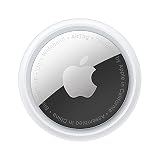
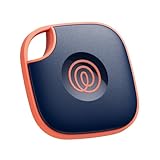
One tracker per checked bag is the rule worth following, not one per family. The moment it's actually useful is exactly the moment your bags have been separated from you and from each other — which is also the moment you'll be glad you didn't try to save money by sharing a single tag between two suitcases.
What to skip, and the full kit at a glance
Skip anything that promises to get you through security "faster" by being clever about the rules rather than compliant with them — bottles marketed as "just over" 3.4 ounces because "screeners rarely measure," or locks that aren't TSA-recognized but are "usually fine." That's a bet against a bad day, and security isn't where you want to be making bets. Skip decorative luggage tags with your full home address printed on the outside of a bag sitting in public for hours — a tracker does the same job without broadcasting where you live. And skip rebuying a lock or bottle set every trip; everything here is reusable for years, which is most of the value.
| Item | Solves | Price |
|---|---|---|
| Bagsmart Toiletry Bag | Pulling liquids out as one unit instead of a scavenger hunt | ~$25 |
| Travel Bottle Set, TSA | Bringing your actual products, sized correctly, without rebuying minis | ~$15 |
| Master Lock TSA Combination | Keeping a checked bag locked without risking a cut-off lock | ~$10 |
| Eagle Creek Pack-It Cubes | Fitting more in less space, separated by category | ~$45 |
| Fjallraven Kanken Backpack | A personal item with predictable, easy-access compartments | ~$80 |
| Apple AirTag 4-Pack | Tracking bags after the checkpoint, iPhone households | ~$99 |
| Tile Mate Bluetooth Tracker | Same idea, cross-platform and cheaper per tag | ~$25 |
If you're only willing to buy two things from this list, make it the TSA-compliant bottle set and the Master Lock combination lock. They're the cheapest items here and the two most likely to actually cause a problem — a confiscated liquid or a lock cut off in your absence — if you skip them. Everything else is about speed and peace of mind; those two are about not losing anything at the checkpoint in the first place.
FAQs
What's the actual TSA liquids rule?
Containers of 3.4 ounces (100 ml) or less, with all of them fitting into a single quart-size, clear, resealable bag, one bag per passenger. Larger containers aren't allowed in carry-ons regardless of how much liquid is actually left inside them — a half-empty 8-ounce bottle still gets flagged, because the rule is based on the container size, not the contents.
Do I really need a "TSA-approved" lock, or will any lock do?
Any lock will physically work, but only TSA-recognized locks (usually marked with a small red diamond logo) can be opened by the master keys TSA screeners carry. If your bag is selected for a manual search and the lock isn't one of those, they'll cut it off to get inside — no warning, no reimbursement. A TSA-approved combination lock avoids that entirely.
Can I bring a power bank or portable charger in my carry-on?
Yes, and you generally should — most airlines require power banks and spare lithium batteries in carry-on luggage, not checked bags, since a battery issue is far easier to manage in the cabin. Keep it under the standard 100 watt-hour limit most consumer power banks fall under, and be ready to pull it out separately if a screener asks.
Will a Bluetooth tracker like an AirTag get flagged at security?
No. AirTags and similar Bluetooth trackers aren't treated any differently than any other small electronic item — they stay in your bag through screening just like a phone charger or a set of earbuds would. There's no separate rule for them.
What's the fastest way to get through the security line, realistically?
Have your liquids bag out and visible before you reach the bin, keep your laptop in an easily accessible compartment rather than buried under clothes, wear shoes that slip off without bending down, and empty your pockets into your bag before you're standing at the bin rather than after. None of this is about gear so much as sequencing — the gear just makes the sequencing possible.
Should I pack my TSA-compliant bottles in my carry-on or checked bag?
Carry-on — the 3.4-ounce rule exists specifically for carry-on liquids, and that's what actually gets checked at the walk-through. Checked bags don't have the same size restriction on liquids, but keep your reusable set in the carry-on toiletry bag anyway, since that's the one you'll actually need mid-flight or mid-layover.
How do I avoid my silicone travel bottles leaking in my bag?
Fill them the night before, cap them fully, and let any trapped air work its way out before you pack them — a bottle capped mid-settle is the most common cause of a slow ooze inside a suitcase. Storing them upright inside a dedicated toiletry bag, rather than loose in a side pocket, contains any leak that does happen.