A storage ottoman is the most quietly ambitious piece of furniture you can buy. On paper it's a box with a cushion on top. In practice, done right, it replaces a coffee table, absorbs three categories of clutter, gives your living room somewhere to sit when you have extra guests, and looks intentional doing all of it. Done wrong, it's a saggy fabric blob that wobbles when you put a wine glass on it and smells vaguely of the blankets inside. This article is about the difference.
The buying decision tree: tray top vs hinged lid vs open top
Tray-top ottomans have a removable wooden or acrylic tray on top. The lid lifts off completely to access storage. These are the coffee table replacements. Use them in front of the sofa where you'll rest drinks and books.
Hinged-lid ottomans have a lid that flips back on a hinge. Easier to access, but you need clearance behind it — don't push flush against the sofa. Position at least 16 inches away. Best choice for bedroom bench-of-bed and entry benches.
Open-top ottomans are decorative baskets, essentially. Good as side tables, terrible for actual storage unless you like seeing everything inside.
For a living room coffee table replacement: tray-top. For a bench that does double duty: hinged lid.
Fabric vs leather vs velvet — and what survives pets
Performance fabric (polyester microfiber): The clear winner if you have pets or kids. Wipes clean, doesn't pill, doesn't absorb pet hair at the root the way velvet does. It outlasts velvet 3-to-1.
Faux leather / PU leather: Easy to wipe, looks sleek. The problem: it peels within two to three years in a high-use spot. Accept a shorter lifespan. Real leather ages beautifully but costs 5x as much.
Velvet: Looks incredible. Attracts pet hair like a lint trap. The pile flattens permanently in heavily sat-on spots. For a bedroom piece that doesn't get hammered, fine. For the center of your living room, be realistic.
Size, shape, and the coffee table question
The cocktail ottoman — large, rectangular or square, 16–18 inches tall — is the most versatile choice for living rooms. The rule of thumb: the ottoman should be about two-thirds the length of your sofa. Too small and it looks like a footrest. Too large and you're navigating around it constantly.
For a bedroom bench: go narrow (18–22 inches deep) and long (48–60 inches). A hinged-lid bench at the foot of the bed replaces a separate blanket chest and looks far more finished.
What actually fits inside — and weight limits
A standard 36x18-inch rectangular ottoman holds roughly 50–80 liters. In practical terms: 4–6 throw blankets, 2–3 weighted blankets, large board games, extra Euro pillows, seasonal items, kids' soft toys.
Weight limits vary enormously. Cheap ottomans with particleboard bases handle 250 lbs but the lid hardware fails sooner. Solid wood-framed pieces handle 350+ lbs. If anyone will stand on it to change a light bulb — and they will — pay for the hardwood frame.
A Bearaby weighted blanket is the ideal ottoman resident. It's too heavy to fold and stuff in a closet gracefully, it's used seasonally, and it takes up couch real estate when sitting out. Vacuum storage bags let you compress off-season throws down to a quarter of their normal size.


The one piece / three jobs ROI argument
A decent coffee table: $150–$400. A blanket storage chest: $120–$300. An extra seat for guests: $80–$200. Total: $350–$900. A well-made storage ottoman with a tray top: $180–$350. In a smaller living room — an apartment, a studio — the math tips further. One piece doing three jobs.
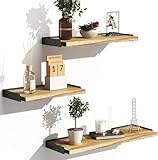
A wall-mounted floating shelf nearby supplements what the ottoman can't do — small display items, a lamp, the remote that always gets lost.
What to skip
Skip cube ottomans under $60 — thin MDF bases, flimsy fabric, hinges that fail within months. Budget at minimum $120 for anything expected to last three years. Skip tufted velvet ottomans if you have pets — button tufts collect pet hair in crevices that are nearly impossible to clean. Skip ottomans without a wooden tray if you want coffee table functionality — the soft surface alone won't hold a drink stably.
FAQs
Can a storage ottoman really replace a coffee table?
Yes, if it has a rigid removable tray top. Without a tray the soft surface is too unstable for drinks and remotes. With a tray it functions identically to a coffee table and adds storage underneath. Go at least 36 inches wide for a sofa-facing replacement.
What's the weight limit for sitting on a storage ottoman?
Solid hardwood-framed ottomans handle 300–400 lbs. Cheaper MDF-framed versions are rated to 250 lbs but hinge hardware fails sooner under repeated stress. If adults will regularly sit on the top, pay for the hardwood frame.
How do I keep a storage ottoman from smelling musty?
Never store anything damp inside. Add a cedar sachet or activated charcoal absorbers inside. Open the lid occasionally to let the interior breathe. Vacuum storage bags help because they seal items away from the interior air entirely.
What fabrics hold up best with cats and dogs?
Performance microfiber and solution-dyed polyester. They resist scratching better than velvet or linen, and pet hair doesn't embed in the fibers the way it does in looped or tufted weaves. Smooth faux leather wipes clean but peels over time from claw contact.
How much can you actually store in a typical storage ottoman?
A standard 36x18-inch rectangular ottoman holds roughly 50–80 liters — enough for four to six throw blankets, two or three board games, or a mix of pillows and seasonal items. Vacuum-compressing bulky items can nearly double effective capacity. Look for at least 10 inches of interior depth.
Hinged lid or tray top for a bedroom bench?
Hinged lid is better for a bedroom bench because you access it frequently. Leave at least 16 inches of clearance behind it so the lid doesn't hit the footboard when it opens.
Are storage ottomans worth it over a regular coffee table plus separate storage?
In most living rooms under 300 square feet, yes — the consolidation is meaningful. You save money buying one piece instead of three, save floor space, and simplify the visual. In larger rooms, a proper coffee table often looks more intentional.