Let's just get this out of the way: KitchenAid stand mixers are expensive. Like, genuinely expensive for what is essentially a bowl that spins. The Artisan starts at $450 and the Professional 600 will set you back $600 before you've bought a single attachment. And yet — people buy them, keep them for twenty years, and pass them to their kids. So either the world is filled with suckers, or something is actually happening here. The truth is somewhere in the middle, and this article is going to give you the full picture so you can spend your money intelligently.
The short version: if you bake bread regularly, make large batches of anything, or use a mixer more than twice a week, a KitchenAid is worth it. If you make birthday cake twice a year, a Cuisinart or Hamilton Beach will serve you fine. Now let's get into the specifics.
KitchenAid Artisan vs Professional 600: Which One to Buy
This is the question that sends people down Reddit rabbit holes for days. Here's the honest breakdown.
The KitchenAid Artisan (5qt, tilt-head) is the one that looks like the kitchen status symbol on every cooking show. Tilt-head design means the motor head lifts back to give you access to the bowl. It's 325 watts, comes in 50+ colors (yes, color matters, and we'll get to that), and handles cookies, cakes, whipped cream, and light bread doughs with zero drama. The 5-quart bowl comfortably makes a double batch of cookies or a single loaf's worth of dough. For most home bakers, this is the right choice.
The KitchenAid Professional 600 (6qt, bowl-lift) is a different animal. Bowl-lift means the bowl locks into place and raises up to the mixer head rather than the head tilting back. It's heavier (29lbs vs 26lbs), has a larger 6qt bowl, runs at 575 watts, and is built for heavier use — double batches of bread dough, dense cookie doughs, larger quantities. If you're a serious bread baker or you regularly make large batches, this is the one. If you're not, the Artisan is perfectly sufficient and noticeably easier to maneuver.
The comparison most people need to see:
| Model | Bowl Size | Wattage | Design | Price | Best For |
|---|---|---|---|---|---|
| KitchenAid Artisan | 5 qt | 325W | Tilt-head | ~$450 | Most home bakers |
| KitchenAid Pro 600 | 6 qt | 575W | Bowl-lift | ~$600 | Heavy bread / large batches |
| Bosch Universal | 6.5 qt | 800W | Bowl-lift | ~$430 | Serious bread bakers |
| Cuisinart SM-50 | 5 qt | 500W | Tilt-head | ~$200 | Budget pick / occasional bakers |
Bowl-Lift vs Tilt-Head: The Debate That Actually Matters
People have extremely strong opinions about this. Here's the actual practical difference after using both.
Tilt-head (Artisan): You press a button, the head tilts back, you swap attachments or add ingredients. Easy, intuitive, takes two seconds. The downside is that when the head is tilted back, there's some wobble with very heavy doughs — the machine can "walk" across the counter when it's fighting a stiff bread dough. For anything other than heavy bread, you'll never notice this.
Bowl-lift (Pro 600, Bosch): The bowl locks into two side prongs and cranks up to meet the attachment. More secure for heavy doughs — zero wobble. The tradeoff is that adding ingredients mid-mix requires you to lower the bowl first, which is mildly annoying. You also need a bit more vertical clearance because of the lift mechanism.
The verdict: tilt-head for 80% of home bakers. Bowl-lift if bread is your primary use case or you regularly do 2+ pound dough batches.
The Bosch Universal Argument
Here's where things get interesting. The Bosch Universal Plus is the stand mixer that serious bread bakers swear by, and it's often cheaper than a KitchenAid Pro 600. 800 watts. 6.5-quart bowl. Unusually wide, squat design that keeps the center of gravity low. A bottom-drive motor that comes at the dough from below rather than from the hook above — which means more even mixing, less ingredient climbing the hook.
Bread forums love the Bosch. The criticism: it's not great for small batches (the bowl is so large that whipping one egg white is basically impossible), the attachments ecosystem is smaller than KitchenAid's, and it is not cute. The KitchenAid is part of the kitchen aesthetic. The Bosch looks like a piece of equipment. If that matters to you — and for many people it does — factor it in.
The Bosch is the right answer if: you bake bread at least weekly, you regularly make 2+ loaves at a time, and you don't care about the 50-color selection or the attachment ecosystem. Otherwise, stick with KitchenAid.
Budget Alternatives: Cuisinart and Hamilton Beach
Not everyone needs a $450 mixer. If you're making birthday cake twice a year, there's genuinely no reason to spend KitchenAid money. These two are the legitimate alternatives.
Cuisinart SM-50 (5qt, 500W): This is the buy for people who want a real stand mixer without the KitchenAid price. 500 watts is respectable — more than the Artisan's 325W — and the 5qt bowl handles most home baking tasks. The build quality is noticeably less substantial than KitchenAid (more plastic, lighter overall), but it mixes well, comes with a dough hook, flat beater, and whisk, and retails around $200 on a good sale. The attachment selection is minimal compared to KitchenAid but covers the basics.
Hamilton Beach 63390: The budget-budget option. 400W, 4.5qt bowl, tilt-head, around $100. It vibrates more than it should, the bowl doesn't feel as secure, and the motor struggles with stiff doughs. But for occasional light use — boxed cake mix, whipped cream, simple cookies — it does the job and costs less than most KitchenAid accessories. Just don't expect it to last 20 years.

KitchenAid Attachments Worth Actually Buying
This is where KitchenAid really makes its money — and where it earns its long-term value. The KitchenAid attachment hub on every mixer is universal across the brand (mostly — check compatibility on the Pro 600 for some older attachments). Here are the ones that are legitimately useful and not just expensive gimmicks.
Pasta roller and cutter set (~$200): Genuinely transformative if you make pasta. Clamps onto the hub, rolls and cuts dough in minutes. The best KitchenAid attachment, full stop. Homemade pasta for dinner is now a weeknight thing.
Meat grinder (~$60): Grind your own burger blends, make sausage, control fat ratios. Works extremely well. The attachment pays for itself in better burgers within the first month.
Ice cream maker bowl (~$70): Freeze the bowl overnight, churn ice cream in 20–30 minutes. Cheaper than a standalone ice cream maker and the results are genuinely excellent.
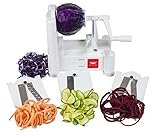
What to skip: The spiralizer attachment (a $30 handheld spiralizer does the same thing), the juicer attachment (slow and hard to clean), and the citrus juicer (your hand works fine). The attachment ecosystem is the Artisan's best argument, but that doesn't mean every attachment is worth it.
What to Skip: The Bowl-Lift Knockoff Problem
A word of warning about the cheap bowl-lift mixers that have flooded Amazon in the $80–120 range. They look like professional stand mixers. They have large bowls, multiple speeds, and impressive-sounding wattage numbers. Do not buy them.
The problem is the motor. A legitimate bowl-lift design handles heavy doughs — that's the whole point. The knockoffs use underpowered motors that overheat on anything stiffer than cake batter, strip their gears within a year, and have bowls that don't seal properly to the lift mechanism. You end up with a machine that vibrates across the counter, can't handle dough, and dies before the warranty period is over. The Amazon reviews are full of "it was great for 8 months" reports.
The rule: if a bowl-lift stand mixer costs under $150, it's not a real bowl-lift stand mixer. It's a tilt-head design that's been cosmetically redesigned to look more serious than it is. Spend the $200 on the Cuisinart or wait and save up for a KitchenAid. There's no legitimate middle ground in this category.
The Color Thing (Yes, It Matters)
One of KitchenAid's most underrated product decisions is offering the Artisan in over 50 colors. This sounds frivolous until you've seen someone's kitchen with a perfectly matched Empire Red or Cobalt Blue mixer on the counter — and then realized that the mixer was there, out, used, because it's beautiful enough to display. And here's the behavioral insight: if it's on the counter, you use it. If it's in the cabinet, you don't.
A stand mixer that fits your kitchen and makes you happy to look at it is a stand mixer you'll actually use. The color upsell is real, it's not shallow, and you should factor it into your decision. The classic Onyx Black and Empire Red hold their value best on the secondhand market too, which matters if you ever resell.
Speaking of secondhand: certified refurbished KitchenAid mixers are one of the best deals in kitchen appliances. KitchenAid sells refurbished Artisans directly on their site and through Amazon for $200–300 — roughly half the retail price. These have been inspected, repaired, and come with a one-year warranty. If the price is the blocker, shop refurbished. The machines last so long that a refurbished one is still going to be running in 2040.
Frequently asked questions
How many quarts do I actually need?
For cookies, cakes, and frostings: 5 quarts handles double batches comfortably. For bread: 5 quarts is fine for single loaves; for regular double-loaf batches, upgrade to 6 quarts. The Artisan's 5qt bowl is the right size for the vast majority of home bakers.
Does wattage actually matter in a stand mixer?
Less than you'd think. Higher wattage doesn't automatically mean better mixing — motor efficiency, gear design, and attachment fit matter as much. The KitchenAid Artisan at 325W handles most tasks better than many 500W competitors because the whole system is engineered together. Watch for overheating on dense doughs as the real indicator of motor adequacy.
Does a dough hook actually knead bread properly?
Yes, with caveats. A dough hook mimics hand-kneading and develops gluten effectively, but it can't 'feel' the dough the way your hands can. You still need to check dough hydration and texture manually. Use speed 2 for bread dough — higher speeds can strain the motor on dense doughs. Add flour or water as needed based on how the dough looks, not just the recipe.
Where's the best place to buy a KitchenAid refurbished?
KitchenAid's own refurbished store (kitchenaid.com/refurbished), Amazon's KitchenAid certified refurbished listings, and occasionally Costco. Avoid random eBay listings without a warranty. The manufacturer-certified refurb with a warranty is the safe play — you're getting a machine that's been inspected and warrantied for half the price of new.
Should I really pay $450 for a stand mixer?
If you bake more than twice a month, yes — the per-use cost over a decade of ownership is negligible and these machines are genuinely better to use. If you bake occasionally, the Cuisinart SM-50 at $200 is a legitimate, capable alternative. If you're a serious bread baker, also consider the Bosch Universal, which beats the KitchenAid for bread specifically at a lower price than the Pro 600.
Can I use a KitchenAid for bread dough?
Yes, the Artisan handles most bread doughs well at speed 2. For very stiff doughs (bagels, pretzels, dense whole-wheat loaves), the motor can strain — this is where the Pro 600 or Bosch earns its price. Listen for the motor laboring or the machine walking across the counter; those are signs you're at the limit.