There's a version of the "versatile sneaker" conversation that goes nowhere fast — mostly because it's really just a list of expensive shoes people want to be told to buy. This isn't that. This is an honest accounting of what actually makes a sneaker work across contexts, why so many technically "neutral" sneakers still fail on that front, and which specific pairs you can buy right now that will earn their keep for the next three to five years. Yes, we have opinions. Some of them are unpopular.
What "goes with everything" actually means
Before we get to specific pairs, it's worth being precise about what we mean, because "versatile" is one of those words that has been hollowed out by overuse. A sneaker that truly goes with everything needs to do a few things at once: it has to be low-profile enough not to compete with what you're wearing, flexible enough to read as dressed-up or dressed-down depending on context, and neutral enough in color and silhouette that it doesn't date itself in two seasons.
That last part eliminates most of what the algorithm serves you. Chunky soles? Dated by next year. Overly branded logos? They limit the outfit math. Anything described as "statement"? By definition, not everything-adjacent. What you're looking for is the shoe equivalent of a white t-shirt — so clean and considered that it makes everything around it look more intentional. That's a high bar. The pairs below clear it.
It's also worth naming the contexts we're actually stress-testing: weekend errands, casual Friday at a real office, dinner at a place that's not fancy but also isn't a burger joint, a museum, travel, and the catch-all "I don't know what I'm doing today but I need to look decent." That's the gauntlet. Most sneakers fail at least one of those.
The white leather low-top: still the answer, still underrated
The white low-top leather sneaker has been the correct answer to this question for forty years. It's not exciting advice. It also happens to be true in a way that transcends trend cycles, which is exactly the point.
The reason white leather works universally is structural: it reads as clean rather than casual, the low silhouette doesn't add visual weight that competes with pants or skirts, and white is the one color that genuinely works against everything — dark denim, olive trousers, floral dresses, black jeans, linen pants. The entire spectrum. A chunky beige sneaker doesn't do this. A white leather low-top does.
The classic picks in this category are well-known for a reason. The Stan Smith, the Common Projects Achilles (if you want to spend $400+), the Nike Air Force 1 Low in the standard white-on-white. For most people, the sweet spot is something in the $70–150 range with genuine leather uppers (not synthetic, which creases badly and ages poorly), a clean sole without too much branding, and a silhouette slim enough to work with slim-cut trousers.
One underrated pairing that proves the versatility point: white leather low-tops with a midi skirt and a tucked-in blouse. It's not a casual look. The shoe keeps it from veering into overly precious. That's the magic trick — the sneaker makes a dressed-up outfit approachable, and makes a casual outfit look intentional.
The runner silhouette: when it works and when it doesn't
Running-inspired sneakers have been the dominant style story for several years now, and the category splits into two very different camps. There are the slim, low-profile runners — think New Balance 550, Samba-adjacent shapes, the classic court shoe — and there are the maximalist chunky runners, the dad shoe tier, the things that weigh approximately one pound each. Only one of these camps actually goes with everything.
Slim runners translate across contexts in a way chunky runners simply don't. A pair of New Balance 574s or 550s in a muted colorway (grey, navy, cream) works with tapered jeans, wide-leg trousers, shorts, and surprisingly, dresses. The silhouette has enough personality to be interesting without being loud. The chunky category reads as "wearing sneakers" in a way that announces itself — which means it can't disappear into a more dressed-up context. That's the test.
For the runner-silhouette pick, the criteria are: muted colorway (avoid anything with a color pop), a sole profile under an inch, and a mesh or suede upper rather than anything super shiny. The goal is a shoe that looks like you put it on without thinking too hard, which paradoxically requires more thought to find.
The complete outfit: what else you're carrying matters
Sneakers don't exist in isolation, and one of the reasons certain outfits with great sneakers still look off is that the accessories undercut the effect. A clean pair of white leather sneakers looks pulled-together with a structured bag. With a completely shapeless tote held together by vibes, it reads as accidental rather than considered. The bag closes the loop.
For everyday carry that doesn't compete with your shoes, the Baggu Nylon Crescent Bag is one of the better recommendations at its price point — compact enough to not overwhelm a casual outfit, with enough structure to make things look intentional. The crescent silhouette reads as fashion-aware without being trend-dependent, which is the same criteria we're applying to the sneakers themselves.

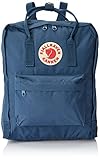
The Fjallraven Kanken is the other bag pick worth mentioning here. It's not a fashion piece in the traditional sense — it's a Swedish school backpack that's been in production since 1978 — but it has the same quality the best versatile sneakers have: it makes everything look more deliberate. The boxy silhouette and waxed finish read as considered next to both casual and dressed-down work outfits. It's also infinitely practical, which is more than you can say for most fashion-adjacent picks.
What to actually skip (this is the part people ignore)
The skip list is where this kind of guide earns its keep, because the temptation is always to tell you what to buy rather than what to avoid. So here is the honest version:
Skip anything with a visible air unit, gel pod, or foam technology visible in the sole. These are running shoes in the functional sense — designed for pavement and performance — and they read that way. Wearing them with chinos or a dress creates a disconnect that no amount of styling fixes. The shoe announces "I prioritize cushioning over aesthetics." Sometimes that's fine. It's not what we're looking for here.
Skip slip-ons for this specific purpose. Slip-on sneakers are great and comfortable and have their place. That place is not "goes with everything." They read as casual in a way that creates a ceiling — they work with very casual outfits and fail with anything more dressed. The lace-up construction is doing functional work in the silhouette.
Skip anything described as "streetwear" or "hype" adjacent. Not because there's anything wrong with it, but because a shoe designed to be noticed cannot simultaneously disappear into an outfit. These are statement sneakers. The whole point is that they're the focal point. You can't make a focal point go with everything — that's a category error.
Skip heavily logoed pairs even from "the right brands." A Nike Air Force 1 with the standard swoosh is one thing. The same shoe with three logos, a metallic Swoosh, and a collaborator's branding in four places is another thing entirely. Branding creates context. Too much branding creates the wrong context.
Skip anything with dramatic color-blocking. Two-tone soles, color-pop eyelets, contrasting patches — all of these make a shoe harder to pair. The shoe is making decisions for your outfit before you've even decided what to wear. The most versatile shoe is the one that leaves those decisions to you.
The one non-sneaker that answers the same question
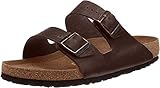
This will make some people mad: the Birkenstock Arizona is better at "goes with everything" than most sneakers. Hear us out. In the warmer months, the Arizona works with shorts, linen trousers, dresses, skirts, and even some tailored pieces in a way that few sneakers match. The silhouette is so specific and so established that it reads as intentional in almost any context. It's also the rare shoe that gets better with age — the footbed molds to your foot, the leather softens, and after a season it looks like a shoe that has history, not one that was just purchased.
The caveat is obvious: they don't work in cold weather, with socks is a whole separate aesthetic conversation (we are pro sock-Birkenstock, for the record), and they have a specific visual weight that doesn't work with every outfit the way a true neutral sneaker does. But if you're building a small capsule wardrobe of shoes that genuinely cover the most ground with the least number of pairs, the Arizona earns a slot that no sneaker can fully replace.
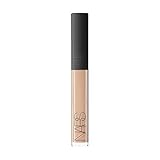
While we're rounding out a style toolkit: if your shoes are doing the work of making an outfit look considered, it's worth making sure the rest of the details aren't undermining them. A good concealer that matches your skin exactly is the equivalent of a clean sole — it reads as effort that doesn't look effortful. The NARS Radiant Creamy Concealer is the one editors and makeup artists keep reaching for because the formula doesn't settle or oxidize, which means it looks like your skin at its best, not like coverage. That's the same quality we're looking for in the shoes.
Frequently asked questions
What color sneaker actually goes with the most outfits?
White, followed by cream/off-white, followed by a medium grey. White works because it reads as clean rather than colorful — it's a neutral in the truest sense. Off-white is slightly more forgiving with beige and earth tones where a bright white can clash. Grey splits the difference between the two. Black is often cited as versatile but it's actually narrower — it works with dark outfits and creates a break with lighter ones. The conventional wisdom on black shoes is more limited than people think.
Can sneakers work for a business casual office?
Yes, with the right pair and specific outfit math. White leather low-tops with slim trousers and a button-down or blazer read as business casual in almost any environment that isn't formal. The key is that the rest of the outfit has to carry more of the dressed-up weight — the sneaker is trading formality for freshness, which only works if the other pieces are doing their job. A hoodie and sneakers is casual. A blazer and the same sneakers is business casual. The shoe didn't change; the context around it did.
How do you keep white sneakers actually white?
Three things: clean them immediately when they get dirty (dried stains set into leather and canvas and are very hard to remove), use a dedicated sneaker cleaner rather than soap and water (which can leave watermarks on leather and yellow canvas), and store them with cedar shoe trees or stuffed with paper to maintain their shape. For leather, a light application of leather conditioner every few months keeps the upper from cracking and makes it easier to wipe clean. For canvas, a water-repellent spray at purchase buys you significant time.
Is it worth spending more than $150 on a versatile sneaker?
It depends on what you're getting for the premium. Above $150, you're generally paying for leather quality (real full-grain vs corrected grain), construction (cemented vs Blake-stitched), and in some cases brand cachet. The leather quality matters for longevity and how the shoe ages — a better leather upper develops a patina rather than just creasing badly and peeling. If you wear the shoes several times a week for three to five years, the math on a $250 pair versus a $100 pair that needs replacing every eighteen months is straightforward. If you're testing whether this silhouette works for your life, start at the lower end.
Do sneakers work with dresses and skirts?
Yes, and they often work better than you'd expect because of the contrast they create. A fitted midi dress with a white leather low-top reads as fashion-intentional in a way that the same dress with heels doesn't — the shoe signals confidence and considered-ness rather than formality. The silhouettes that work best are slim low-tops (not chunky runners) with any hem length that shows ankle, and slim runners with full midi or maxi lengths where the shoe peeks out at the bottom. Avoid very thick soles with flowing dresses — the visual weight mismatch is jarring.
What's the one mistake people make when trying to style sneakers with everything?
Buying a sneaker they love in isolation and then trying to make the rest of their wardrobe work around it. The versatile sneaker should be invisible — a supporting actor, not the lead. If you're building an outfit around the shoe, you've already lost the "goes with everything" game. The right approach is the reverse: figure out what you already wear most, then find a shoe that disappears into those outfits without friction. That usually means lower profile, less color, less branding, and less technology than the pair you were initially excited about.