If your dog finishes a cup of kibble in the time it takes you to set the bowl down and straighten up, you have a gulper. And if you have a gulper, you have probably googled "dog bloat" at least once at 11pm in a mild panic. The slow feeder category exists specifically for this problem — and it ranges from genuinely clever to completely useless. Some "slow feeders" slow dogs down for exactly four meals before the dog figures out the pattern and starts scarfing again. Others are the real deal. Here's how to tell the difference, and what's actually worth buying.
Why fast eating is a real problem (not just annoying)
Speed eating in dogs causes two categories of issues. The first is the one everyone knows: your dog eats so fast they immediately throw it back up on the rug you just steam cleaned. Lovely. The second is more serious: gastric dilatation-volvulus, better known as bloat. GDV happens when a dog's stomach fills with gas and can twist on itself — it's a life-threatening emergency that requires immediate surgery. Deep-chested breeds (Great Danes, German Shepherds, Standard Poodles, Weimaraners, Boxers) are at highest risk, but any dog can develop it.
The mechanism isn't fully proven, but the working theory is that gulping air along with food rapidly contributes to stomach distension. Slowing down the eating pace reduces air intake and gives the stomach time to process incrementally. This is why slow feeders aren't just a fun enrichment toy — for a dog that scarfs meals, they're a legitimate health intervention.
Cats get this too, by the way. Cats that wolf down food and then immediately vomit on your pillow (sorry, the couch, which is somehow worse) are typically doing it because they ate too fast. Slow feeders and puzzle feeders work for cats just as well as dogs, and they address the boredom-eating pattern that's common in indoor cats.
Does slow feeding actually help bloat?
The short answer: yes, for gulpers, it's a meaningful risk reduction — not a guarantee, but a real improvement. A 2020 study in Frontiers in Veterinary Science found that eating speed was associated with GDV risk, and that interventions that slowed eating pace reduced the risk. Multiple veterinary behaviorists and internal medicine specialists recommend slow feeders as first-line management for fast eaters, particularly in large and giant breeds.
What slow feeders won't do: they won't eliminate the risk entirely, because GDV has multiple contributing factors (genetics, anatomy, exercise timing, stress). If you have a deep-chested breed and the bloat risk is significant, talk to your vet about prophylactic gastropexy — a procedure that tacks the stomach to the abdominal wall and prevents the twisting component of GDV. But for the day-to-day speed-eating problem, a good slow feeder is one of the cheapest, easiest interventions available.
The types of slow feeders — and which actually work
The market broadly has three types, and they're not equally effective.
Maze/ridge feeders: These are the flat or bowl-shaped feeders with raised ridges or a maze pattern the dog has to work around to get to the food. They're the most common type, and they work reasonably well for most dogs for most of the feeder's life. The downside is that food gets trapped in the grooves and starts to get funky if you're not diligent about washing. Look for dishwasher-safe versions. The Outward Hound Fun Feeder is the most widely recommended option in this category — it's around $12, has multiple ridge patterns in different difficulty levels, and holds up well to daily use. The spiral pattern is harder than the star pattern, so if you have a dog that's solved basic slow feeders before, start there.
Puzzle feeders: More complex, more expensive, and more engaging. Instead of just routing food around ridges, the dog has to move pieces, flip covers, or slide compartments to access kibble. The PAW5 Rock'N Bowl falls somewhere between these two categories — it's a slow feeder with a rock-and-roll motion that means the bowl itself moves while the dog eats, adding a balance challenge. Puzzle feeders slow eating more than maze feeders and add mental stimulation, which matters especially for working breeds. The tradeoff is they're harder to clean and some dogs just get frustrated and walk away.
LickiMats and spreader feeders: These are flat mats with a textured surface where you spread wet food, peanut butter, Greek yogurt, or pumpkin purée. The dog licks it off slowly over five to fifteen minutes. LickiMats are great for supplementing dry food with wet, for giving medication, for dogs who are anxious (the licking motion is genuinely calming), and for cats who eat too fast from bowls. They're not ideal as the sole feeding method for a dog who eats two cups of dry kibble twice a day, but as a supplement or for occasional meals they're excellent. Look for the LickiMat Wobble (has a suction-cup base) or the regular LickiMat Classic — both freeze well if you want to make a frozen treat that lasts even longer.
The enrichment angle: feeding as mental exercise
Here's the piece of the slow feeder conversation that doesn't get enough attention: you're not just slowing down a meal, you're giving your dog's brain a job. Dogs, particularly working breeds, were bred to problem-solve for their food. A bowl of kibble that disappears in 45 seconds gives them exactly none of that. A puzzle feeder or slow feeder that takes 10–15 minutes to work through is the equivalent of a short training session in terms of mental engagement. And a mentally tired dog is a well-behaved dog.
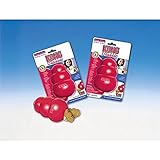
The KONG Classic is the gold standard here. It's not technically a slow feeder for kibble — you fill it with a mix of kibble, peanut butter, banana, pumpkin, or wet food, and freeze it overnight. The dog works at it for 20–40 minutes trying to get the food out. It's a completely different pace than a bowl, and it doubles as a chew toy, anxiety management tool, and crate training aid. Every dog should own at least two so you can have one freezing while one is in use.
For cats: the boredom-eating and speed-eating fix
Cats who eat too fast, throw it back up immediately, and then ask to be fed again five minutes later are running a pretty successful con, but the underlying issue is real — they ate too quickly for the stomach to register fullness. Puzzle feeders and LickiMats help with this for cats too, but the underrated cat solution is changing how food is delivered entirely.
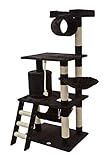
Indoor cats who are fed from a single bowl twice a day are bored, sedentary, and often overeating from lack of stimulation. Splitting meals into smaller portions spread in multiple locations, using a puzzle feeder, or hiding kibble in a LickiMat gets them moving and extends mealtime naturally. A cat tree gives them vertical territory, which reduces stress-eating behavior and gives indoor cats the perching and climbing outlets their brains need.
What not to bother with
A few slow feeder categories are mostly marketing.
Tennis-ball-in-the-bowl trick: It works, sort of, but most dogs figure out how to push the ball to one side within a week. Use a ball designed to stay in place, or just buy a real slow feeder. The $12 investment pays off faster than you'd expect.
Automatic feeders set to single large meals: These solve convenience, not speed. A timed feeder that drops a full portion at once doesn't slow eating — it just shifts the speed-eating to a different time. If you use an automatic feeder, set it to portion out multiple smaller meals across the day instead.
Elevated bowls for bloat prevention: This is counterintuitive, but raised bowls are no longer recommended as a bloat preventative — the research actually suggests they may increase risk in large breeds. The original recommendation was based on older, weaker studies. If you already use an elevated bowl for comfort reasons (very large dogs, dogs with arthritis in their neck), that's fine, but don't buy one specifically for bloat prevention.
Cheap maze feeders with very shallow ridges: If the food ridges are less than about half an inch tall, most dogs root them out in 90 seconds. Look for feeders where the kibble visibly gets lodged and has to be worked out, not just nudged.
The setup that actually works long-term
Here's the honest recommendation: use two or three feeders in rotation so your dog doesn't learn a single pattern. Start with an Outward Hound Fun Feeder or PAW5 Rock'N Bowl for daily kibble meals. Add a frozen KONG two to three times a week as a supplement — stuff it with whatever's in the fridge (a spoonful of peanut butter sealing the small hole, kibble packed in, wet food or banana as the top layer), freeze overnight, and pull it out at mealtime instead of a bowl. Rotate in a LickiMat for wet food days or medication delivery. Between the rotation and the variety of challenge, the dog stays engaged longer and never fully "solves" the system.
For cats, same principle: LickiMat for wet food, puzzle feeder or small bowl spread in multiple spots for dry kibble, and a cat tree so they're not just loafing on the couch between meals. The combination of food enrichment plus environmental enrichment is what actually changes behavior long term — the slow feeder alone does the job at mealtime, but the cat tree and territory access addresses the root boredom that drives anxiety eating.
FAQs
Do slow feeders actually help with bloat?
Yes, for dogs that gulp food, slow feeders reduce the amount of air swallowed during eating, which is one of the contributing factors to GDV (bloat). They don't eliminate the risk entirely — GDV has multiple causes including genetics and anatomy — but the research supports eating speed as a meaningful risk factor, and slowing it down as a real intervention. Deep-chested breeds especially benefit, and for them you should also have a conversation with your vet about prophylactic gastropexy.
My dog figured out the slow feeder — now what?
Rotate to a different feeder pattern or switch to a puzzle feeder with moving parts. Dogs learn maze patterns quickly; variety keeps them challenged. You can also try feeding in a muffin tin, scattering kibble in the grass outside, or using a frozen KONG — the texture and format change is what resets the challenge.
Are slow feeders good for cats too?
Yes. Cats who vomit shortly after eating often do so because they ate too fast. LickiMats work especially well for wet food, and puzzle feeders designed for cats extend mealtime naturally. Splitting dry kibble into smaller portions placed in multiple locations also slows eating and adds movement.
How do I clean a slow feeder?
Most plastic and silicone slow feeders are dishwasher safe on the top rack. If you're washing by hand, a small brush (a bottle brush or an old toothbrush) gets into the ridges that a sponge won't reach. Wash after every wet-food use; for dry kibble, every two to three days is reasonable. Silicone LickiMats can go in the dishwasher and also freeze flat, which makes cleanup easier.
What size slow feeder do I need?
Most slow feeders list the recommended breed size or cup capacity. As a rule: the bowl should hold the dog's full meal with a little room to spare, and the ridge height should be proportional to the dog's snout. A deep-ridged feeder designed for a Lab is frustrating and useless for a small dog with a tiny muzzle. Outward Hound offers multiple sizes — the "mini" for small dogs and the "regular" for medium to large dogs is a good starting split.
Can I use a slow feeder for raw or wet food?
Yes, though it gets messier. LickiMats are specifically designed for wet, spreadable food and work beautifully with raw, wet food, or mixed meals. Maze feeders with deeper ridges also handle wet food, but they take more effort to clean — the grooves trap wet food and need to be scrubbed out promptly. Silicone feeders are easier than plastic for wet food cleanup.
Should I use a raised bowl with a slow feeder?
Elevated bowls are no longer recommended for bloat prevention — recent research suggests they may actually increase risk in large breeds, which is the opposite of the old conventional wisdom. For comfort and ergonomics in very large or arthritic dogs, elevation still makes sense, but don't add it specifically for bloat. A slow feeder at floor level is the better intervention.