Most sleep masks are a lie. A thin piece of fabric with a cute print and a dubious elastic band, sold on the promise of better sleep, delivering instead a slit of streetlight right across your field of vision the moment you roll over. The problem isn't the concept — total darkness genuinely matters for sleep quality — the problem is that 80% of what's marketed as a "sleep mask" is closer to a silk eye-decoration than a light-blocking tool.
Here's what I've learned testing them: the difference between a mask that works and one that doesn't isn't the material, the price, or the brand. It's the contour. A flat mask presses against your eyelids, lets light bleed in from every edge, and creates enough pressure on your eyes to make you feel like you're being gently interrogated. A contoured mask — one that's shaped around your eye socket — sits off your eyes entirely, seals at the nose bridge and temples, and creates actual darkness. That's the whole game.
This guide covers the ones worth buying, the specific failure modes of cheap masks, why the full sleep environment matters, and the supporting gear that gets your room close enough to a sensory deprivation chamber that your nervous system finally lets go.
Why total darkness actually matters (and why your mask probably isn't delivering it)
Your skin has light-sensitive cells. Not a metaphor — actual intrinsically photosensitive retinal ganglion cells that respond to light even when your eyes are closed. These cells connect directly to your suprachiasmatic nucleus, the internal clock that regulates melatonin release. Even low-level light exposure through thin eyelids signals your brain that morning is approaching, suppresses melatonin, and nudges your body toward wakefulness.
The research here is pretty unambiguous: sleeping in a darker room reduces nighttime awakenings, increases time in slow-wave and REM sleep, and improves how rested you feel in the morning. A sleep mask is one of the cheapest ways to approximate that darkness without replacing every window treatment in your apartment.
The failure mode of most cheap masks: they're cut flat, which means they press on your eyelids, and the nose bridge gap lets in a crescent of light. You can feel the pressure, you can see the glow, and you spend the night adjusting the thing instead of sleeping. The answer is a mask with a 3D contoured shell — shaped like a shallow eye cup — that creates a pocket of darkness without touching your eyes at all.
The contoured masks worth buying
The masks below all share two properties: they block light from the sides and nose-bridge, and they do it without pressing on your eyeballs. The eye cup design means you can open your eyes inside the mask, which sounds trivial but makes a real difference in how relaxed your face is during sleep.
Manta Sleep Mask. The one that redefined what a sleep mask can be. 100% blackout, adjustable eye cups that position independently over each eye, and a modular strap that doesn't tangle in your hair. The eye cups are wide enough to work with any face shape. It's $45, which is more than you'd spend on a thin mask — and also more than you'd spend on a month of melatonin supplements that don't work as well as darkness. The investment calculus is clear.
Alaska Bear Sleep Mask. The best budget-to-performance ratio in the category. Natural mulberry silk, contoured nose piece that closes the gap where most flat masks fail, and a soft elastic that doesn't dig in on side sleepers. At $10–15 it's not going to achieve the same total-darkness result as the Manta — no silk mask will — but it's dramatically better than a flat polyester mask, and it's washable.
MZOO Sleep Eye Mask. The contoured shell pick that competes directly with Manta at about half the price. Memory foam padding around a hard plastic eye cup, adjustable strap, total blackout when positioned correctly. The trade-off: it's slightly heavier and bulkier than silk options, which bothers some side sleepers. For back sleepers, this is the best value.
The full sleep environment — masks aren't the only lever
A sleep mask handles the light on your face. But if your room is an oven in July, or your neighbor is setting a personal best on their nightly renovation project, or your sheets feel like sandpaper, the mask is doing 20% of the work. Here's the rest of the toolkit.
Blackout curtains. The investment that actually seals the room. A good contoured mask blocks direct light, but a room full of ambient glow still registers — and it means your mask has to work harder. NICETOWN's blackout curtains use triple-weave fabric that genuinely blocks 95%+ of incoming light, and hung at ceiling height (the only correct way), they make a bright city apartment feel like a countryside bedroom at 2am. They also reduce noise and regulate temperature.

Weighted blanket. The second most evidence-backed sleep intervention on this list. Deep pressure stimulation — the mechanism of a weighted blanket — activates the parasympathetic nervous system. Your heart rate and cortisol drop. It replicates the sensation of being held, which turns out to be something human nervous systems find extremely useful for switching off. The Bearaby is the one worth buying: organic cotton, chunky knit structure that lets air through, and available in weights from 15–25lbs. Choose 10% of your body weight as a starting point.

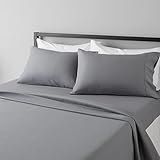
Sheets that don't fight you. Cool, breathable sheets are the unsung variable. If your bedding traps heat, your core temperature can't drop the 1–2 degrees it needs to initiate sleep onset. Microfiber sheets are warmer and less breathable than cotton — fine in winter, counterproductive in summer. The Amazon Basics microfiber set is great value for cooler months; if you sleep warm, get the percale-weave cotton version instead.
What to skip: the flat-mask problem
Let's be specific about what doesn't work, because the sleep mask market is 80% this category.
Thin satin or polyester flat masks. The ones that come in 3-packs for $12. They press on your eyelids, the nose bridge gap lets in a crescent of light, and the elastic digs into your hair. They work for maybe two nights before the novelty wears off and you start sleeping without them again. If this is your current relationship with sleep masks, you haven't tried a real one — you've tried a flat piece of fabric.
Travel masks with padded flat panels. Better than the above, but still fundamentally the same shape problem. The padding means less eyelid pressure, but the flat construction still can't seal the light gap at the nose bridge and sides. These work for a 4-hour flight when you're exhausted and desperate; they don't work for optimizing an 8-hour night.
Anything with a rigid frame that doesn't adjust. Eye sockets are not standardized. A fixed-position eye cup that works for someone with a wider face will leave gaps on someone narrower, and vice versa. Adjustability isn't a premium feature — it's a functional necessity. The Manta's independently adjustable cups are the correct solution to this.
Cooling gel masks. For migraines, yes. For sleep, no. The gel inserts get warm within 20 minutes and then you're sleeping under a warm wet compress. Cool washcloth energy, not darkness delivery.
Blocking sound: the other half of the equation
Light and sound are the two main sleep disruptors, and they're usually tackled together. Once you've handled the light, the noise problem becomes more obvious — and the tools are different depending on whether you want passive silence or active masking.
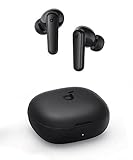
Sleep earbuds for white noise. The Soundcore P3i earbuds sit close enough to flush in the ear that they're usable on a pillow — most earbuds aren't. Load a white noise or rain app, set a 45-minute sleep timer, and you've handled the sound layer. They're not marketed as sleep earbuds but they're one of the best options for people who want noise masking without the investment in a dedicated device.
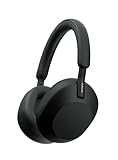
Over-ear headphones for white noise sessions. If you read or wind down before sleeping, over-ear noise-canceling headphones deliver a deeper silence than earbuds can. The Sony WH-1000XM5 has best-in-class ANC and 30 hours of battery — you can run white noise through them, hear nothing from the outside world, and your brain gets the cue that the day is done. Not practical for actual sleeping (you can't sleep on your side in them), but transformative for the wind-down hour before.
The 15-minute sleep environment audit
If you want to actually improve sleep quality rather than collect sleep products, run through this checklist once and fix what you find:
- Light sources: Stand in your bedroom at night with the lights off. Note every glow: LED indicators on electronics, streetlight through curtains, charging cables, digital clocks. Cover or remove each one. The goal is "can't see your hand in front of your face."
- Temperature: The ideal sleep room temperature is 65–68°F. If you can't control your HVAC that precisely, a ceiling fan creating airflow is the next best thing. Heavy blackout curtains also reduce solar heat gain during the day, which matters for evening room temperature.
- Sound floor: Note the baseline sound in your room. Traffic, a noisy building, a partner who breathes loudly — identify the sources and match your intervention: earplugs for high-frequency noise, white noise for variable sound environments, earbuds for complex noise situations.
- Screen light: The biggest melatonin suppressor most people ignore. Blue-spectrum light from phones, tablets, and TVs delays sleep onset. Enable Night Shift, lower brightness, and consider stopping screen use 30 minutes before sleep. The sleep mask can't compensate for two hours of blue light exposure beforehand.
- Mask fit: Test your current mask: can you see anything with it on in a dark room? Does it press on your eyelids? Does it slide off your nose when you move? If yes to any of these, you need a contoured replacement.
Most sleep problems aren't chemistry problems — they're environment problems. The above five things, addressed properly, will improve your sleep more than any supplement stack.
What makes a sleep mask actually block light?
Two things: contoured shape and edge sealing. A flat mask sits against your eyelids and leaves gaps at the nose bridge and sides where light bleeds in. A contoured mask with a 3D eye cup sits off your eyes entirely and seals against your face at all edges. The Manta and MZOO are the benchmark here — they create genuine blackout conditions regardless of how bright your environment is.
Is sleeping in darkness actually better for you?
The research is consistent: yes. Light exposure during sleep suppresses melatonin, increases nighttime cortisol, and fragments sleep architecture. Even low-level ambient light — the kind you might not consciously notice — affects REM duration and slow-wave sleep. A properly dark room consistently correlates with better subjective sleep quality and improved morning alertness.
Are weighted blankets worth it?
For most people who have tried one: yes. The deep pressure stimulation mechanism is well-documented in anxiety and sensory processing research, and many people report faster sleep onset and fewer nighttime awakenings. The caveat is weight selection — too light and you don't feel the benefit, too heavy and it becomes uncomfortable. Start at 10% of body weight and adjust. The Bearaby's open-knit construction also prevents the overheating problem that plagued earlier weighted blankets.
Can I use sleep earbuds if I'm a side sleeper?
Most in-ear earbuds create pressure when you roll onto them, which wakes you up. The best options for side sleepers are earbuds that sit very flush with the ear (the Soundcore P3i qualifies), or purpose-built sleep headphones that use flat speakers embedded in a fabric headband — search "SleepPhones" for that format. Bone conduction headphones are another option but the audio quality is limited.
How do I stop my sleep mask from sliding off?
Three causes: elastic that's too loose, a mask that's too wide for your head, or sleeping in a position that catches the strap. First, adjust the strap to be snug but not tight — the mask should stay put with gentle pressure. Second, consider a mask with a Velcro or clip-based strap rather than fixed elastic (the Manta has this). Third, position the strap lower on your head — across the back of the head rather than at the crown — for better stability on side sleepers.
What should I do about light coming through my curtains?
There are two failure modes: light bleeding around the edges of curtains, and light transmitting through the fabric. For edge bleed, hang your curtain rod wider than the window and use blackout curtains long enough to reach the floor — overlap is your friend. For fabric transmission, the only fix is true blackout fabric with a tight weave (the NICETOWN triple-weave is the standard recommendation). Thermal-backed curtains can look blackout but often transmit light through imperfections in the backing.
Does room temperature really affect sleep quality?
Significantly. Core body temperature needs to drop 1–2 degrees Fahrenheit to initiate sleep onset. If your room is too warm, your body struggles to make that drop and you take longer to fall asleep, wake more frequently, and get less deep sleep. The research-backed optimal range is 65–68°F. Cooling mattress toppers, breathable percale sheets, and a ceiling fan all help if you can't control the HVAC directly.