Most self-help books get read in a burst of motivation, shelved, and forgotten by Thursday. The audiobook version of that cycle is: downloaded, played for 20 minutes during a commute, abandoned at chapter three. But here's the thing — a small category of self-help audiobooks actually changes how you operate. Not because they're magic, but because the narration, the pacing, and the way audio forces you to actually sit with an idea instead of skimming past it creates a different kind of retention. This list is those books. Every one of them is available on Audible, and if you're not already a member, the free trial is the obvious way in.
30 days free, one credit to use on any title below, cancel anytime.
Try Audible Free for 30 Days →
Why audiobooks work better for self-help (specifically)
This isn't true for every genre. Fiction audiobooks are hit-or-miss depending on the narrator. Textbooks are basically useless in audio form. But self-help? Self-help audio hits differently. First, the pacing is forced on you — you can't skim to the summary. Second, a lot of the best self-help authors narrate their own books, and hearing someone explain their framework in their own voice carries authority that a page of text can't replicate. Third, the format pairs perfectly with activities that would otherwise be dead time: commutes, workouts, dishes, folding laundry.
The foundational listen: Atomic Habits
James Clear narrates Atomic Habits himself, and it shows. The book is already tight on the page — no wasted chapters, no filler — and in audio form that tightness becomes clarity. The core framework (habits are the compound interest of self-improvement, identity-based change beats outcome-based change) lands harder when you're walking than when you're reading on a couch. Under six hours. If you listen to nothing else on this list, listen to this one.

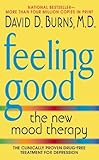
For anxiety and the inner critic: Feeling Good
David Burns wrote Feeling Good in 1980 and it has outsold every self-help book published since. It's a CBT manual disguised as a self-help book, and in audiobook form it works as a cognitive toolkit you can apply in real time. Therapists still assign this book. That's a meaningful signal. Fair warning: longer and denser than the others. Treat it as something you actually sit with, not commute fodder.
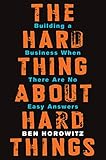
For founders and people in the hard middle of something: The Hard Thing About Hard Things
Ben Horowitz narrates his own book and is genuinely good at it. The dry humor lands, the vulnerability in the harder chapters comes through. This is not a motivational book. It's a book about how to make difficult decisions under uncertainty. Even if you've never run a company, the mental models translate to any high-stakes situation where there is no clean answer.
For actually executing on your goals: Full Focus Planner
Michael Hyatt's Full Focus system gets more practical airtime in productivity circles than almost any other framework. The principle: most planning systems fail because they conflate the urgent with the important. In audio form, the guided explanations feel more like coaching than reading. This pairs well with Atomic Habits — listen to Hyatt for the planning structure; use Clear's framework to make the planning habit automatic.

What to skip: the audiobooks that don't translate
Books that are basically worksheets. Anything that requires you to fill in blanks — you will hit a "now take out your journal" prompt every 12 minutes. Better read in print.
Books where the author is a bad narrator. Always check the sample before committing a credit. If it feels like a presentation at an all-hands, skip it.
Books over 9 hours in the genre should be approached with skepticism — a 350-page self-help book rarely has 350 pages of ideas. In print you can skim. In audio you cannot.
The Miracle Morning. The core idea is fine. The execution is repetitive and the narration is aggressively enthusiastic in a way that wears thin. Read a summary instead.
30 days free, one credit included — use it on any title above. Cancel before the trial ends and pay nothing.
Start your free Audible trial →
Is Audible worth it as a monthly membership?
If you listen to two or more books a month, yes. The monthly membership gives you one credit (~$15 value) plus access to the Plus Catalog (thousands of included titles). If you listen to one book a month or fewer, buying individual titles is usually cheaper.
Do audiobooks count as "really reading" the book?
Research finds retention is comparable for narrative and concept-driven content, which is exactly what self-help is. For ideas-first self-help, audio is at minimum equivalent to reading.
What's the best way to actually retain what you hear?
Three things: listen at 1.25x–1.5x speed, use the bookmark feature when something lands, and immediately apply one small thing from what you heard before the next session.
Which of these is best for someone who never finishes self-help books?
Atomic Habits. It's under six hours, the ideas arrive in order, and James Clear's narration is engaging without being preachy.
Are there good free self-help audiobooks?
Yes — Audible's Plus Catalog has a rotating selection of self-help titles at no additional cost. Libby (your library card) also has a large audiobook catalog with zero cost.
What speed should I listen at?
Start at 1.0x and go to 1.25x after 15 minutes if it feels slow. Most people land at 1.5x for non-fiction. Author-narrated books often benefit from staying closer to 1.25x.