Every road trip gear list on the internet is basically the same list, and that list is too long. Trunk organizer systems. A dedicated console caddy. A second cooler for "just drinks." A phone mount, a backup phone mount, a car diffuser, a set of seatback tablet holders nobody in the car will use past hour two. You load the trunk like you're prepping for a six-month overland expedition and then drive four hours to your cousin's lake house.
- Top pickAnker 737 PowerCore 24K~$130
- Best budgetBagsmart Hanging Toiletry Bag~$25
Trunk space is finite and packing time is finite, so the actual question isn't "what road trip gear exists" — it's "what road trip gear is worth the space it takes up." That's a much shorter list. This is it: the handful of things that get used on every single trip, plus the honest reasoning for why the rest of the category is mostly noise.
The thing that actually saves a road trip: real charging capacity
Here's the scenario that ruins a road trip faster than bad weather: it's hour six, everyone's phone is at 12%, the map app is the only thing keeping you off a closed highway, and the car charger you bought for $8 is trickling power slower than the phones are draining it. A 12V car charger is not the same thing as backup power. It's fine for topping off. It is not enough when four people are all navigating, streaming, and filming at the same time.
What actually solves this is a real power bank — not the little lipstick-sized one in your bag for a coffee shop emergency, but something with enough capacity to charge multiple devices multiple times, and enough output to fast-charge a laptop if you're working from the passenger seat on a long haul. The Anker 737 is the one that earns its space here. It's not small, and that's the point — it has the capacity to actually matter.
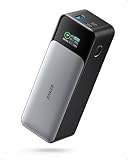
The honest case for spending real money here: a $20 power bank sounds like the same idea, but the output is usually capped low enough that it's charging one phone slowly while draining itself in the process. The 737's 140W output means it can top off a laptop, which is the difference between "we can still work at the rest stop" and "we're driving in silence because everyone's screen is dead."
The unglamorous stuff that actually saves a trip
Two items in this category don't photograph well for a gear roundup and don't feel exciting to add to a cart, which is exactly why they get skipped — and exactly why skipping them is a mistake.
First: the drink situation. Most families overpack the beverage category. A second cooler "just for drinks" sounds efficient and instead becomes a second thing to load, unload, drain, and dry. What actually works better is one good insulated tumbler per person that lives in the cupholder for the entire trip, refilled at gas stations, instead of a cooler full of individually wrapped bottles sweating onto the upholstery.
One tumbler per person, filled with ice at the first gas stop, refilled at every stop after that. It's less stuff, less condensation in the car, and — unlike a cooler — it doesn't take up a cubic foot of trunk space you need for actual luggage.
Second: tire pressure, the thing nobody checks until it's a problem. Long highway stretches, temperature swings between morning and afternoon, and a trunk loaded heavier than usual all change your tire pressure in ways you won't notice until a dash light comes on somewhere with no gas station in sight. A compact 12V tire inflator plugs into the same outlet as your phone charger, checks and fills pressure in a few minutes, and turns "there's a slow leak and we're two hours from the nearest shop" from an emergency into a five-minute stop. It's the least exciting item on this list and arguably the most useful one.
Packing for one-night stops without unpacking the whole trunk
The specific road trip problem packing cubes solve isn't the drive — it's the overnight stop. You pull into a motel at 9pm, you're exhausted, and you need exactly tonight's clothes and tomorrow's without digging through three duffel bags stacked on top of each other in the trunk. A couple of packing cubes, one per person, holding just the next 24 hours of stuff, means you grab one bag and you're inside in under a minute.
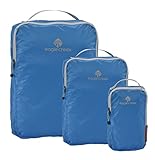
Pair it with a compact toiletry bag that hangs instead of sitting on a questionable motel counter, and the entire overnight-stop routine goes from a 20-minute ordeal to something you barely think about.
If the dog's coming, this earns its space too
A road trip with a dog in the back seat changes the packing list in one specific way: heat management. Car interiors get hot fast even with the AC running, especially in a back seat with less airflow, and a panting, overheated dog is a worse travel companion than one lying on something cool. A self-cooling pad — no batteries, no plug, just gel or fiber that activates from body weight — takes up almost no trunk space and makes a real difference on anything longer than a two-hour drive.
What to skip, and the short list if you're packing tonight
This is the part most road trip lists skip entirely, because "don't buy this" doesn't generate affiliate revenue. But the whole premise of this article is trunk space is finite, so here's what to leave off the list:
- Trunk cargo organizer systems. The collapsible-crate style organizers look great in product photos and in practice become a fixed structure that dictates how everything else has to be packed around it. A couple of soft duffel bags flex to fill whatever space is actually available. A rigid organizer doesn't.
- A second, dedicated cooler. Unless you're camping and need to keep raw food cold for days, one cooler (or the tumbler approach above) covers it. A second cooler "just for snacks" is a cooler that's two-thirds empty and taking up the space a real bag needed.
- Novelty phone mounts with extra features. Wireless charging phone mounts that clip to the vent sound efficient, but most of them charge slower than a cable, block the vent's actual airflow, and fail within a year. A $10 basic mount and the cable you already own does the job better.
- Seatback organizers with a dozen pockets. They look organized in the listing photo and turn into a junk drawer strapped to the back of a seat within one trip. If kids are along, a single soft pouch with their specific stuff beats an elaborate pocket system nobody refills correctly.
- A dedicated car trash can. A plastic grocery bag clipped to the gear shift or door handle does the exact same job as the $18 branded version, and you throw it away with the trash still in it instead of washing it out at every stop.
None of these are bad products exactly. They're just solving a problem you don't have, at the cost of space you do need. The test that actually matters before buying anything for a road trip: will this get used on every single trip, or will it get used once and then live in the trunk as dead weight for the next two years? If the honest answer is "once," it doesn't earn the space.
If you're staring at a trunk and a loose pile of "road trip stuff" right now, here's the actual priority order: charging capacity first, because a dead phone with no navigation is the fastest way to turn a good trip into a stressful one. Tire inflator second, because it's the cheapest insurance against the one thing that can genuinely strand you. Packing cubes and a toiletry bag third, because overnight stops are where trip fatigue actually shows up. A real tumbler instead of a cooler of loose bottles fourth. And if there's a dog coming, the cooling pad is non-negotiable in anything hotter than mild spring weather. That's five categories, six products, and every one of them gets used on the actual drive — not just packed for the drive and forgotten in a bag until you unpack at home and wonder why you brought it.
FAQs
What's the single most important thing to bring on a road trip?
A real power bank with enough capacity and output to charge multiple devices more than once. A dead phone means no navigation, no roadside help lookup, and no way to reach anyone if something goes wrong. Everything else on a road trip packing list is a convenience. Charging is closer to a safety item.
Do I actually need a portable tire inflator?
Yes, more than most drivers assume. Long highway miles, temperature swings, and a heavier-than-usual load from luggage all shift tire pressure. A compact 12V inflator turns a slow leak into a five-minute fix instead of a roadside emergency, and it's small enough to live in the glovebox permanently, not just during road trips.
Is a trunk organizer worth buying for a road trip?
For most people, no. Rigid crate-style organizers force everything else to pack around their fixed shape, which usually wastes more space than it saves. Soft duffel bags and packing cubes flex to fill whatever room is actually available in the trunk, which is almost always more efficient for a multi-day trip.
How do I keep a dog comfortable on a long car ride?
Airflow and a cool surface matter more than most people expect. A self-cooling gel or fiber pad that needs no batteries or refrigeration gives the dog a comfortable spot in the back seat, and it rolls flat for storage when not in use. Combine it with regular stops for water and a stretch every two to three hours.
Should I bring a cooler or just insulated tumblers?
Unless you're keeping raw food cold for camping, insulated tumblers usually beat a cooler for a standard road trip. One tumbler per person, refilled with ice at gas stops, takes up a fraction of the space a cooler does and skips the condensation and drainage hassle entirely.
What road trip gear is most likely to be a waste of money?
Novelty phone mounts with extra built-in features, elaborate multi-pocket seatback organizers, and a second dedicated cooler are the three most common overspends. They solve problems most trips don't actually have, and they take up space that better-used items need.
How much power bank capacity do I actually need for a road trip?
Look for at least 20,000mAh if more than one device needs charging, and check the wattage output, not just the capacity. A high-capacity power bank with low wattage output still charges slowly. Something in the 100W+ range can fast-charge a phone and even top off a laptop, which matters if anyone's working from the car.