Every few years a house fire makes local news and the follow-up detail is always the same: overloaded power strip, hidden behind a couch, running a space heater it was never rated for. It's an easy thing to roll your eyes at until you actually look behind your own entertainment center or under your desk. Most of us are running more devices off one wall outlet than the strip was designed for, we bought it for $9 without reading a single spec, and we have no idea if it's even a surge protector or just a glorified extension cord with extra holes. This isn't a scare piece. Most power strips never cause a problem. But the ones that do almost always share the same handful of preventable issues, and once you know what they are, fixing this in your own house takes about twenty minutes and under $100.
- Top pickBelkin 12-Outlet Pivot-Plug Surge Protector~$40
- Best budgetAmazon Basics 6-Outlet Power Strip~$10
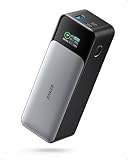
- Worth the splurgeAnker 737 PowerCore 24K~$130
The honest quick answer
If you only fix one thing today: check whether the thing you're plugging your TV, computer, or space heater into is UL listed and whether it's an actual surge protector or just a power strip. Those are two different products that look identical, and the difference matters more than the price tag. A basic power strip just adds outlets. A surge protector adds outlets and absorbs voltage spikes before they reach your electronics. Neither one is inherently dangerous — a cheap unlisted strip running too much current is the actual hazard.
What makes a power strip a real fire risk (it's rarely the strip itself)
The strip is almost never the sole problem. Fires trace back to a combination of factors stacking on top of each other: a strip rated for 15 amps running well past that limit, a high-draw appliance (space heater, window AC, hair dryer, toaster oven) plugged into a strip meant for electronics, a strip tucked under a rug or behind furniture where heat can't dissipate, or a strip that's been chained into another strip, multiplying the load on a single wall outlet that was only ever rated for one circuit's worth of draw. Any one of these alone is usually fine. Two or three at once is how a strip gets warm enough to melt its own plastic housing.
The single biggest tell that something's wrong is heat. A power strip or surge protector should feel cool or barely warm to the touch during normal use. If it's warm enough that you notice it, or the plastic near the outlets looks discolored, that unit is being asked to do more than it's built for — unplug it and stop using it, full stop, regardless of how new it is.
UL listing and joule ratings — what the numbers on the box actually mean
Two labels matter more than any marketing copy on the packaging. The first is a UL listing (or ETL, its equivalent) — an independent lab has tested the actual unit for fire and shock hazards under real conditions, not just approved a design on paper. This is non-negotiable. A power strip with no UL or ETL mark anywhere on it, sold for $6 from a brand you've never heard of, is the single most common thread in strip-related fire reports. The mark itself costs the manufacturer money to earn, so a legitimate one won't skip printing it.
The second number, specific to surge protectors, is the joule rating — a measure of how much energy the unit can absorb from a single surge event before its internal protection is used up. Joule ratings aren't infinite; a big enough spike, or enough smaller ones over time, degrades the surge-suppression component even while the strip keeps working as a plain power strip afterward, with zero protection left and no obvious sign it happened. For basic electronics — lamps, chargers, a router — 1,000 joules is plenty. For a home office with a computer, monitor, and networking gear, look for 2,000+ joules. For a full entertainment center with a TV, receiver, and game consoles, 3,000+ joules is the safer target. Most surge protectors will list a joule rating on the packaging; if you can't find one anywhere, assume the "surge protection" claim is marketing, not engineering.
Basic power strip or real surge protector — how to actually tell them apart
This is the mix-up that causes the most confusion in stores. Every surge protector is technically a power strip, but most power strips are not surge protectors. The giveaway is on the packaging: a real surge protector will state a joule rating and usually a "let-through voltage" spec, plus some kind of connected-equipment warranty (APC and Belkin both guarantee to replace equipment damaged while properly connected). A plain power strip just says how many outlets it has and what amperage it's rated for. If the box doesn't mention joules anywhere, it's a power strip, not a surge protector — perfectly fine for a lamp or a phone charger, genuinely risky as the only thing standing between your desktop computer and a lightning-adjacent power spike.
For things that don't care about power quality — lamps, a fan, holiday lights, a phone charger — a plain UL-listed power strip is all you need, and spending extra for surge protection you'll never use is just spending extra.
What to actually plug in — and what never belongs on a basic strip
This is where most of the real risk lives, and it has nothing to do with brand. Never plug a space heater, window air conditioner, hair dryer, curling iron, or any other heat-generating high-draw appliance into a power strip of any kind. These devices frequently pull 1,200–1,500 watts on their own — close to or beyond what most strips are rated for total, across every outlet combined. Plug them directly into a wall outlet, every time, no exceptions. This single rule prevents more strip-related fires than any product upgrade could.
Good candidates for a power strip or surge protector: computers, monitors, printers, routers, modems, lamps, phone and laptop chargers, TVs, game consoles, and small kitchen appliances used briefly (toasters, blenders) rather than run continuously. The common thread is low-to-moderate, steady draw — not a sudden 1,500-watt heat load.
Daisy-chaining: the habit that turns a fine strip into a real hazard
Plugging one power strip into another power strip — daisy-chaining — is explicitly against fire code in most places, and for good reason. Every strip in the chain is still ultimately drawing through the same single wall outlet and the same circuit behind it, but now you've made it much easier to plug in more devices than that circuit was ever designed to carry, without any visual cue that you've crossed a line. The strip itself might be perfectly rated and UL listed; the wall circuit behind it isn't rated for what you've stacked onto it. If you keep running out of outlets, the fix isn't a second strip plugged into the first one — it's a single strip with more outlets, or an electrician adding an outlet where you actually need one.
The related habit worth breaking: running a strip's cord under a rug, through a doorway where it gets stepped on repeatedly, or coiled tightly to hide it. A pinched or repeatedly-stressed cord damages the internal wiring in ways you can't see from outside, and a rug on top of a warm strip traps heat that would otherwise dissipate safely.
Cable management that's actually a safety upgrade, not just tidiness
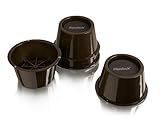
Hiding a power strip is fine — hiding it somewhere with zero airflow is not. A ventilated cable box or under-desk tray keeps a strip visible enough to notice if something's wrong, off the floor where it won't get stepped on or vacuumed over, and cool enough that heat isn't trapped against carpet or a wall. This is the one area where a genuinely low-effort organizing purchase doubles as a real safety improvement.
What to skip, and one honest alternative
Skip anything sold in a 2-for-$10 bundle with no UL or ETL mark visible anywhere on the unit or the packaging — this is the single most reliable red flag in the category, more predictive than brand name or outlet count. Skip strips with a "surge protected" claim but no joule number printed anywhere; that's a marketing word doing the work an engineering spec should be doing. And skip any strip, no matter how well-rated, if the plastic housing shows scorch marks, melting, or a persistent burning-plastic smell — replace it immediately rather than monitoring it.
If you're genuinely worried about overloading outlets — a lot of devices, an older house with fewer circuits, or a dorm room with one outlet per wall — a battery bank can take real pressure off during the day for phones, tablets, and small electronics, so fewer things need to stay plugged in simultaneously. It's not a substitute for a properly rated surge protector on your actual desk setup, but it's a legitimate way to reduce how much you're asking any single outlet to carry.
The honest bottom line
A power strip fire is almost always several small, boring decisions stacked on top of each other — no UL listing, a heat-generating appliance plugged in where it shouldn't be, a chain of strips feeding one outlet, a cord buried under a rug. Fix those and the actual strip you choose stops mattering much, whether it's the $10 Amazon Basics one or the $40 Belkin. The upgrade worth spending money on isn't a fancier strip. It's a UL-listed one with the right joule rating for what's plugged into it, kept somewhere it can breathe, with nothing daisy-chained behind it.
Frequently asked questions
What does UL listed actually mean, and does it matter?
UL (Underwriters Laboratories) or its equivalent ETL is an independent lab that tests the actual physical unit for fire, shock, and overheating hazards under real-world stress conditions — it's not a self-reported claim from the manufacturer. It matters a lot: the large majority of power-strip-related fire incidents involve units with no UL or ETL mark anywhere on them. Always check for the mark on the strip itself, not just the box, since some counterfeit products print a fake mark on packaging that doesn't match the actual unit.
What joule rating do I actually need?
For basic electronics like lamps, chargers, and a router, 1,000 joules is enough. For a home office setup with a computer and monitor, look for 2,000 joules or more. For a full entertainment center with a TV, receiver, and consoles, aim for 3,000+ joules. Higher is never wrong, just sometimes unnecessary spend — the joule number should scale with how much you'd lose if a surge got through, not just how many devices are plugged in.
Is daisy-chaining power strips actually dangerous, or just against the rules?
Both. It's against fire code in most jurisdictions because it lets you plug in far more devices than the single wall circuit behind the chain was ever designed to carry, without any visual warning that you've exceeded a safe load. The strips themselves might each be fine individually — the problem is the wall outlet and circuit behind all of them combined, which doesn't change just because you added another strip.
Can I plug a space heater into a power strip or surge protector?
No, never, regardless of how well-rated the strip is. Space heaters, window air conditioners, and similar high-draw appliances frequently pull 1,200–1,500 watts alone, which is close to or beyond what most strips are rated to carry across all outlets combined. Plug these directly into a wall outlet every time — this single rule prevents more incidents than any strip upgrade.
How do I know if my surge protector still works, or if it's just a power strip now?
Surge protection components degrade with use and don't reset — a strip can absorb enough smaller surges over time (or one big one) to use up its protection while continuing to function normally as a plain power strip, with no obvious sign anything changed. Some higher-end models (including the APC pick above) include an indicator light that turns off when protection is depleted; if yours doesn't have one, a safe rule of thumb is replacing surge protectors every 3–5 years, sooner after a known power event like a lightning strike or outage.
Is it safe to run a power strip under a rug or carpet?
No. Rugs and carpet trap heat against the strip that would otherwise dissipate into open air, and a cord running under foot traffic gets compressed and stressed in ways that damage internal wiring without any visible sign from outside. Route cords along baseboards or through a cable channel instead, and keep the strip itself on a hard, open surface.