Most personal finance books have a problem: they repeat the same idea for 300 pages because the author had a great magazine article and a book deal. The audiobook version of that book is somehow worse — a narrator droning through bullet points you could have read in ten minutes. But here’s the thing: the right personal finance audiobooks are genuinely transformative. The ones that click don’t feel like homework. They feel like a conversation that rearranges your brain while you’re washing dishes or stuck in traffic.
This is the list that’s worth your time. Not every famous personal finance title — a lot of those are skippable, and we’ll get to that — but the ones where the format actually works, the narrator is listenable, and the ideas are specific enough to change how you act, not just how you feel.
Get 30 days free + 1 credit. Cancel anytime. No strings — just your first audiobook on us.
The one everyone cites — and actually deserves it
Atomic Habits by James Clear is technically a habits book, not a personal finance book. But it is the most useful personal finance book I’ve encountered in a decade, because it solves the actual problem: behavior change. You already know you should spend less, save more, invest the difference. You don’t do it because knowledge and action are different things. Clear’s framework — make good habits obvious, attractive, easy, and satisfying — applies directly to automatic savings, avoiding impulse spending, and building the kind of boring-but-effective financial routines that compound over decades.
The audiobook is read by the author. That matters. Clear has a calm, methodical delivery that matches the book’s precision. No filler, no hype. The concepts land clearly on audio because the book is already built around concrete examples rather than abstract advice. This is the rare personal finance-adjacent title that genuinely works better as audio than print.

For people who want the business and money picture together
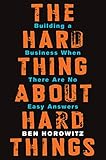
The Hard Thing About Hard Things by Ben Horowitz is ostensibly a startup book — about building companies when everything is going wrong. But the financial thinking embedded in it is some of the most honest you’ll find anywhere. Horowitz writes about managing cash, making decisions under uncertainty, and the psychological weight of financial pressure in a way that most personal finance authors dance around entirely. He’s been there. The book shows it.
If you run a business, freelance, or have any intention of doing either, this is required listening. The chapters are short enough to digest in commute segments. The narration is strong and the storytelling is genuinely funny in places — which is not something you can say about most books in this category.
The one that reframes your relationship with money completely
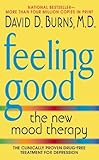
Feeling Good by David Burns is a cognitive behavioral therapy classic, not a finance book at all. So why is it on this list? Because financial anxiety, spending as emotional regulation, and avoidance of financial decisions are fundamentally psychological problems that no budgeting spreadsheet can fix. Burns walks through the cognitive distortions — catastrophizing, all-or-nothing thinking, emotional reasoning — that fuel bad financial decisions at least as much as any lack of information.
Read this alongside a practical money book and you will get further than reading ten practical money books alone. The audio version is dense but genuinely rewarding. The techniques are concrete and immediately applicable. It is the sleeper pick on this list, and the one most likely to change your relationship with money at the root level rather than the surface.
For founders, freelancers, and side hustlers
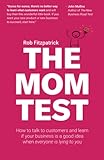
The Mom Test by Rob Fitzpatrick is about customer conversations, not personal finance. But it belongs here because it teaches the single skill that separates people who build financially sustainable businesses from those who don’t: asking the right questions before committing money. The money you don’t spend on a bad idea is as real as the money you save. Fitzpatrick’s framework for validating ideas before investing in them is one of the most financially leveraged skills you can develop.
At under 200 pages, the audiobook is mercifully short. Fitzpatrick reads it himself. The conversational tone is perfect for the format. You can finish this in two commutes and it will change how you evaluate any decision that involves spending real money on an unproven idea — which is most of them.
The planner companion: when you need to stop listening and start doing
At some point, listening has to turn into doing. The Full Focus Planner by Michael Hyatt is built around translating goals — including financial goals — into a weekly review and daily execution system. If you’ve absorbed ideas from five different money audiobooks and still haven’t changed your behavior, the problem is almost always the bridge between listening and action. This is that bridge.
It’s not an audiobook — it’s a physical planner — but it pairs perfectly with audiobook listening because it gives you somewhere to put the insights. Hyatt’s quarterly goal framework slots cleanly onto financial targets: save X by March, build emergency fund by Q3, pay off the card by end of year. Goals that have a date and a plan get done. Goals that don’t, don’t.

What to skip — honest takes on the most-recommended titles
Not everything that gets recommended constantly is worth your time. A few honest opinions on overrated titles:
Rich Dad Poor Dad — The first chapter has a genuinely useful idea (assets vs. liabilities framing). The remaining nine hours are mostly vibes and real estate anecdotes from the 1980s. The mechanics it describes are not replicable for most people in the current market. Read a summary and spend the saved hours on something on this list.
Think and Grow Rich — Written in 1937. The core message is “believe in yourself and visualize success,” which is fine as far as it goes, but it’s padded with mystical thinking and the specific advice is dated to the point of uselessness. There are better mindset books that were written after the invention of the index fund.
The $100 Startup — Inspirational but thin. The case studies are real, but the actionable guidance is vague enough that you finish it feeling motivated and no clearer on what to actually do. The Mom Test above covers similar territory with ten times the rigor in a fraction of the runtime.
Most “passive income” audiobooks — If the book was clearly published to sell a course, skip it. The audiobook is an advertisement for the course. The ideas that survive multiple re-reads and multiple years of practice are the ones worth your time. Every title on this list qualifies. Most passive income titles don’t survive contact with reality.
Get 30 days free + 1 credit. Cancel anytime. No strings — just your first audiobook on us.
Is Audible worth it if I already have Spotify or Apple Music?
Yes, for different reasons. Spotify and Apple Music have limited audiobook catalogs and you don’t permanently own the titles you listen to. Audible’s monthly credit system means you pay once and keep the book forever — even if you cancel your membership. A free trial gets you one book at no cost, which is enough to determine whether audio is how you want to consume this kind of content.
Can I actually learn personal finance from audiobooks, or do I need to take notes?
Both approaches work, but differently. For conceptual shifts — how you think about money, risk, and habits — audio is excellent. Ideas delivered in narrative form tend to stick more deeply than bullet points. For tactical detail — specific numbers, formulas, step-by-step instructions — you’ll want the print version for reference. A solid approach: listen first to absorb the framework, then grab the print or ebook for the parts you want to actually implement.
What’s the best first audiobook if I’m brand new to personal finance?
Atomic Habits. It sounds counterintuitive — it’s not technically a money book — but the reason most people fail at personal finance isn’t lack of knowledge, it’s inability to change behavior. Start with Atomic Habits to understand why you do what you do, then layer in specific financial tactics from other titles. You’ll implement more and backslide less.
How long does a typical personal finance audiobook take to listen to?
Most run 6–10 hours. At 1.5x speed — comfortable for most listeners after a short adjustment period — that’s roughly 4–7 hours of actual listening time. You can finish most titles on this list in a week of commuting, cooking, or walking. The Full Focus Planner is a physical product with no runtime.
Are these books on Libby or other free platforms?
Most are available via Libby (free with a library card). Wait times for popular titles like Atomic Habits can run several weeks in most markets. Audible lets you start immediately. If you’re budget-conscious, check Libby first. If you want to start today, Audible’s free trial is the fastest path — and the first credit covers the cost of any title on this list.