I came to money books late, and skeptically. The genre has a reputation, mostly earned, for being either smug or panicked, written by people who want you to feel either inferior or afraid. The books on this list are the ones that did neither. They sat on the nightstand and changed something quietly. A month later I was making different choices about a checking account, or a Sunday afternoon, or a job. None of them are about getting rich. The best ones are about getting honest, which turns out to be the only place useful money advice can actually start.
Start with the one about feelings, not formulas
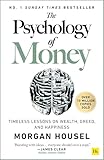
Most personal finance books open with a spreadsheet. Morgan Housel opens with the observation that two people with identical balance sheets can have completely different relationships with money, and that the relationship is what predicts almost everything. The Psychology of Money is a series of short essays, each one built around a story, and each one quietly dismantles a belief you probably did not know you held. It is the rare money book you can hand to someone who hates money books.
Then the one that gives you permission to spend
Ramit Sethi's book has a terrible title and a genuinely radical premise: that the point of money is to fund a life you actually want, and that aggressive frugality is just a different kind of avoidance. He calls it the rich life, and he means buying the lattes if lattes matter to you, and ruthlessly cutting the things that do not. The frameworks in this book (the Conscious Spending Plan, the automated money flow) are the ones I have actually kept using.
The one that reframes the whole timeline
Bill Perkins' Die With Zero is the book that made me actually rearrange my calendar. The argument is simple and uncomfortable: most people save money for experiences they will be physically and emotionally unable to enjoy by the time they have the money to enjoy them. The forty-year-old who postpones the trip to thirty has gotten the math exactly backward. The book is short, the math is convincing, and the implications keep unfolding for months.

The one about the cost of your hours
Vicki Robin's Your Money or Your Life is the original FIRE-movement bible, but stripped of its current internet baggage it is just a profoundly humane book about the relationship between earning, spending, and the finite hours of a life. The central exercise (calculate your real hourly wage after commute, clothes, decompression, and stress) reframes every purchase in terms of life energy. It is the book that turned the FIRE movement into a movement, and it is still the best version of the argument.

The one about how rich people actually live
Stanley and Danko spent decades studying actual American millionaires and discovered they are almost nothing like the movies suggest. They drive used cars. They live in modest houses. They are first-generation wealthy, frequently self-employed, and they have an almost boring relationship with money. The book is dated in places (the cars and the suit prices) but the core finding is permanent: the people you think are rich usually are not, and the people who actually are rich usually do not look it.
The one about how your brain lies to you about money
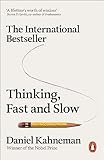
Thinking, Fast and Slow is not a personal finance book. It is a book about cognition, written by the Nobel laureate who quietly rewrote the field of economics. But almost every chapter has direct money implications: anchoring, loss aversion, the planning fallacy, the way we systematically misjudge probability. It is long, dense, and worth the time. Once you have read it, every financial decision you make happens with a little more daylight around it.
The one that hides timeless advice in a parable
The Richest Man in Babylon was first published in 1926 and has never been out of print. It is a series of fables set in ancient Babylon about merchants and money lenders, and the financial principles inside are so simple they sound like nothing: pay yourself first, live below your means, make your money work for you. The trick of the book is that the parable form bypasses the part of your brain that resists advice. You finish it nodding.
How to actually read these
One at a time, with a pen. Money books reward annotation in a way that fiction does not. Underline the line that hits, dog-ear the page, write the resulting decision in the margin. A month later, flip back through what you marked. The act of returning to your own underlines is most of the value, more than the original read. If you can only read two from this list, start with Housel and Sethi. If you can only read one, start with Housel.
FAQs
Which money book should I read first?
The Psychology of Money by Morgan Housel. It is short, it is well-written, it does not require any financial background, and it changes the lens through which you read everything else. Almost every other book on this list lands harder once you have read this one.
I am in debt. Should I read these or just read Dave Ramsey?
If you are in active credit-card debt and need a structured payoff plan, The Total Money Makeover by Dave Ramsey is genuinely useful and worth reading first. Once the debt is handled, come back to this list. The books here assume you have a little breathing room to think.
Are old money books still relevant?
The math changes, the markets change, and the specific products change. The human brain does not. Books like Your Money or Your Life and The Richest Man in Babylon are about behavior and identity, not about index funds, and the behavior parts age extremely well.
What if I find personal finance books boring?
Then read Die With Zero or The Psychology of Money. Both are written more like essay collections than instruction manuals. Neither one reads like homework. If those still bore you, the genre may genuinely not be for you, and that is fine. Find a financial planner you trust and skip the reading.
Do I need to read all seven?
No. Pick two. Read them slowly. Annotate them. Make one actual change in your life as a result. Then, in six months, pick a third. Reading seven money books in a row is how you avoid changing anything, because the volume of advice cancels itself out.
Is Atomic Habits a money book?
No, but it is the best companion to any of these. Money behavior is habit behavior, and the systems James Clear describes are exactly the systems Sethi assumes you can build when he tells you to automate everything. Read it alongside whichever book on this list you pick.