Here's the open secret of the kitchen-knife industry: most knife blocks are a delivery mechanism for mediocre knives. You pay $200 for a wood block plus a 15-piece set, and what you've actually bought is one decent chef knife, one okay paring knife, and twelve filler pieces (steak knives nobody asked for, kitchen shears that won't stay sharp, a sharpening steel that will wreck your edges, a "utility knife" with no clear purpose). The block is the bait. The math doesn't work in your favor. This is how to actually buy knives like a person who cooks.
The honest quick answer
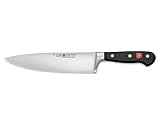
Buy one excellent chef knife, one paring knife, and a serrated bread knife. That's the whole list for 95% of home cooks. Store them on a magnetic wall strip or in a drawer organizer. Skip the block-and-set entirely. You'll spend less, cook better, and free up half a square foot of counter space. The knife below is the one that food professionals quietly recommend at every price point.
Why the 15-piece block set is a scam
Walk into any department store and you'll see knife blocks priced from $80 to $600. The pitch is value: "look at all those knives." The reality: the manufacturer has a fixed budget per set, and that budget gets spread across however many slots they need to fill. A $200 set with 15 pieces gives each knife about $13 of actual cost — minus the wood block, minus packaging, minus shipping. You're buying twelve knives that wouldn't sell on their own at $20 each. They go dull fast, the steel is soft, the handles loosen. Compare that to spending the same $200 on three excellent knives and you have tools you'll use for twenty years.
The other catch: most of those slots will sit empty forever. Steak knives live in a drawer. The boning knife gets used twice a year. The "carving fork" gets used never. You're paying to store knives you don't use on your counter.
The empty universal block: the only block worth buying
If you genuinely want a counter block — for aesthetic reasons or because you have kids and want blades up high — buy an empty universal block and slot in your own knives. Universal blocks have flexible bristle inserts (or angled wood slots) that hold any blade size. You pick three or four great knives, slide them in, done. You get the look without the bundled garbage. Bamboo or walnut blocks run $30–$60 empty. Combined with a Victorinox chef + a paring knife + a serrated bread knife, you've spent under $120 total for a real setup.
The brands worth trusting if you want to upgrade beyond Victorinox: Wusthof Classic (German, heavier, holds an edge well), Henckels Pro S (similar to Wusthof, often cheaper), Shun Classic (Japanese, lighter, sharper edge angle, requires more careful storage). Avoid: anything sold on TV, any 15-piece set, anything described as "self-sharpening" (those built-in ceramic sharpeners in some blocks actually grind your edges down every time you re-insert the knife — they're a feature that destroys what they're supposed to protect).
The better answer for most people: a magnetic wall strip
A magnetic strip mounted to the wall above or near your prep area is the storage method professional kitchens use, and there's a reason. It keeps blades visible, dries them properly (no wet wood), takes up zero counter space, and you grab the right knife instantly without staring at a row of identical handles. Walnut or bamboo strips look like furniture, not a tool rack. Most are 12–18 inches long and hold 4–6 knives plus a pair of shears. Mount it at adult-shoulder height if you have small kids in the house.
The one warning: don't slap the blade onto the magnet edge-first. Lay the spine against the magnet first, then rotate the blade flat. Edge-first contact dings the cutting edge against the steel core of the strip and you'll feel it the next time you slice a tomato.
The in-drawer organizer: the option for people who hate counter clutter
If you don't want anything visible — counters clean, no wall hardware — an in-drawer knife organizer is the move. Bamboo trays with angled slots hold blades safely (edges down, handles up for grabbing) and convert any kitchen drawer into knife storage. They run about $25–$40, install in two seconds (just drop them in), and the bamboo absorbs minor moisture without warping. Pair with a small honing steel and a sharpener stored in the same drawer and you've got a complete knife station that nobody can see.
One thing to check before buying: measure your drawer interior depth. Most organizers are designed for standard 18-inch deep drawers. If yours is shallower, you'll need a compact version, or you'll be staring at a tray that won't close.
What about kitchen shears, sharpening steels, and the rest of the block contents?
Kitchen shears: yes, get a separate good pair (OXO or Wusthof, around $20). They live in a drawer, not in a block slot. The shears that come with sets are stamped, hollow-handled, and won't cut through chicken bones — which is half the point of having shears.
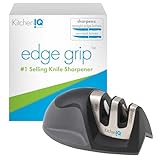
Sharpening steel (the long rod): this is a honing rod, not a sharpener. It re-aligns a slightly bent edge — it does not remove metal. Useful if you cook every day, optional otherwise. The cheap KitchenIQ pull-through above does the actual sharpening when you need it.
Steak knives: buy them separately as a small set if you eat steak often. The ones in block sets are universally bad. A four-piece Wusthof or Victorinox steak set runs $40–$80 and lasts a lifetime.
The full setup: what to actually buy
If you're starting from zero, here's the complete kitchen knife setup that beats any block-and-set on the market, for less money:
One Victorinox 8" chef knife (~$45). One small paring knife (~$15). One serrated bread knife (~$30). One pull-through sharpener (~$8). Storage of your choice: magnetic strip (~$30), in-drawer organizer (~$30), or empty universal block (~$50). Total: $128–$148 for a setup you'll use forever, instead of $200 for fifteen mediocre tools you'll mostly ignore.
Frequently asked questions
Is a Wusthof or Henckels block set ever worth buying?
Sometimes — but only the small ones. A Wusthof Classic 7-piece block can be a fair deal because Wusthof's filler knives are still real Wusthof knives, not cost-cut filler. Anything past 7 pieces is padding regardless of brand. If you want Wusthof, just buy the chef knife on its own and add as needed.
What's the difference between German and Japanese knives?
German knives (Wusthof, Henckels) are heavier, sharpened to a wider edge angle (around 20 degrees per side), and built for rocking cuts and heavy work. Japanese knives (Shun, Global, Mac) are lighter, sharper (around 15 degrees per side), and built for push-cutting and precision. Both are great. German is more forgiving if you're not careful with storage and sharpening.
How often do I need to sharpen my knives?
For a home cook using a knife daily: pull-through sharpener every 3–6 months, professional sharpening once a year if you want to be precise. Honing steel between sharpenings if you have one. If your tomato squashes instead of slicing, you waited too long.
Are ceramic knives worth it?
No, for most people. They hold an edge longer than steel but chip easily, can't be sharpened at home, and shatter if dropped. Useful for slicing soft fruit if you already own one — not worth buying as a primary knife.
Is the dishwasher really that bad for knives?
Yes. Heat warps the handle joint, detergent etches the steel, and bumping against other items in the rack chips the edge. Hand-wash, dry immediately, store properly. A good knife treated this way lasts decades. The same knife dishwashered weekly is junk in three years.
What size chef knife should I buy?
8 inches for most people. 6 inches if you have small hands or a small cutting board. 10 inches only if you cook a lot and have the counter space. Skip Santoku-style unless you specifically prefer the shape — an 8-inch chef knife does everything a Santoku does and more.