A kitchen scale is the closest thing cooking has to a cheat code. It's not glamorous. It sits on your counter, it reads numbers, it costs less than a decent bottle of wine. And yet it's the single piece of equipment that separates recipes that work reliably from recipes that sort of work sometimes. If you bake bread and your loaves are inconsistent, a scale fixes that. If you brew coffee and your cup tastes different every morning, a scale fixes that too.
Why a kitchen scale changes everything
Volume measurements are a lie. A cup of all-purpose flour can weigh anywhere from 120 to 160 grams depending on whether you scooped it packed, sifted it, or spooned it lightly — that's a 33% variance in your most common baking ingredient. Scales fix this because weight doesn't compress or settle. For coffee brewing, precision matters even more: a pourover recipe calls for a specific coffee-to-water ratio. Without a scale, you're estimating. With a scale, you're dialing in.
What to look for: readability to 1 gram (or 0.1g for coffee), tare function (zeroes out the bowl weight so you measure directly into it), fast response time so you can stop pouring before you overshoot, and a platform big enough for your largest mixing bowl.
The scale most people should buy: OXO Good Grips
OXO makes the scale that most home cooks should own. The pull-out display is the feature that sounds silly until you've owned it: when you put a large mixing bowl on the platform, it slides out from underneath so you can actually read the numbers. It reads to 1 gram, handles up to 11 pounds, the stainless steel platform wipes down in two seconds, and the display is large and backlit. No clever features, no Bluetooth — just a scale that weighs things accurately and is pleasant to use.
For coffee specifically: the precision pick
Most kitchen scales read to 1 gram. For coffee, it matters more — the MyWeigh KD-8000 reads to 0.1 grams. You're measuring 18g of coffee for an espresso shot. Being off by 0.5g changes the extraction. At 0.1g resolution, you're not off. It also has a higher capacity (17.6 lbs) and fast response time — critical for pourover where you're adding water in stages and need live feedback.
The gear that works better with a scale
A scale doesn't exist in isolation. Pour-over coffee goes from approximate to repeatable the moment you weigh your coffee and water. The Chemex is the classic vehicle for this — its thick paper filters and glass design make the brewing process transparent, and weighing your inputs means you can reproduce a good cup exactly.


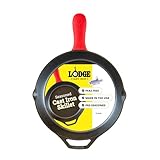
The Lodge cast iron skillet is the other scale-friendly kitchen item — when seasoning with oil, weighing the amount you apply gives more consistent results than eyeballing.
Grams vs. ounces, tare, and the stuff people ask about
Use grams. Always grams. Grams are smaller units, so you get more precision without needing decimal places in most baking contexts. 250g is cleaner to work with than 8.82 oz. Most serious recipes are written in grams.
The tare function: place your empty bowl on the scale, press tare (resets to 0), add your first ingredient, press tare again, add the next. You can measure an entire recipe into one bowl without any math or extra dishes.
Which scale to buy based on how you cook
Baking regularly: OXO Good Grips (pull-out display wins). Mostly coffee: MyWeigh KD-8000 (0.1g resolution). Just starting out: any basic 1g-resolution digital scale works — the tare function is what matters most, and even cheap scales have that.
Do I really need a kitchen scale?
For savory cooking, measuring cups are fine. For baking, they're genuinely unreliable — flour can vary by 30% depending on how you scoop it. A scale gives you consistent results every time, and it's actually faster than measuring cups because you measure directly into your bowl.
Which scale is best for coffee brewing specifically?
The MyWeigh KD-8000 because it reads to 0.1 grams. For espresso where you're dosing 17–20g, a 0.1g resolution makes a real difference to consistency. For pourover and Aeropress, any 1g-resolution scale will work.
How do I use the tare function?
Place your empty bowl on the scale. Press tare — display resets to 0. Add your ingredient to target weight. Press tare again — resets to 0 for the next ingredient. You can repeat as many times as you need and measure an entire recipe into one bowl without any math.
What's a good coffee-to-water ratio to start with?
1:15 is the standard starting point — 1 gram of coffee for every 15 grams of water. For a 300g cup, use 20g of coffee. Adjust from there: more coffee (1:13) for stronger, less (1:17) for lighter. The point of a scale is that once you find your ratio, you can reproduce it exactly.
Are there kitchen scales worth buying over $50?
For most home cooks, no. The scales above cover 95% of home cooking needs. If you're doing professional pastry work or large batches requiring higher capacity, the $75–$150 range adds capacity and durability. But under $50 gets you everything you need.