The countertop is the most contested real estate in any kitchen. It's where appliances go to die, where mail accumulates in defiance of physics, where the fruit bowl you optimistically bought competes for space with three cutting boards and a knife block you haven't actually used since 2022. The result isn't just ugly — a cluttered counter slows down every meal you make because you can't find anything and there's nowhere to actually work.
- Top pickOXO Good Grips POP Container (3.4qt)~$16 each
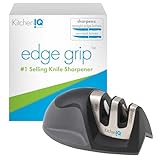
- Best budgetKitchenIQ Edge Grip 2-Stage Knife Sharpener~$8
- Worth the splurgeBaratza Encore ESP Burr Grinder~$200
Here's the honest version of kitchen countertop organization: it's not about buying more stuff. It's about making deliberate decisions about what earns the right to live on the counter, giving everything else a better home, and picking a small number of containers and tools that genuinely do the job. This guide covers all of it.
The rule that solves 80% of countertop clutter
One rule fixes most countertop chaos: only things used at least three times a week earn counter space. Everything else gets a drawer, a cabinet, a pantry shelf, or — if you haven't touched it in six months — a donation bin. This sounds obvious. It is obvious. But most people have never actually applied it, because it requires putting the air fryer away if you only use it on Sundays, and that feels like effort. It isn't. Two minutes to pull it out is dramatically less miserable than working around it every day.
Apply the test ruthlessly: the KitchenAid mixer that comes out for holiday baking, the blender you use twice a month, the mandoline you're afraid of — all of it lives in a cabinet. What stays: the coffee maker (daily), the toaster (daily or near-daily), and one or two other things that genuinely earn their square footage. Clear the rest first. Then organize what's left.
Canisters: the highest-ROI countertop upgrade
If you do one thing, make it this: get airtight canisters for your countertop staples. Flour and sugar in their original bags look chaotic, tear and spill, and go stale faster. In clear airtight containers, they look intentional, stay fresh longer, and you can see at a glance when you're running low. OXO's POP containers are the gold standard here — the lid pops open with a single push, seals airtight, and the containers stack cleanly. The 3.4qt fits five pounds of flour exactly. The 1.7qt is right for sugar, rice, and oats.
The visual impact is immediate. Three matching canisters on a counter communicates "someone who has their life together" in a way that a $200 backsplash does not. If you can only do one thing from this list, do this one.

Appliance management: when the air fryer is the problem
Countertop appliances are the number-one cause of countertop collapse. One appliance becomes two becomes six, and suddenly you have a counter that functions as a showroom for things you bought with good intentions. The air fryer is the current culprit in most kitchens — it's large, it's boxy, and its footprint is basically a small oven.
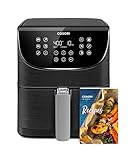
The Cosori 5.8qt is one of the best air fryers you can buy, but if you're using it three times a week or less, it should not live on the counter. Store it on a low pantry shelf or in a lower cabinet with the cord tucked on top. When you do use it, take sixty seconds to pull it out and set it up. The counter space you reclaim for meal prep is worth every one of those sixty seconds, every time.
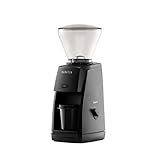
For daily-use appliances that do earn counter space, placement matters. Group by use: coffee station in one corner (coffee maker, grinder if you have one, mugs within reach). Toaster near the bread. Keep three inches of clearance behind every appliance for ventilation and cleaning access.
The knife situation: get it off the counter
Knife blocks take up significant counter space, collect crumbs in the slots, and often hold six knives you don't use. The options that reclaim that space:
- Magnetic wall strip — mounts to the wall, holds knives at eye level, takes zero counter space, keeps blades accessible. If you have wall space near the prep area, this is the move. About $20–35.
- In-drawer knife organizer — if you have a deep drawer near the prep area, a bamboo in-drawer organizer keeps knives protected and out of sight. About $20–30.
- Knife block in a cabinet — a small block that lives in a lower cabinet next to the prep area. Pull it out when you need it. Revolutionary in its simplicity.
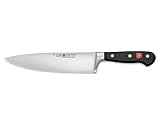
The Victorinox Fibrox is the knife that culinary schools recommend — keep it sharp and accessible, just not necessarily out in the open. And a knife sharpener belongs in your knife drawer, full stop.
Small tools: the drawer vs. the crock debate
The ceramic utensil crock on the counter is a beloved kitchen object that also functions as a clutter amplifier. Things go in, they never come out, and after six months you have nineteen spatulas and two wooden spoons lodged at the bottom under a silicone brush that has never touched anything. Here's the deal: a utensil crock works beautifully if you edit it ruthlessly — five to seven tools maximum, the ones you reach for daily. Everything else in a drawer.
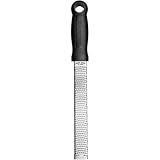
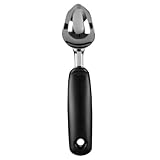
The Microplane zester is a perfect example of a tool that gets shoved into a crock and forgotten. It's used frequently once people actually have it (citrus zest, hard cheese, fresh ginger, nutmeg) but it's long and awkward and pokes things. Flat in a drawer, blade covered or down. The OXO can opener is another — used weekly but bulky and odd-shaped. Drawer, not crock, not counter.
The baking situation and hidden storage wins
Baking supplies are responsible for a special category of counter chaos: mixing bowls that stack awkwardly, a stand mixer that lives permanently in the corner even though you bake twice a month, sheet pans stored vertically against the backsplash. A few things that actually help:
Sheet pans and baking mats belong in a cabinet or pantry on a vertical divider ($10–15) — stored upright they take a fraction of the footprint. Silpat baking mats lie flat and store inside the sheet pan they pair with, adding zero extra storage burden. Mixing bowls nest inside each other in a lower cabinet. The stand mixer — unless you're baking weekly — earns a cabinet or a dedicated appliance garage if you have the depth.
The appliance garage is worth knowing about: it's a section of upper cabinet with a roll-up (tambour) door that hides small appliances when not in use. Many kitchens have space for one. IKEA and custom cabinet shops both do them for $100–400. If you're renovating, it's the single highest-value countertop organization feature you can add and the one that photographers always use to make kitchens look impossibly clean.
How do I decide what stays on the counter vs. goes in a cabinet?
Use the three-times-a-week rule: if you use it three or more times per week, it earns counter space. Coffee maker, toaster, and for some people a KitchenAid or kettle — that's often the entire list. If you're being honest with yourself, the air fryer, blender, Instant Pot, and food processor all go in cabinets for most households. Counter space is prep space; appliances are guests, not residents.
What's the best way to organize a small kitchen counter?
Work in zones: a coffee station, a prep zone, and a cooking zone. The prep zone — usually the longest uninterrupted stretch of counter — should be kept completely clear except for the cutting board in active use. Everything else works around that clear space. In small kitchens, vertical storage (wall-mounted magnetic knife strips, floating shelves above the counter for spices or oils) is the highest-leverage move because it adds storage without consuming counter area.
Should I use matching containers on my countertop?
Yes, and not just for aesthetic reasons. Matching containers create what designers call visual calm — your brain stops cataloging individual objects and reads the area as "organized storage." Three mismatched vessels are visually louder than six matching ones. It doesn't have to be expensive: three OXO POP containers of the same size, a set of ceramic canisters from Target, or repurposed glass jars in the same shape all work. Consistency is the key, not cost.
How do I handle a countertop that's also used as a landing zone for mail, keys, and random stuff?
The only real answer is to create a better landing zone somewhere else. A small tray or catch-all bowl on a console table, in an entryway, or on a mudroom shelf captures the same instinct (drop things without thinking) in a place that doesn't interfere with cooking. Once you have a dedicated landing spot that isn't the kitchen counter, the habit shifts within a week. The tray needs to be near where you enter — not in the kitchen.
What countertop organizers look good but don't actually help?
Paper towel holders that stand vertically and take more space than the roll they hold — an under-cabinet mount is better. Knife blocks that store six knives you don't own yet — magnetic strips or in-drawer organizers are superior. Tiered spice racks that live on the counter when a drawer insert or cabinet riser would work better. And decorative fruit bowls that turn into clutter catchers within days. Each of these solves the look of organization rather than the reality of it.
How do I keep countertops clean once they're organized?
The daily reset habit: before bed or after dinner, spend 90 seconds returning everything to its spot and wiping the counter down. The counter that's clear and wiped down each night never becomes the disaster that requires a 45-minute purge. Once a week, actually move the coffee maker and toaster and wipe underneath them. It takes thirty seconds and the kitchen will smell and look meaningfully cleaner. Counters that never get fully cleared accumulate a surprising amount of grime behind and under appliances.