There's a specific kind of gardening shame that only indoor plant people know: you bought a gorgeous pothos, put it in a terracotta pot on your windowsill, watered it faithfully, and somehow it still looked like it was staging a slow-motion collapse. So you gave up on plants. Maybe you're a plant killer. Maybe greenery just isn't for you.
You're not a plant killer. You just got bad advice — or no advice — about which plants can actually tolerate the way real people actually live. Most indoor plant deaths are caused by overwatering, wrong light, or buying something too fussy for your space. This guide fixes all three, and points you at the gear that actually helps.
The one rule that saves most plants: stop watering on a schedule
The biggest mistake: watering every Tuesday because that's when you do it. Plants don't care what day it is. They need water when the soil is dry — not before. Succulents might need water every 2–3 weeks in winter. A pothos in a humid kitchen might need it twice a week in summer. The variable that matters is soil moisture, not the calendar.
The fix is embarrassingly simple: stick your finger an inch into the soil. If it's still damp, walk away. If it's dry, water thoroughly until it drains from the bottom. That's the entire technique. "Water when dry" keeps 80% of plants alive that "water on a schedule" kills.
If you want to formalize this, a soil moisture meter takes the guesswork out entirely — especially useful for plants in deep pots where the top inch dries fast but the roots are still sitting in moisture. They run about $10 and pay for themselves the first time you don't drown a $40 fiddle-leaf fig. (Look for one on Amazon — search "soil moisture meter indoor plants" — they're too generic an item to pin a single ASIN to, but any 3-probe meter with a middle "moist" zone reading works fine.)
The plants that are actually hard to kill
Not "these are easy if you do everything right." These are plants that tolerate neglect, irregular watering, imperfect light, and occasional forgetting-about-for-three-weeks without dying.
Pothos (Epipremnum aureum). The unkillable trailing vine. Handles low light, irregular watering, dry air, and forgetting. Grows fast enough to feel rewarding. You can propagate cuttings in a glass of water and give them away to everyone you know. If you're starting from zero, start with pothos.
Snake plant (Sansevieria/Dracaena trifasciata). Prefers indirect light but tolerates near-dark corners. Needs watering maybe twice a month, less in winter. The architectural shape works in modern, minimal, or maximalist rooms equally well. Genuinely hard to kill through neglect. The main way to kill it: overwatering into root rot.
ZZ plant (Zamioculcas zamiifolia). Has water-storing rhizomes in the roots that function like an internal reservoir. Go two weeks without watering — ZZ doesn't care. This is the plant for people who travel frequently or just don't think about plants much.
Spider plant (Chlorophytum comosum). The classic hanging basket plant that produces babies (spiderettes) on long runners, which you can pot up and give away. Handles low light, tolerates infrequent watering, and has an almost cheerful look that's hard to achieve with architectural plants. Very hard to kill.
Peace lily (Spathiphyllum). This is the one that tells you when it needs water: the leaves droop dramatically, you water it, it recovers within an hour. It's the only plant that reliably communicates its needs. Low light, shady corners, offices — peace lily handles all of it. The white blooms are a bonus.
Cast iron plant (Aspidistra elatior). Named for a reason. Handles deep shade, infrequent watering, temperature swings, and basically everything else you might accidentally subject it to. Grows slowly, which is fine when the goal is "alive and good-looking," not "impressive growth rate."
Chinese evergreen (Aglaonema). Available in green, red, and pink variegated forms that look expensive and tropical. Tolerates low light and irregular watering. The colorful varieties need slightly more light than the plain green forms — but even the most demanding Aglaonema is easier than most Instagrammable plants.
Where you display them: shelves and elevation matter
Light is the other variable that kills plants, and it's one most people solve wrong. The instinct is to put plants on a windowsill — but windowsills in many apartments get only a few hours of direct sun, and the temperature right next to glass swings dramatically (hot in summer, cold drafts in winter). More reliable: a shelf within 4–6 feet of a window, out of direct harsh sunlight, with good ambient brightness.
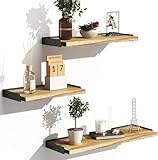
Floating shelves solve the display problem elegantly. A three-shelf arrangement on a wall adjacent to a window lets you stagger trailing plants (pothos, spider plant) and upright plants (snake plant, ZZ) at different heights. It looks intentional instead of "I put a plant on the nearest flat surface." The Bayka floating shelves are the easiest entry point — invisible brackets, each shelf holds up to 33lbs, and they come in sets of three. Twenty minutes of installation and you have a plant wall that doesn't require a contractor.
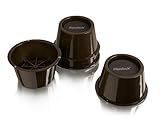
Elevation within each shelf matters too. Trailing plants like pothos look much better — and grow more enthusiastically — when the pot is raised slightly so the vines have room to cascade. The Slipstick furniture risers are technically designed for beds and sofas, but a set placed under a heavy planter elevates it 3 inches and improves drainage airflow while you're at it. At $20 for four risers, it's the cheapest plant upgrade on this list.
The grow light question: do you actually need one?
Honest answer: if you have a room that gets bright natural light for at least 4–6 hours a day, you probably don't need a grow light for the plants on this list. The beginner-friendly species above tolerate low light specifically because they evolved in the understory of tropical forests where direct sun is rare.
Where a grow light becomes genuinely useful: north-facing rooms with limited windows, basements with minimal natural light, or winter months above the 45th parallel when the sun barely clears the horizon. In those cases, a full-spectrum LED lamp running 12–14 hours a day substitutes for the light your plants are missing. Look specifically for grow lights labeled "full spectrum" or "6500K" — these approximate daylight more accurately than warm-toned LEDs.
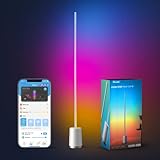
If you're not ready to buy a dedicated grow light, the Govee corner lamp in warm white puts out enough ambient light to supplement low-light plants in a dim room — it won't replace 6 hours of sun, but it makes a difference for shade-tolerant species. The RGB function is irrelevant to your plants; what matters is leaving it on for extended hours near your plant shelf. Think of it as ambient support, not a substitute for a real grow setup.
What to skip: plants beginners should not buy
The "what not to buy" list is as important as the what-to-buy list. These are the plants that look incredible in the store and have claimed more beginner plant parents than almost anything else:
Fiddle-leaf fig. The most Instagrammed, most complained-about indoor plant. Finicky about light, temperature, humidity, drafts, and being moved. Drops leaves when unhappy, which can be triggered by a cold breeze from an open window, a heating vent blowing on it, or simply looking at it wrong. Beautiful in photos, genuinely difficult in practice. Do not start here.
Maidenhair fern. Requires high humidity (consistently 50%+), indirect bright light, and never letting the soil dry out. Maidenhair ferns shrivel within 24 hours of the soil going dry. Unless you're running a humidifier and checking soil moisture daily, this is an expensive disappointment.
Calathea/Maranta (prayer plants). The foliage is stunning — dark green with pink veins, leaves that move up and down with the light cycle. They're also extremely particular about water quality (tap water chlorine bothers them), humidity, and temperature. Beautiful, high-maintenance. Get one after you've successfully kept three beginner plants alive for a year.
Orchids (Phalaenopsis). This is a nuanced one. Orchids in bloom are spectacular and they're sold everywhere. The problem: keeping them and getting them to rebloom requires specific care (bright indirect light, specific fertilization schedule, letting roots dry between waterings). They're not as hard as their reputation, but they reward experience rather than beginner enthusiasm. Start elsewhere and come back to them.
Any plant marketed primarily for its appearance in a specific trending aesthetic. If you're buying it because it looks good in a grid of apartment photos, and you haven't looked up its actual care requirements, you've already made the wrong decision. Buy for the care requirements that fit your life, then find what looks good within those constraints.
Organizing your plant care supplies (and your sanity)
Once you have more than three plants, you'll accumulate a scattered collection of soil amendments, fertilizer sachets, stakes, misters, and spare propagation vessels. The fastest way to keep this under control: a dedicated drawer or bin for plant supplies, treated like a kitchen drawer — everything has a place, nothing gets lost at the back.
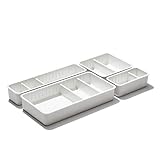
The OXO Good Grips drawer organizer is the tool for this. The four interlocking trays configure to your drawer dimensions and keep soil amendments, fertilizer packets, small scissors, and propagation clips from becoming a loose pile. The same logic as kitchen organization: when the right place is the easy place, stuff goes back where it belongs. The OXO POP containers work for storing loose materials — potting mix amendments like perlite, orchid bark, or activated charcoal stay dry and accessible in an airtight container rather than in a half-open bag tipped sideways in a cabinet.

How do I know if I'm overwatering my plant?
The signs: yellowing leaves (especially lower ones), mushy or blackened stems at the base, soil that stays wet for more than a week, and a sour or musty smell from the pot. The cure is to let the soil dry out completely before watering again. If the roots have rotted, repot into fresh dry soil and cut away any black mushy roots. Overwatering kills more indoor plants than any other cause — more than underwatering, more than bad light.
Can I keep plants alive in a north-facing apartment?
Yes, with the right species. North-facing rooms get diffuse, indirect light all day — which is perfect for pothos, ZZ plant, snake plant, cast iron plant, and peace lily. Avoid any plant that needs "bright indirect light" or "some direct sun." If the room is genuinely dim, a full-spectrum grow light running 12–14 hours a day makes almost any of the beginner-friendly species viable.
What's the easiest indoor plant to keep alive if I travel a lot?
ZZ plant, by a significant margin. Its underground rhizomes store water, meaning it can go 2–3 weeks without attention and look fine. Snake plant is a close second. Both tolerate low light and infrequent watering. Self-watering planters (a reservoir in the base that wicks moisture upward) extend the no-attention window further — they're worth buying if you're regularly away for a week or more.
Do indoor plants actually improve air quality?
Less than the popular NASA study suggests. The 1989 study was conducted in a sealed chamber — not a ventilated room. In a real apartment or house with normal air exchange, you'd need dozens of plants per room to measurably improve air quality. The real benefits of indoor plants are psychological: they reduce stress, increase attention, and make spaces feel more alive. That's genuinely valuable — just not for the reasons the wellness marketing says.
How much light does a "low light" plant actually need?
"Low light" in plant terminology means no direct sun but some ambient brightness — not a windowless closet. It typically means a spot 6–10 feet from a window, or a room that's lit but doesn't get direct beam sunlight during the day. True low-light plants (pothos, ZZ, snake plant, cast iron) can manage in dim rooms, but "dim" still means "you could read a book by this light" — not "I need a desk lamp to see." If it's dark enough to need artificial light to see during the day, add a grow light.
What's the best pot size for indoor plants?
The general rule: pot diameter 1–2 inches larger than the root ball. People buy pots too large because they want the plant to grow into it — but an oversized pot holds excess soil that stays wet long after the roots have absorbed their share, creating root rot conditions. When repotting, go up only one size at a time. Terracotta is better than glazed ceramic or plastic for beginners because it breathes, helping the soil dry more evenly and making overwatering less deadly.