Let's start with the uncomfortable truth: your back doesn't care what your chair looks like. The $89 mesh chair from Amazon with 4,000 reviews might be destroying your posture right now. And the $1,495 Herman Miller Aeron — the chair that became shorthand for "I work in tech" — is genuinely excellent but also three times the price of what most people actually need. The good news is that the $200–$500 range is where the real value lives, and the options have gotten dramatically better since the pandemic turned everyone's spare bedroom into a full-time office.
This guide is for people who spend 6–10 hours a day sitting. If you're under four hours, any halfway decent chair is fine. If you're at eight, your chair is a health decision.
The case for spending $300–$500
At $100 or under, chairs are built to a cost, not a standard. Foam compresses within months. The lumbar support is a fixed bump that hits the wrong vertebra. Armrests wobble. Gas cylinders fail. At $300–$500, you're buying: adjustable lumbar that actually moves to where you need it, 4D armrests, seat depth adjustment, and materials that hold up for 5–10 years.
The chairs in this range worth recommending:
- Autonomous ErgoChair Pro (~$499) — The most adjustable chair under $500, full stop. 11 adjustment points including flexible back and independent lumbar height/firmness. Fully mesh. Buy direct from Autonomous; they run sales and it often drops to $399–$429.
- Flexispot BS9 (~$280–$350) — Strong budget-ergonomic with solid lumbar and seat that slides forward for depth control. Good for people who want ergonomic gains without the configuration complexity.
- Branch Ergonomic Chair (~$329) — The sleeper pick. Looks like actual furniture, not a gaming chair. Adjustable lumbar, waterfall seat edge, 4D armrests. Ships assembled in a single box.
Herman Miller vs. budget: the honest comparison
| Feature | Herman Miller Aeron (~$1,495) | Autonomous ErgoChair Pro (~$499) | IKEA MARKUS (~$230) |
|---|---|---|---|
| Lumbar adjustment | PostureFit SL (sacrum + lumbar) | Height + firmness adjustable | Fixed built-in only |
| Armrests | 4D | 4D | Fixed height only |
| Seat depth | Yes | Yes | No |
| Warranty | 12 years | 2 years | 1 year |
The Aeron is genuinely better. But the Autonomous ErgoChair Pro gives you roughly 85% of the ergonomic benefit at 33% of the cost. For most home office workers, the Autonomous is the rational answer.
What to skip under $100
Foam seats flatten within months. Fixed lumbar hits the wrong spot. Armrests that go in one direction only. Gas cylinders that sag within two years. If your budget is under $200, buy the IKEA MARKUS over any Amazon sub-$100 option — the MARKUS holds up and has proportions that are at least reasonable.
The desk setup that makes a good chair work
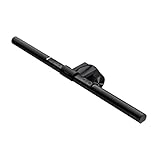
Your monitor should be at roughly eye level — most people's are 3–6 inches too low, causing neck craning all day. A monitor arm or riser fixes this. The BenQ ScreenBar is the other big upgrade: it eliminates eye strain from overhead lighting glare without adding desk clutter.


The WFH peripherals that complete it
Lighting and organization

Is the Autonomous ErgoChair Pro worth $499?
Yes, for anyone sitting 6+ hours a day. It's the most adjustable chair under $500, with 11 points of adjustment including independent lumbar height and firmness, 4D armrests, and seat depth control. It costs roughly a third of a Herman Miller Aeron and delivers about 85% of the ergonomic benefit.
Is the IKEA MARKUS good enough for a full-time home office?
For light to moderate use (under 4 hours a day), yes. For full-time remote work, the fixed lumbar, non-adjustable armrests, and lack of seat depth control add up physically over months. Treat it as a compromise, not a long-term solution.
What's the minimum I should spend on a WFH chair?
For full-time remote work: $250 minimum, with $300–$350 being the sweet spot where real adjustability starts. Below $150, you're buying a placeholder that will become a problem faster than you expect.
Do I need a lumbar pillow if my chair has lumbar support?
No — if your chair has proper adjustable lumbar, an add-on pillow is redundant and can actually position your spine incorrectly. Lumbar pillows are a workaround for chairs that don't have adequate built-in support.
How long should a home office chair last?
Budget ($50–$150): 1–2 years. Mid-range ($250–$500): 4–7 years. Herman Miller/Steelcase: 10–15 years with 12-year warranties. Two replacements of a $150 chair often costs more than one $329 Branch over the same period.