If you fly more than six times a year, the luggage question stops being about what's cheap and starts being about what survives. Hard-sided luggage is the answer more often than not — a polycarbonate shell shrugs off baggage handlers, protects anything breakable you packed, and doesn't absorb whatever mystery liquid is at the bottom of the overhead bin. The bad news is the price range goes from "$60 at Walmart" to "$800 for an Away carry-on," and neither end of that spectrum is the right answer for most people. Here's where the actual value lives.
- Top pickBagsmart Hanging Toiletry Bag~$25
- Best budgetMaster Lock TSA Combination Lock~$10
- Worth the splurgeAnker 737 PowerCore 24K Power Bank~$130
Why hard-sided luggage in the first place
Soft-sided bags are more flexible and often lighter, and for infrequent travelers they're perfectly fine. But if you're checking bags regularly, dealing with aggressive weather, or packing things that can't get crushed — camera gear, wine, anything in glass — a hard shell changes the calculus completely. Modern polycarbonate shells flex on impact instead of cracking, spinner wheels handle airports better than the two-wheel rollers soft bags typically have, and the zippered exterior means nobody's slashing the side of your bag open while it sits on the tarmac. The weight penalty has shrunk to almost nothing at the mid-range and above.
The most important specs, in order: shell material (polycarbonate beats ABS for flex and durability), wheel quality (spinner wheels with ball bearings over cheap plastic pivots), and whether the zipper is recessed or exposed. Everything else is marketing.
The carry-on you should actually buy
The 20" carry-on is the format most frequent travelers use for everything but the longest trips. It fits overhead on almost every domestic and most international flights, and it forces you to pack efficiently in a way that makes you faster at airports, not slower. The Bagsmart toiletry setup pairs with any hard-sided carry-on you already own — or use below as a proxy for the carry-on accessories tier. For the shell itself, look for 100% polycarbonate, a recessed zipper, and a built-in TSA lock. The options that consistently win on those specs in the $70–$110 range come from Coolife, Rockland, and Samsonite's budget line (Freeform). All three beat Away on bang-for-dollar.
What you're really paying for above $200 in carry-ons is brand recognition, colorways, and a warranty that's nice but rarely needed. The polycarbonate shell is the same. The wheels are comparably rated. Save the $150 difference for the airport lounge day pass.
Pack smarter, not more: packing cubes are non-negotiable
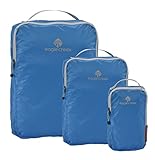
Hard-sided luggage has a rigid exterior and a floppy interior — everything migrates to one corner during transit. Packing cubes are the fix, and they're one of those travel upgrades that feel silly until you use them once and immediately re-pack every future trip the same way. One cube per category: tops, bottoms, underwear and socks, cables. Compress into the bag. When you arrive, move cubes to drawers and you're done. Eagle Creek's Pack-It cubes are the ones that show up in every flight attendant's gear list — they compress well, are sized to match standard luggage compartments, and last a decade of serious use.
Never lose your bag: put an AirTag in every piece of luggage
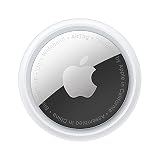
If you check bags, you need an AirTag in every checked piece. Airlines lose bags. They lose them more than they admit — over 2.5 million bags were mishandled by US carriers in 2023 alone. With an AirTag and the Find My app, you know exactly where your bag is in real time. When you file a lost bag claim, you can show the airline the GPS coordinates of your luggage sitting in their Denver hub while you're in Detroit. The 4-pack works out to $25 a tracker. One per bag, one in your coat. It's the best $100 you'll spend on travel this year, and it costs you exactly zero effort after setup.
TSA liquids: the $15 fix you should have done years ago
The 3-1-1 liquids rule is the same as it's been for 20 years. Three-point-four ounce bottles, one quart-sized bag, one per passenger. Most people are still playing the "is this small enough?" game at the security bin with full-sized shampoo bottles and getting waved off. A dedicated travel bottle set costs $15 and ends that game permanently. Refill from your full-size products at home, drop the whole set in the exterior pocket of your carry-on, pull it out as one unit at security. That's it. You've saved five minutes at every airport forever.
The lock situation
Hard-sided luggage almost always has a built-in TSA lock, which is good. It's also not sufficient. The TSA master keys are publicly known — every TSA-approved lock can be opened by a determined thief with the right tool. Use the built-in lock as a deterrent and for peace of mind on domestic flights. For international travel or leaving bags unattended in hostels and hotel lobbies, add a secondary loop lock through the zipper pulls. The Master Lock TSA combination at $10 is the standard: compact, reliable, accepted everywhere. One on your checked bag, one on your toiletry bag, done.
Power on the go: don't get stranded at 3%
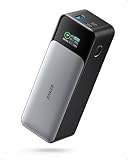
Long airport layovers, overnight flights, delays sitting at the gate — your phone dies at the worst possible time. A high-capacity power bank that lives in your carry-on solves this and doubles as a charging station for everyone traveling with you. The Anker 737 PowerCore 24K is overkill for a day trip and exactly right for international travel: 24,000mAh charges an iPhone from zero four times over, has two USB-C ports for simultaneous charging, and the display tells you exactly how much charge remains. It's a bit heavy (about a pound) but it earns that weight over a 14-hour travel day.
FAQs
Is hard-sided luggage actually better than soft-sided?
For checked bags and frequent travelers, yes. Hard-sided polycarbonate shells handle baggage handler abuse better, protect fragile contents, keep their shape, and are easier to wipe clean. Soft-sided bags are more flexible for overhead fitting and weigh slightly less at the cheap end, but the gap has closed at mid-range. If you fly more than 6 times a year and check bags at least half the time, hard-sided is the right call.
What size carry-on actually fits in overhead bins?
22" x 14" x 9" is the domestic airline standard for carry-on, though Spirit, Frontier, and most international carriers have stricter limits. The 20" hard-sided carry-on (roughly 20" x 14" x 8" actual exterior dimensions) fits everywhere. The 22"–24" "large carry-on" frequently doesn't fit on regional jets and you'll be forced to gate-check it — at which point you've lost the main advantage of packing a carry-on. Stick with 20" if you want true carry-on reliability.
Is polycarbonate or ABS plastic better for luggage?
Polycarbonate is better. It's lighter, more flexible (bends on impact instead of cracking), and more impact-resistant overall. ABS is cheaper and more brittle — it cracks at corners and seams under hard impacts. PC/ABS blends split the difference but skew toward polycarbonate performance. Avoid pure ABS shells on anything you're checking regularly.
How do I know if my luggage is actually lost vs just delayed?
With an AirTag inside, you'll know within 15 minutes of landing. Without one, airlines consider a bag "delayed" for the first 24 hours and "lost" after 5 days under DOT rules. File a report at the airline's baggage desk before you leave the airport — that timestamp matters for claims. With an AirTag, you can show the airline exactly where the bag is, which dramatically speeds up recovery.
Are hard-sided bags harder to clean?
The opposite, actually. Wipe the exterior with a damp cloth. Interior liners on most mid-range bags are removable or wipe-clean. Soft-sided bags absorb spills, stains, and airport-floor grime into the fabric permanently. The hard shell is the low-maintenance option by a wide margin.
What's the best luggage for international travel specifically?
For international travel: a 20" carry-on that meets IATA cabin baggage standards (55 x 40 x 23cm), a secondary TSA loop lock for zipper pulls, an AirTag inside, and packing cubes so you can quickly reshuffle if an airline wants to weigh your bag. Many international carriers have weight limits (7–10kg carry-on) rather than just size limits, so a lightweight polycarbonate shell matters more abroad than domestically.
How long should hard-sided luggage last?
A mid-range polycarbonate carry-on from a reputable brand should last 5–8 years of regular use. Signs it's time to replace: cracks in the shell especially at corners, wheels that wobble or don't roll true, a broken zipper or TSA lock that can't be repaired. Spinner wheels are the most common failure point — inspect them periodically and replace when they degrade, not before.