Here's the thing nobody tells you when you buy a cute $14 necklace: it's not that you got unlucky. Most inexpensive jewelry is built to tarnish. It's brass or copper alloy under a thin flash of gold or rhodium, and the coating starts wearing through the first time it touches lotion, sweat, or pool water. You're not doing anything wrong. The piece was never going to survive daily wear — it just took a few weeks to prove it. The fix isn't "buy more expensive jewelry" across the board. It's understanding which materials are actually built for daily contact with your skin, and which ones are just dressed up to look like they are.
- Top pickOXO Good Grips 4-Piece Drawer Organizer Set~$30
- Best budgetBagsmart Travel Toiletry Bag~$25
- Worth the splurgeBaggu Nylon Crescent Bag~$38
Why jewelry actually tarnishes (it's not really about price)
Tarnish is a chemical reaction, not a defect. Sterling silver reacts with sulfur compounds in the air and turns dark. Base metals like brass, copper, and nickel oxidize when they hit moisture, sweat (which is slightly acidic), and the sulfur in some skincare and cleaning products. Gold-plated pieces don't tarnish in the traditional sense — the base metal underneath does, once the plating wears thin enough to expose it. That's why a gold-plated ring looks fine for six weeks and then suddenly has a green-gray line where it touches your finger.
The two biggest accelerants are things most people don't think about: chlorine (pools and hot tubs strip plating fast) and perfume or lotion applied directly where jewelry sits. Spraying perfume on your wrist and then putting a bracelet over it is one of the fastest ways to degrade plating. The other accelerant is just contact time — a ring worn 24/7 tarnishes faster than a necklace you take off at night, simply because it never gets a break from moisture and friction.
The materials that actually resist tarnish
This is the part that matters most. A handful of materials are structurally resistant to tarnish — not "treated" or "coated," but resistant all the way through, because there's no thin plating layer to wear off in the first place.
| Material | Tarnish resistance | Water/shower safe? | Typical price |
|---|---|---|---|
| Solid stainless steel (316L) | Excellent — no plating to wear off | Yes, including chlorine | $15–50 |
| Titanium | Excellent — hypoallergenic, won't oxidize | Yes | $20–80 |
| 14k gold-filled | Very good — bonded gold layer, 100x thicker than plating | Yes, dry quickly after | $25–90 |
| Solid gold (10k–18k) | Excellent — will not tarnish | Yes | $150+ |
| Gold vermeil (silver + thick gold layer) | Good, but the weakest of the "good" options | Better to remove before showering | $40–120 |
| Gold-plated brass/copper | Poor — this is the "tarnishes in weeks" category | No | $10–30 |
If you want jewelry you genuinely never think about — shower in it, swim in it, sleep in it — stick to solid stainless steel, titanium, or 14k gold-filled. Solid gold is the gold standard (literally) but the price jump usually isn't worth it for pieces you're going to layer, lose, or bend earbud wires around. Gold-filled gives you 90% of the look and the durability at a fraction of the cost, which is why it's become the default for "everyday fine jewelry" brands over the last several years.
What "waterproof" and "tarnish-free" actually mean when you're shopping
These words show up on nearly every listing now, and they mean wildly different things depending on the seller. "Waterproof" on a jewelry listing almost never means literally waterproof — it means the piece is made from a material (stainless steel, titanium, gold-filled) that won't degrade from incidental water exposure like handwashing, sweat, or a quick shower. It does not mean you should leave it in a chlorinated pool for hours or scrub it with abrasive soap.
The listing details tell you more than the headline claim does. Look for the actual base material spelled out — "316L stainless steel," "14k gold-filled," "titanium" — rather than vague phrases like "gold tone" or "18k gold plated," which are the two phrases most associated with fast tarnish. If a listing won't say what the base metal is, that's usually because the base metal is the problem.
Store it right and even the "good" metals last longer
Material matters most, but storage is the free upgrade almost nobody uses. Tossing jewelry loose in a drawer or bowl does two things: pieces scratch each other constantly, and they're exposed to more air (and therefore more tarnish-causing reaction) than jewelry kept in a closed box or pouch. Separating pieces — even with something as simple as a divided tray — cuts down on both scratching and the surface area exposed to air at any given time.
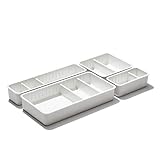
If you'd rather display than hide, a small open shelf near your dresser works too — a shallow dish or tray sitting on it keeps pieces visible and easy to grab, without the pile-in-a-bowl scratching problem. It's a smaller commitment than a full jewelry box and it looks intentional instead of like clutter.

Traveling without turning your bag into a tangle nightmare
Jewelry thrown loose into a suitcase pocket is the fastest way to end a trip with a snapped chain or a scratched ring. You don't need a dedicated jewelry roll (though they're inexpensive and worth it if you travel often) — a zip pocket inside a bag you're already packing does the job. The goal is just separation: pieces that can't slide around and knock into each other.
What to skip: red flags on "tarnish-free" listings
A few patterns are worth watching for before you add something to cart:
- "Gold tone" with no material listed. This almost always means plated base metal. If the material isn't named, assume it's not the good stuff.
- Extremely thin plating measured in microns without context. Plating thickness matters, but a listing that leads with a micron number and nothing else about the base metal is usually distracting from a cheap core.
- Reviews mentioning green skin or discoloration within the return window. Skim the 3-star reviews specifically — that's where "it looked great until week three" complaints tend to live, because 1-star reviews get emotional and 5-star reviews are often left before enough wear has happened to notice.
- No mention of nickel-free. If you have sensitive skin or a nickel allergy, "hypoallergenic" claims without specifics aren't enough — look for pieces that explicitly state nickel-free or list surgical-grade/316L stainless steel, which is inherently low-nickel.
The five-minute habit that extends any piece's life
Even tarnish-resistant metals benefit from a basic routine: put jewelry on last, after lotion, perfume, and hairspray, not before. Take it off before swimming, cleaning with anything bleach-based, or using hand sanitizer repeatedly. Wipe pieces down with a plain soft cloth after a sweaty day before putting them away — you don't need a specialty product, just something that removes the film of skin oil and product residue before it sits against metal overnight. That single habit does more for longevity than any material upgrade.
Frequently asked questions
What's the best metal for jewelry you never take off?
Solid stainless steel (316L) and titanium are the two most durable choices for pieces worn constantly — they don't tarnish, they're hypoallergenic, and they hold up to water, sweat, and daily friction better than anything with a plated surface. 14k gold-filled is the next best option if you want the look of gold specifically.
Is gold-filled the same as gold-plated?
No, and the difference matters a lot. Gold-filled has a layer of real gold mechanically bonded to a base metal (usually brass), and that layer is roughly 100 times thicker than standard gold plating. Gold-plated jewelry has a microscopically thin coating applied through electroplating, which wears through in weeks to months of regular wear. Gold-filled can last years or decades with normal care.
Can I shower or swim in tarnish-resistant jewelry?
Solid stainless steel and titanium can generally handle showering, sweating, and swimming without damage. 14k gold-filled tolerates showering and light water exposure fine, but chlorinated pools and hot tubs will shorten its life faster than plain water will, so it's worth removing before extended pool time. Gold vermeil and anything plated should come off before water exposure of any kind.
Why did my "tarnish-free" jewelry still turn my skin green?
Usually one of two things: the listing's "tarnish-free" claim referred to the plating resisting oxidation for longer than typical plating, not being immune to it forever, or the base metal underneath a thin gold or rhodium layer was never disclosed clearly. Skin turning green or dark is a sign of a base metal (often copper or brass) reacting with sweat and skin oils — a true solid stainless steel, titanium, or gold-filled piece won't do this.
How should I clean tarnish-resistant jewelry?
For solid stainless steel, titanium, and gold-filled pieces, a soft cloth and mild soap with warm water is usually enough — avoid abrasive cloths, ultrasonic cleaners on plated items, and anything with bleach or ammonia, which can degrade even durable finishes over time. Dry pieces fully before storing them, since trapped moisture is what encourages tarnish and discoloration in the first place.
Is it worth paying more for solid gold instead of gold-filled?
For everyday pieces you're likely to layer, lose an earring from, or catch on a sweater, gold-filled gets you most of the look and durability of solid gold at a fraction of the price, and most people can't tell the difference by eye. Solid gold is worth the premium for pieces you plan to keep for decades, pass down, or wear literally every day without any breaks — situations where the extra durability and resale value actually matter.