Real espresso under $500 is hard. Not "you have to shop carefully" hard. Genuinely hard, because espresso is a pressurized extraction that depends on three things working together — pressure, temperature stability, and a properly fine, even grind — and the cheaper a machine gets, the more it cheats on at least one of them. Most $200 espresso machines on Amazon are not making espresso. They're forcing hot water through pre-ground coffee at fake pressure and producing something that looks like espresso and tastes like a regret.
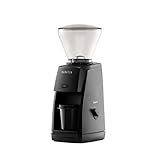
- Top pickBaratza Encore ESP Burr Grinder~$200
- Best budgetAeropress Original Coffee Maker~$35
That said: there are honest answers in this price range, and there's a clear path forward if you actually want to take this seriously. Here's the unvarnished version.
The honest truth: the machine is half the equation
If you take nothing else from this article, take this: you cannot make espresso with pre-ground coffee. Espresso requires a grind so fine and so consistent that pre-ground bags can't deliver it, and even if they could, the grind goes stale within minutes of leaving the grinder. Every "all-in-one" espresso machine that includes a built-in grinder under $500 uses a grinder that would be embarrassing as a standalone $40 unit.
So the real budget question isn't "what's the best $500 machine." It's "what's the best machine plus grinder combo I can build for $500." That's the framing that gets you actual espresso instead of pressurized brown water.
The honest entry point: Breville Bambino + dedicated grinder
The Breville Bambino is the cheapest espresso machine that genuinely works. 15 bars of pump pressure (real, not marketing), a thermojet heating system that's ready in 3 seconds, an automatic steam wand that produces actual microfoam, and a 54mm portafilter that — while not the commercial 58mm standard — is wide enough that the grind matters more than the basket size. It runs around $300.
The catch: the Bambino does not include a grinder. If you pair it with the Baratza Encore ESP — the entry-level grinder built specifically for espresso — you're looking at roughly $500 total. That combination will outperform any all-in-one machine under $800. It's the answer most home baristas eventually arrive at, and you can skip the detour by starting there.
The lever path: Flair, Aeropress, and other no-electric options
Here's the move most beginners don't consider. Manual lever espresso makers — the Flair Neo Flex and Flair 58 chief among them — produce real espresso using your own arm strength to generate pressure. No pump, no boiler, no electronics. You boil water in a kettle, you pull the lever, you get a real shot with real crema. The Flair Neo runs around $100. The Flair 58 (the "serious" version) runs $400ish.
The reason this matters: a $100 manual lever plus a $200 grinder gets you to actual espresso for $300. The tradeoff is effort and a learning curve. The reward is that you understand what you're doing, and the gear lasts forever because there's almost nothing to break.
The Aeropress isn't espresso, but it's the most-mentioned "espresso-style" alternative for a reason. It uses gentle pressure and immersion to produce a concentrated cup that's strong enough to use as the base for a flat white or latte. World Barista Champions travel with one. At $35, it's the lowest-risk way to figure out whether you actually like espresso-style drinks before you spend $500 on a setup.
The grinder problem, in detail
Here's why pressurized hot water from a cheap machine doesn't count as espresso. Espresso extraction needs a fine grind that creates resistance against 9 bars of water pressure. That resistance is what produces crema, body, and the concentrated extraction you're paying for. Without a proper grind, the water rushes through and you get a thin, bitter, fast pour that lacks every characteristic of real espresso.
"Pressurized" portafilter baskets — the kind that come standard with cheap machines — fake this resistance with a tiny pinhole that creates artificial pressure. They produce something that looks vaguely like espresso (it can even fake crema) but tastes nothing like it. If your machine came with one, that's a sign it was designed around bad grind quality. The Bambino includes both pressurized and standard baskets, which is why it's the entry point: it's designed to grow with you.
The Baratza Encore ESP is specifically calibrated for the espresso range. Its 20 espresso-tuned grind settings give you the resolution to dial in shots, which is something a $50 blade grinder physically cannot do. This is the single most important purchase in the entire setup.
The kettle and the scale (don't skip these)
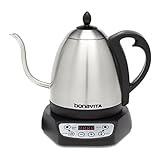
If you go the manual lever or Aeropress route, a variable temperature gooseneck kettle is non-optional. Espresso wants 200°F water, give or take a few degrees. Tap-temperature water doesn't extract. Boiling water over-extracts and makes things bitter. The Bonavita gives you preset temperatures and holds them for 60 minutes, which is more useful than it sounds when you're learning.
A scale matters too. Espresso ratios are precise: 18g of coffee in, 36g of espresso out, in 25–30 seconds. Eyeballing it produces inconsistent shots. A $20 kitchen scale fixes this entirely.
What about the Bambino Plus, the De'Longhi Dedica, the Gaggia Classic Pro?
Quick takes on the other names you'll see. The Bambino Plus ($500) adds an automatic milk frother — useful if you make lattes daily, skippable if you're willing to learn the manual wand. The De'Longhi Dedica EC685 ($200) is fine if you want a small footprint but the steam wand is weak and the temperature stability is worse than the Bambino. The Gaggia Classic Pro ($450) is a cult favorite because it uses a commercial 58mm portafilter and is endlessly modifiable, but the steam wand requires technique and it weighs 20 pounds. None of these change the grinder math: you still need a real burr grinder, and that's still a separate $150–250 purchase.
The realistic budget breakdown
- $300 total: Aeropress + Baratza Encore ESP. Not espresso, but excellent strong coffee and a great way to learn what you like.
- $300 total: Flair Neo Flex + Baratza Encore ESP. Real espresso, manual effort, no electronics.
- $500 total: Breville Bambino + Baratza Encore ESP. The honest entry point for electric espresso. This is the answer most people are looking for when they ask about machines under $500.
- $500 all-in-one machines with built-in grinders: Avoid. The grinders are not capable of espresso fineness. You will be frustrated.
The freshness rule applies here too: even with the right gear, you need fresh whole bean coffee within 2–6 weeks of roast date. Fresh whole bean espresso roasts on Amazon have improved a lot — look for a printed roast date, not a "best by."
The pour-over backup plan
One more honest option. If you're attracted to espresso because you want a strong, complex cup of coffee, a Chemex pour-over with the right grinder gives you most of what you actually want without any of the espresso headaches. It's not concentrated like espresso, but it's clean, bright, and showcases bean character better than espresso does. Worth considering before you invest in a full espresso setup.
FAQs
Can you actually make espresso for under $500?
Yes — but only if you split your budget between a real machine (Breville Bambino, ~$300) and a real grinder (Baratza Encore ESP, ~$200). All-in-one machines under $500 with built-in grinders cannot grind fine enough or evenly enough for true espresso.
Why does everyone insist on a separate grinder?
Espresso requires a very fine, very even grind to create the resistance needed for proper extraction at 9 bars of pressure. Cheap built-in grinders and standalone blade grinders can't do this. Without it, you get pressurized hot water — fast, thin, bitter, and missing crema.
What's the difference between "pressurized" and "non-pressurized" portafilters?
Pressurized baskets have a single tiny hole that fakes resistance, letting bad grinds appear to make espresso. Non-pressurized (standard) baskets require proper grind quality but produce real espresso. The Bambino includes both, which is why it's the recommended entry point — you can train wheels on the pressurized basket, then graduate.
Is the Aeropress really an espresso alternative?
Not technically. It's a pressure-immersion brewer that produces concentrated coffee, not true 9-bar espresso. But it's strong enough to base a flat white or latte on, and at $35 it's the cheapest way to figure out whether you like espresso-style drinks before investing in a full setup.
What about pod machines like Nespresso?
Nespresso machines genuinely produce something close to espresso because the pods are pre-dosed with the right grind. The tradeoff is per-shot cost (~$0.85/pod), limited bean choice, and a lot of waste. They're a legitimate option if you want zero learning curve and don't mind the recurring expense — just understand it's a different product than a "real" espresso setup.
How long until I'm pulling good shots?
With a Bambino + grinder + decent fresh beans: about 20–30 shots of practice. You'll waste a quarter pound of coffee learning to dial in grind size, dose, and tamp. After that, you'll be making drinks better than most chain coffee shops. Manual lever has a longer learning curve (50+ shots) but teaches you more.
Do I need a milk frother / steam wand?
Only if you make milk-based drinks (lattes, flat whites, cappuccinos). For straight espresso shots or Americanos, the steam wand is unused. The Bambino's auto wand is good. If you want fully automatic milk texturing, step up to the Bambino Plus (~$500).