Most desk organizers fail at the actual job. They add more visual complexity — more small containers requiring decisions about what goes where — without removing the fundamental problem, which is that there is too much stuff on the desk. The ones that work do one thing well: they make the default state of the desk clean rather than making the cluttered state slightly more organized.
Start with the drawer, not the desktop
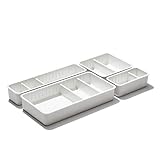
The best desk organizer is one you cannot see. Get the small stuff off the surface and into a well-organized drawer and you have solved the problem. The OXO Good Grips four-piece set is the most popular drawer organizer on Amazon because it actually works — interlocking pieces, smooth edges, and the right depth for pens, scissors, and the random cables that accumulate in every desk drawer.
The cable problem is its own problem
No amount of pen cups and paper trays will fix a desk covered in cables. The Anker Cable Management Box hides a power strip and up to six cables in a single box that sits under or behind the desk. It sounds minor until you do it, at which point you cannot believe you tolerated the previous situation.

The monitor stand that adds storage
Raising your monitor to eye level is good for your neck. Getting a monitor stand with storage underneath is good for your desk. The space under a riser fits a keyboard, small notebooks, and chargers — it is free real estate that most people never use. Look for bamboo or aluminum, which hold weight without wobbling.
Floating shelves above the desk
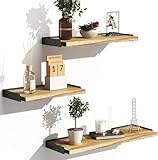
The mistake most people make: buying more horizontal organizers for an already crowded horizontal surface. Go vertical. The Bayka floating shelf 3-pack holds up to 33 lbs each, takes about 30 minutes to install, and moves your reference books, plants, and small items off the desk entirely.
The monitor light as a decluttering move
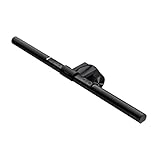
A desk lamp takes up surface space. The BenQ ScreenBar clips to the top of your monitor, takes up zero desk space, and lights the work surface better than most lamps because it is designed specifically for this purpose. Removing the lamp removes a cord, a base footprint, and the decision of where to put it.
What to skip
Multi-compartment desktop caddies. The ones with 12 slots for pens, paper clips, and sticky notes. They fill up, the compartments become arbitrary, and they just look full instead of organized.
Decorative storage that prioritizes aesthetics over use. Ceramic cups are pretty. They also tip over, cannot be removed from the desk easily for cleaning, and do not hold as much as they look like they do.
Cord organizers that require weaving. You will do it once and never again. The box wins.
What is the single most impactful desk organizer change?
Moving cables off the surface. Every desk looks immediately better when cables are managed — a cable box, cable clips along the back of the desk, or routing cables through a grommet. After cables, drawer organization is second because it removes the visible surface clutter fastest.
How do I keep my desk organized after I set it up?
The one-in-one-out rule and a weekly clear-off. Every item added to the desk needs a designated home — if it does not have one, it does not belong on the desk. Spend five minutes every Friday removing anything that accumulated during the week. Systems that require daily maintenance fail; weekly is sustainable.
Are bamboo desk organizers worth the extra cost?
For items you will see and touch daily, yes. Bamboo looks better than plastic, does not yellow over time, and feels more substantial. For drawer interiors where you will not see the material, the OXO plastic set is fine and cheaper.
How do I organize a small desk that cannot fit much?
Go vertical: wall-mounted shelves, monitor riser with storage, pegboard above the desk. The goal is to move everything off the horizontal surface that does not need to be there during active work. A small desk with nothing on it but a monitor and keyboard is more functional than a large desk covered in organizers.
What should actually be on my desk vs stored elsewhere?
On the desk: monitor, keyboard, mouse, one drink, current notebook or project materials. Stored nearby but not on the desk: everything else. The test is whether you need it in the next two hours. If not, it should not be on the surface.