There is a category of cookbook that exists purely to sit on a shelf and make you feel aspirational. You buy it, flip through the glossy photos twice, and it becomes $40 of beautiful guilt. This article is not about those books. This is about the cookbooks that actually live on your counter, get splattered with olive oil, have pages you've dog-eared so many times the corners are soft, and have genuinely changed the way you cook. Those are the ones worth owning in print — and yes, print specifically.
Why physical beats digital every time in the kitchen
Cooking apps and PDFs look great on paper. You can search by ingredient, filter by dietary restriction, and carry ten thousand recipes in your pocket. The problem is that your phone in the kitchen is a grease trap, a distraction machine, and a device that locks its screen every 30 seconds right when your hands are coated in raw chicken. A physical cookbook stays open on the page you need. You can annotate it. You can spill on it. You develop a real relationship with it over years of use that no app can replicate.
The "skip" list, briefly: recipe apps work fine for browsing, terrible for active cooking. Downloaded PDFs are the worst of both worlds — they scroll, they lock, they're not searchable when your eyes are on a hot pan. Save the digital experience for planning and grocery lists. When you're actually cooking, use a book.
The one cookbook everyone should own first
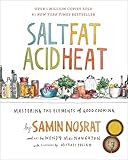
If you own nothing else, own Salt, Fat, Acid, Heat by Samin Nosrat. It was published in 2017 and it immediately changed how food writing works, because instead of giving you recipes to follow, it teaches you the four elements that make all food delicious. Once you understand why a dish works — what the salt is doing, what the acid is brightening, what the fat is carrying — you stop needing recipes entirely. You start improvising correctly instead of randomly. It is the closest thing to a cooking education in 480 pages.
The books that actually teach technique
After you understand the principles, you need the technique. The Food Lab by J. Kenji López-Alt is the most comprehensive technique reference available at any price. At nearly 1,000 pages, it covers American home cooking with the rigor of a culinary school textbook — except it's genuinely fun to read. Kenji runs every technique through systematic testing and explains exactly why the method works.
The vegetable books that actually get used
Two books transformed how a lot of home cooks think about vegetables. Jerusalem by Yotam Ottolenghi and Sami Tamimi is a deeper, more personal book rooted in the shared food culture of Jerusalem. The recipes are complex, rewarding, and unlike anything in a standard Western cookbook repertoire. If you make one Ottolenghi purchase, make it this one.
The companion tools worth having nearby
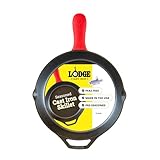
A great cookbook is only half the equation. The other half is having the right pan. The Lodge cast iron skillet is the kitchen tool that shows up implicitly in almost every serious cooking book. It sears better than stainless, it goes from stovetop to oven without complaint, and a well-seasoned Lodge at $24 outperforms $200 pans for most tasks.
What to look for in a cookbook before you buy
Not all cookbooks deserve shelf space. A few filters before you click buy: Does the author explain why, or just list steps? A good cookbook teaches; a bad one just instructs. Are the headnotes useful and opinionated, or filler? Does the ingredient list use things you can actually find, or does it require specialty stores for every dish?
Celebrity cookbooks fail this test constantly. Books by trained cooks, food journalists, and restaurant chefs who specifically wanted to translate professional technique to home cooking — those are the ones that stick.
Aren't cooking apps and YouTube just better than cookbooks at this point?
For certain things, yes — video is great for techniques like knife skills. But for active cooking, a physical book on the counter is faster, stays open, doesn't require a charger, and doesn't ping you with notifications while you're deglazing a pan.
I barely cook. Is it worth buying physical cookbooks?
Start with one — specifically Salt, Fat, Acid, Heat. It's the book most likely to make you actually want to cook more, because it explains flavor rather than just dictating steps.
What's the right cookbook for someone who already cooks well?
The Food Lab, without hesitation. It will challenge things you think you already know and replace intuition with tested understanding. Even experienced cooks find multiple techniques in it that change their habits permanently.
Should I buy used cookbooks?
Yes, often. Most serious cookbooks hold up over years. Used copies on Amazon or Thriftbooks are often half price. The one exception is books tied to a specific trend or moment — those date faster.
How many cookbooks is too many?
A useful number: one foundational principles book, one comprehensive technique reference, and one or two books aligned to the cuisine you actually cook most. After that, the marginal value drops fast.
Is the Lodge cast iron skillet really as good as expensive pans?
For most home cooking tasks — searing, roasting, frittatas, cornbread, pan sauces — yes. The Lodge is heavier than fancy pans, which some people find inconvenient, but that weight is also why it holds heat so well.