Here is an uncomfortable truth about cookbook stands: a cutting board works. Prop your cookbook open, lean it against the backsplash, done. Hundreds of home cooks have been doing this for decades without incident. If you've been using a cutting board as a cookbook holder and it's working for you, there is no crisis to solve here.
And yet — a good cookbook stand is one of those purchases where the upgrade is immediately, viscerally obvious. The book stays open without a hand holding it. The pages don't flap shut right when you're measuring. You can read it from two feet away without leaning over the counter. If you cook from books regularly — not just occasionally pulling out a recipe on your phone, but actually working through cookbooks, testing recipes, annotating — a stand earns its counter space fast. The question is which one, and whether it's worth spending real money on.
The short answer: yes, for a specific type of stand, at a specific price point. Here's how to think through it.
What actually makes a cookbook stand worth buying
The stands that fail share a few common problems: they can't hold heavy books flat, the page guards are too short or in the wrong position, they tip forward under the weight of a thick cookbook, or they're too shallow to hold anything larger than a paperback. A $12 plastic stand from a discount store will collapse under the weight of a serious cookbook — the kind with 600 pages and a thick spine — within six months.
What makes a stand worth owning:
- Weight capacity. A proper cookbook stand holds books up to 5–6 lbs without tipping. That covers virtually everything including thick French Laundry-style tomes.
- Page guards that actually reach the text. The horizontal bar at the bottom holds the book open, but if it covers the bottom two lines of a recipe, it's useless. Look for guards that are adjustable or positioned so they hold pages without obscuring content.
- Angle adjustment. You want to read at counter height, not crane your neck at a fixed 45 degrees. Adjustable angle stands are significantly more comfortable over a long cooking session.
- Stability. The stand should not rock or slide when you reach past it. Rubber feet and a weighted base matter more than they sound.
- Easy to clean. Oil splatter is not optional. It happens. The stand needs to be wipeable.
One material note before we get into picks: wood stands look beautiful and many people love them. But wood is porous, absorbs oil, and can warp near heat or steam. Acrylic and metal are more practical for actual kitchen use. This isn't a dealbreaker — just something to factor in based on how you cook.
Wood vs. metal vs. acrylic — the honest comparison
Wood stands are the classic choice and the most common gift you'll find in a kitchen store. They look warm and intentional on a counter. The downsides: most wood stands have fixed angles, they stain easily from oil splatter, and cheaper ones warp within a year. If you keep your kitchen immaculate, cook delicate foods, and treat the stand more like a decorative object that occasionally holds a book, wood is beautiful. If you splatter, steam, and cook aggressively, wood will look terrible within two years and possibly stop lying flat.
Metal stands — usually stainless or chrome — are the practical workhorse option. They're easy to wipe down, hold their shape indefinitely, and most have adjustable angles. The aesthetic is more utilitarian. In a modern kitchen this looks intentional; in a farmhouse kitchen it can feel out of place. The Lodge Cast Iron stuff aesthetic is not what you're going for with a chrome wire stand, but functionally they're the best option for heavy daily use.
Acrylic stands are the sleeper pick. Clear acrylic is virtually invisible on a counter, doesn't absorb anything, wipes clean in seconds, and looks elevated without trying. The risk is scratching — acrylic scratches more easily than metal — and some cheaper ones crack at stress points over time. A well-made acrylic stand (which means thicker material and reinforced joints) is genuinely excellent and the most "disappearing" option aesthetically.
The splurge vs. save reality
There is a clear quality cliff at around $40. Below that, you're getting fixed-angle stands made of thin material that struggle with anything over 3 lbs. Above $40 and especially in the $50–80 range, you get adjustable angles, real weight capacity, and materials that last. The very expensive stands ($100+) are mostly selling aesthetics — bamboo with visible joinery, handcrafted wood from a small-batch maker — not functional improvements over the $60 tier.
So: save money relative to the very top of the market, but don't go cheap. The $25 stand from a big-box store will frustrate you. The $60 stand will be something you still own in a decade.
One underrated option in the "save" category: a good tablet holder. If you frequently cook from recipes on your iPad or phone, a tablet holder designed for kitchen use does everything a cookbook stand does for digital content, often better. More on this below.
The picks worth buying
These are the six stands (and one splurge) that actually meet the criteria. I've organized them by material and use case.
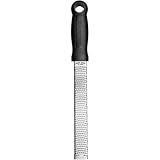
This is the metal workhorse recommendation. It's not the prettiest stand in the world — it looks like something you'd find in a professional kitchen, which is exactly what it is. The five-angle adjustment is genuinely useful; the magnifier strip is a nice touch for fine print. It wipes clean completely. If you just want the best functional stand without thinking about it further, this is the answer.
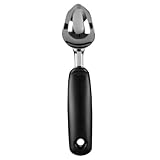
The OXO is the most "invisible" stand on this list — clear acrylic means it recedes on any counter. It's also OXO, which means the ergonomics are thought through: the book guard is positioned to hold pages without obscuring the bottom lines, the base doesn't slide. At $28 it's the strongest value here. The one caveat: it won't hold a very heavy tome (anything over 4 lbs will make it work harder than ideal).
Microplane makes the best graters in the world (seriously, the Microplane grater is one of the best $15 kitchen purchases you can make — more on that below). Their cookbook stand applies the same philosophy: stainless, simple, overbuilt. The weighted base means zero tipping. Both-sides page clips are better than the single bottom bar on cheaper stands — they hold pages open without any overlap onto the text.
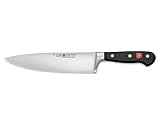
This is the obligatory detour. If you're investing in cooking infrastructure — stands, tools, the whole setup — and you don't yet own a sharp, properly made chef's knife, that's where the money goes first. The Victorinox Fibrox is what culinary schools recommend, what professional cooks buy for their home kitchens, and what you want. Everything else on this list is secondary to a knife that actually works.

Another detour, but relevant: many of the best cookbook recipes that actually get cooked at home are the ones that benefit from a pressure cooker. Braised short ribs in 45 minutes. Dried beans in 30. Stock in an hour. If you're buying a cookbook stand because you're serious about cooking from books, the Instant Pot belongs in that same consideration set. It makes ambitious recipes achievable on a weeknight.
Tablet holders for digital recipe cooks
If you cook primarily from your phone or tablet rather than physical books, a tablet-specific holder is worth considering alongside or instead of a cookbook stand. The key differences: tablet holders typically have a smaller footprint, have no bottom bar to obscure text (the screen shows exactly what you set it to), and some have splash-resistant features.
The best kitchen tablet holder is something like a gooseneck or adjustable-arm mount that attaches to a cabinet or the counter edge, putting your tablet at eye level. This eliminates the leaning-over-the-counter problem entirely. It's a different product category than a cookbook stand, but if your primary recipe source is digital, it's the better investment.
That said: a good cookbook stand holds tablets just fine. The OXO acrylic stand above is explicitly designed for both books and tablets. You don't need two separate products unless your setup specifically calls for it.
The oil splatter reality and how to deal with it
No matter what stand you buy, it will get oil on it. This is not a design flaw; it's a kitchen. The question is how easy it is to clean.
Acrylic: A damp cloth removes essentially everything. Use a microfiber cloth to avoid scratching. Do not use abrasive cleaners.
Metal/stainless: Dish soap and a sponge. Stainless can go in the dishwasher if you're not worried about water spots on visible surfaces.
Chrome wire: The most annoying to clean because oil gets into the wire intersections. A toothbrush helps. Not a dealbreaker but worth knowing.
Wood: Oil penetrates. You can treat it with food-safe mineral oil periodically to condition the wood, but you will not get cooking oil stains fully out of most wood stands. Budget for this visually or choose a different material.
One practical note: if your cookbook stand lives near your stovetop (which it often does), splatter is much more intense than if it's on the other end of the counter. Position matters. The closer to the burners, the more you'll be wiping it down.
The Lodge cast iron situation is worth noting here as a comparison. Lodge cast iron is one of the most maintenance-intensive pieces of kitchen equipment you can own — you season it, you dry it by hand, you never put it in the dishwasher. People do this gladly because it performs. A cookbook stand should never require that level of maintenance. If your stand needs a care routine, you bought the wrong stand.
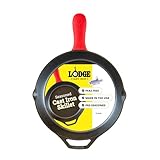
Not a cookbook stand, but included here for context: Lodge cast iron is the benchmark for durable kitchen investment. When we talk about something being "worth the splurge," we mean it performs noticeably better, lasts noticeably longer, and becomes a tool you reach for without thinking. A good cookbook stand should clear the same bar — not be something you fidget with, work around, or replace every two years.
The Chemex coffee maker (below) is another example of this principle: beautiful, functional, timeless. Buying one good thing and keeping it is better than cycling through a series of cheaper things that almost work.

The point is not to buy a Chemex right now (unless you want to). The point is the philosophy: in the kitchen, a few excellent things outperform a drawer full of adequate ones. A cookbook stand is a small purchase in absolute terms, but it's a thing you interact with every time you cook from a book. Getting it right matters proportionally more than the price suggests.
Frequently asked questions
Do I really need a cookbook stand or will a cutting board work?
A cutting board absolutely works as an improvised cookbook holder — leaning a book against the backsplash is a valid strategy. The upgrade a dedicated stand provides is hands-free page-holding, better reading angles, and stable positioning while you move around the kitchen. If you cook from books daily, the stand earns its keep. If you cook from books occasionally, the cutting board method is fine.
What's the difference between a cookbook stand and a book folio?
A cookbook folio is a protective sleeve or cover that holds the book open (like a protective case with a stand function built in). A stand is a separate holder the book sits in. Folios are useful if you want to protect a specific book from splatter and damage; stands are more versatile because they work with any book. Most serious cooks prefer stands for their flexibility.
What size cookbook stand do I need?
Look for a stand with at least a 12" wide base to accommodate large-format cookbooks like those from Ottolenghi or Thomas Keller. Depth-wise, 8–10" is sufficient for most books. The key measurement is the page guard height — make sure it extends high enough to hold pages without covering more than the bottom quarter-inch of content.
How do I keep a cookbook stand clean?
Wipe it down after every cooking session where there's been splatter near the stove. Acrylic and stainless are the easiest materials to maintain — damp cloth for both. For chrome wire stands, a toothbrush gets into the joints. Avoid wood stands if you cook high-splatter dishes (deep frying, sautéing with aromatics) unless you're prepared to re-oil the wood periodically.
Can I use a cookbook stand for a tablet or e-reader?
Yes — most good cookbook stands hold tablets and e-readers as well as physical books. The OXO acrylic stand is explicitly designed for both. If you cook primarily from a tablet, a dedicated kitchen tablet mount (gooseneck arm or cabinet-clip style) gives you more positioning flexibility and usually keeps the screen at eye level rather than counter level.
Is a $100+ cookbook stand worth it compared to a $50 one?
In most cases, no. The functional improvements in the $50–80 range (adjustable angle, real weight capacity, good page guards) are meaningful. Above that price, you're primarily paying for aesthetics — handcrafted wood, premium bamboo, visible joinery. Beautiful if that matters to you; not a functional upgrade over a well-made $60 stand.