Somewhere in every coffee drinker's life, there's a moment of betrayal. You make a pot with the same beans, the same machine, the same water you always use, and it tastes... off. Sour one day, bitter the next, weak the day after that, despite you doing literally nothing differently. The beans aren't lying to you. Your grinder is.
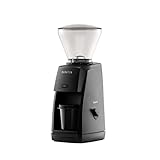
- Top pickBaratza Encore ESP Burr Grinder~$200
- Best budgetAeropress Original Coffee Maker~$35
If that grinder is a blade grinder — the kind with a little propeller at the bottom that whirs around like a tiny blender — this isn't a mystery, it's physics. And it's also the most common reason people conclude they "just don't like fancy coffee" when what actually happened is that fancy coffee never had a chance.
The problem with blade grinders: chaos disguised as convenience
A blade grinder doesn't grind coffee. It chops it, randomly, the same way a food processor chops an onion. Beans near the blade get pulverized into dust. Beans farther from the blade bounce around mostly intact. Run it for 10 seconds and you don't get "medium-ground coffee" — you get a chaotic mix of dust, medium chunks, and the occasional half-cracked bean, all in the same scoop, all headed into the same filter.
That matters because extraction — the process of hot water pulling flavor compounds out of ground coffee — depends heavily on particle size. Small particles (dust) have more surface area, so water extracts from them fast, often too fast, pulling out the bitter, papery compounds that come out last in a proper extraction. Big particles (boulders) have less surface area, so water barely touches them before your brew cycle ends, leaving them under-extracted, sour, and weak. Put dust and boulders in the same cup and you get both problems simultaneously: bitter and sour and thin, fighting each other in your mouth. That's the "off" taste. It's not the beans. It's the grind.
The genuinely maddening part is that a blade grinder makes this worse the more precious you get about it. Buy nicer beans, and you're just extracting more bitterness from the dust and more sourness from the boulders. Grinding longer to get it "finer" only turns more of the batch to dust while leaving the toughest chunks stubbornly whole. There's no lever on a blade grinder that fixes this. You can't dial in what you can't control.
What a burr grinder actually fixes
A burr grinder works completely differently. Instead of chopping, it crushes beans between two burrs — either flat discs or a cone inside a ring — set at a fixed, adjustable gap. Every bean has to pass through that same gap to come out the other side, which means the resulting grounds land in a tight, predictable range of particle sizes instead of a chaotic spread. Coarse setting, you get a narrow band of coarse particles. Fine setting, a narrow band of fine particles. Either way, "narrow band" is the part that matters — it's what lets water extract at roughly the same rate from every particle in the cup, instead of racing through the dust and ignoring the boulders.
The second thing a burr grinder buys you, almost as an afterthought, is control. Blade grinders have exactly one variable: how long you hold the button. Burr grinders have a dial or a stepped adjustment with dozens of settings, which means you can actually match your grind to your brew method — coarse for French press, medium for drip, fine for pour-over, extra-fine for espresso. That's not a luxury feature. It's the actual mechanism by which different brew methods produce different results. Without it, you're brewing every method with roughly the same wrong grind and wondering why your Aeropress tastes like your drip machine.
This is also why "just buy better beans" only gets you so far. Good beans ground badly still taste bad. Mediocre beans ground well, with a burr grinder set correctly for the brew method, will beat them most of the time. The grinder is the multiplier that everything else in your coffee setup depends on.
The honest signs you're actually ready to upgrade
Here's where most grinder advice oversells itself. Not everyone needs a burr grinder right now, and pretending otherwise is how people end up with $200 of unused kitchen equipment. The upgrade is worth it when a few things are true at once:
- You're brewing more than a couple of times a week. If coffee is a daily or near-daily habit, the cost of a burr grinder amortizes fast — you're talking pennies per cup over a couple of years.
- You've already fixed the free stuff. Fresh-roasted whole beans, a roast date instead of a "best by" date, decent water, a brew ratio you're not just eyeballing. If you're still buying whatever pre-ground bag is cheapest at the grocery store, a burr grinder won't fix that — grind fresh from whole beans is step one, and it should come before the grinder purchase, not after.
- You've noticed your coffee tastes inconsistent from one brew to the next with the same beans and method. That inconsistency is almost always a grind problem, and it's the single clearest signal that a blade grinder has become your bottleneck.
- You've hit a flavor plateau. You've upgraded beans, upgraded your brew method, maybe bought a nicer kettle, and the coffee still tastes flat or muddy no matter what you try. That plateau is what a burr grinder breaks through, because it's fixing the one variable none of those other upgrades can touch.
If none of that describes you — you drink coffee a couple times a month, you genuinely can't taste the difference and don't care to, or you haven't even started buying whole bean coffee yet — save your money. A burr grinder solves a specific, real problem. It's not a magic wand for people who aren't paying attention to their coffee in the first place.
Why the Encore ESP specifically, and not something else
Once you've decided you're actually ready, the next question is which burr grinder, and this is where it's easy to either overspend or undershoot. Hand grinders are cheaper and genuinely fine if you only make one cup at a time and don't mind the arm workout, but they're slow and inconsistent to use daily for a household. Jumping straight to a $500+ flagship grinder before you know what you like is its own kind of premature — you're paying for range and precision you don't have the palate to use yet.
The Encore ESP sits in the sweet spot, and it earns that spot for a specific reason: it's the updated version of Baratza's long-running Encore, with conical steel burrs and a wider adjustment range that stretches down into espresso-fine territory while still covering everything coarser. That matters even if you have zero interest in espresso right now, because it means the grinder doesn't become obsolete the moment your taste or your brew method changes. Buy it for pour-over today, and if you get an espresso machine in two years, it's already capable — you're not buying a second grinder.
Practically, it's also just easy to live with: 40 stepped settings that click into place and stay put (no drifting dial), a catch bin that empties without static-clinging grounds all over your counter, and a company with a real reputation for parts and support if something eventually wears out. It's not the prettiest grinder on a countertop and it's not silent, but it does the one job — consistent particle size, every time, dialed to whatever you're brewing — better than anything else near its price.
Building the rest of the setup around it
The grinder is the multiplier, but it's multiplying whatever brew method you pair it with. A few things earn their spot next to it.
For pour-over, the Chemex is still the standard for a reason — it's been made essentially the same way since 1941, and the thick paper filters strip out oils and sediment for a clean, bright cup that actually shows off what your freshly ground beans taste like. It's also just a genuinely beautiful object to have on a counter, which isn't nothing.
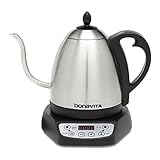
Pour-over also lives or dies on pour control, which is the one variable a grinder can't fix. A regular kettle dumps water too fast and too imprecisely for a slow, staged pour, so a gooseneck kettle is the other half of that equation — it gives you control over rate and direction, and if it has variable temperature, you can actually hit 200°F for pour-over instead of guessing with a kettle that only knows "boiling."
And if the whole reason you've been putting off a grinder is that you don't have time for a ritual every morning, the Aeropress is the answer to that objection. It's $35, plastic, nearly indestructible, and produces a genuinely excellent, concentrated cup in about two minutes using fresh grounds from the Encore ESP set fine. It travels well, it's dead simple to clean, and it removes "I don't have time to fuss with this" as a reason to keep buying pre-ground coffee.
The honest case for waiting
None of this is an argument that everyone needs $350 of coffee equipment sitting on their counter. If you're still working through a container of pre-ground coffee and haven't yet switched to whole bean, do that first — it's free information. Buy a bag of whole bean coffee from a local roaster, get it ground at the store for your brew method, and see if the freshness alone changes how you feel about your coffee. If it does, and you notice yourself wishing you could dial the grind finer or coarser for different methods, that's your actual signal, not a review article telling you to buy something.
It's also fair to wait if your palate genuinely can't tell the difference yet, which is normal and not a character flaw. Grind consistency is a real, measurable thing, but appreciating it takes a little bit of calibrated tasting — usually a few weeks of paying attention. There's no rush. The Encore ESP will still be there, and it'll still be the right answer, whenever the plateau actually shows up instead of being pre-empted by an ad.
Frequently asked questions
Is a blade grinder really that much worse than a burr grinder?
Yes, more than most people expect. A blade grinder chops beans randomly, producing a mix of fine dust and coarse chunks in the same batch. The dust over-extracts and turns bitter; the chunks under-extract and turn sour. A burr grinder crushes beans to a consistent particle size, so extraction happens evenly across the whole batch — which is the difference between a clean, balanced cup and one that tastes muddled no matter how good the beans are.
Is the Encore ESP overkill if I don't drink espresso?
No. The "ESP" in the name reflects an expanded grind range that reaches down into espresso-fine territory, but that range simply adds capability at one end — it doesn't take anything away for drip, pour-over, or French press. If you only ever brew drip coffee, it performs exactly as well as a grinder built solely for that purpose, with the added benefit of being ready if your brew methods ever change.
How much better does fresh-ground coffee actually taste?
Substantially, and it's one of the more noticeable upgrades in the kitchen relative to its cost. Ground coffee starts losing aromatic compounds within minutes of grinding as it oxidizes and off-gases carbon dioxide. Grinding immediately before brewing preserves those compounds, which translates to more aroma, more clarity, and less flat, cardboard-y flavor in the cup — a difference most people can taste on the very first try, without any training.
What's the actual difference between the regular Encore and the Encore ESP?
The Encore ESP uses updated conical steel burrs and a wider adjustment range that extends further into fine, espresso-capable territory than the original Encore, which was built mainly for drip and pour-over. Both are excellent, reliable grinders from the same company; the ESP is simply the more future-proof version if there's any chance you'll want a finer grind down the road.
Do I need a gooseneck kettle, or is the grinder enough on its own?
The grinder matters more — it's the bigger lever on flavor and the one most people are missing. But if your brew method is pour-over, a gooseneck kettle addresses the other major variable: pour control. A regular kettle pours too fast and imprecisely for the slow, staged pour pour-over actually needs, so pairing the two gets you closer to a coffee shop result than either upgrade alone.
How long does a grinder like the Encore ESP actually last?
With normal home use, conical burr grinders like this one are built to last years, not seasons — the burrs are metal, not the plastic blades in cheap grinders, and Baratza has a longstanding reputation for supplying replacement parts rather than forcing a full replacement when something eventually wears. Treated reasonably (emptied regularly, kept away from moisture), it's the kind of purchase you make once.