Most cat trees are an interior design crime. Beige carpet wrapped around particle board, dangling sisal mice, fake fur in a color that doesn't exist in nature, and a footprint the size of a loveseat. You bought one because your cat needed it, you put it in the corner of the living room, and now every guest who walks in pretends not to see it. Your cat, of course, loves it. Your cat has no taste.
The good news: cat trees have quietly gotten better. Real wood, sisal rope instead of carpet, modular shelving, wall-mounted options that look like Scandinavian art installations. You can give your cat the vertical territory they actually need without your home looking like a 1998 PetSmart display. Here's what to buy and what to avoid.
Why your cat actually needs a cat tree
This isn't a luxury purchase. Cats are arboreal predators by instinct, and vertical space genuinely matters to them in ways horizontal space doesn't. High perches let them survey their territory, retreat from stressors (other pets, kids, the vacuum), and feel safe enough to actually sleep deeply. A cat without vertical access is a cat with chronic low-grade stress, which shows up as overgrooming, aggression, or hiding under the bed for sixteen hours a day.
So yes, a cat tree. The question is just which one, and how to keep it from ruining your living room.
The main pick: a tall sisal tree, in a neutral color
Height matters. Cats want to be above eye level, ideally above the tops of doorways. A 60-inch tree is the minimum for adult cats. Sisal rope (not carpet) is the right scratching surface — it lasts roughly five times longer than carpet, doesn't shed fibers, and doesn't get matted with cat hair and dander. Look for beige or gray fabric, not the weird mauve or teal options that scream "pet store clearance shelf."
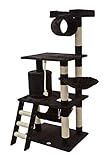
The Go Pet Club 62-inch is the unfussy workhorse pick. It's tall, sisal-wrapped, has multiple perches, and comes in a beige that disappears into most rooms. It's not a designer piece, but it's also not visually offensive, which puts it ahead of 80% of the market.
The wall-mounted route: shelves instead of a tree
If you cannot bring yourself to put a piece of carpet-wrapped furniture in your living room, do what minimalist cat owners have been doing for a decade: skip the tree entirely and build a wall climbing route with floating shelves. Three or four staggered shelves up a wall, ideally ending near a window, and your cat has more vertical territory than any pre-built tree provides. Bonus: the shelves still function as shelves when your cat is not on them.
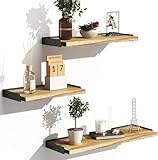
The Bayka 3-pack is the cheapest way to test this idea. They're rated for 40 pounds each (way more than any cat), and the dark wood looks intentional rather than pet-themed. Mount them 15 to 18 inches apart vertically and stagger them horizontally so your cat has to actually jump between them. That's the whole project.
Sisal vs carpet: this is not a close call
If you only remember one thing: sisal beats carpet, every time. Carpet looks worse from the day you unbox it, gets matted within months, traps every loose hair, and your cat will scratch the side of your couch instead because it's a more satisfying texture. Sisal rope is rough, holds its shape, and gives the satisfying shred-resistance cats actually want. A sisal-wrapped tree will look acceptable for years. A carpet tree starts looking sad in about six weeks.
If you already own a carpet tree, you can re-wrap the posts with sisal rope yourself for about $20. It takes an afternoon and instantly upgrades how the whole thing looks.
Brands worth knowing
Three brands consistently make cat furniture that doesn't look embarrassing in a real home:
- The Refined Feline — premium modern cat furniture in real wood, including the famous Lotus Tower. Expensive ($300 to $600) but genuinely furniture-grade. Worth it if you have one cat and a tasteful apartment.
- Vesper by Catit — Belgian-designed mid-range trees in walnut and oak finishes. The Vesper V-High and V-Tower are the standouts. About $150 to $250.
- FrontPet — solid mid-range with a focus on stability and sisal construction. Less designer, more practical, and well-built for the price.
If you're willing to spend $200 plus, those brands are where to start. If you want to stay under $100, the Go Pet Club above is still the right answer.
Stability is the hidden problem nobody warns you about
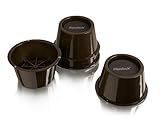
Most cat tree complaints in reviews boil down to one thing: the tree wobbles. A wobbly tree is a cat tree your cat will not use, and a tall wobbly tree is a furniture-falling-on-the-cat hazard. Two fixes that work: tighten every bolt twice (manufacturers under-tighten), and add furniture risers under the base to stabilize it on uneven floors and add weight distribution. The Slipstick risers below also raise the whole tree another three inches, which your tall cat will appreciate.
Placement: where it goes matters as much as what it is
A great cat tree in the wrong spot gets ignored. The right spot has three things: a window view (cats want to monitor the outside world), proximity to where the family hangs out (cats are social, despite their reputation), and away from loud appliances or high-traffic doorways. The corner of a living room near a window, ideally with morning sun, is the platonic ideal. A laundry room is the platonic worst.
If you have multiple cats, you need multiple high spots, not one tall tree. Cats time-share favorite perches but won't share the same surface. Two medium trees in different rooms beats one giant tree every time.
The runner-up: when the budget tree won't do
If you want one piece of cat furniture that actually looks like furniture in your living room, splurge once. The Go Pet Club at $80 covers basic needs. The Vesper V-High at $200 is a different category — walnut veneer, modular, doesn't read as "pet item" to anyone who walks in. Save the difference, buy once, and skip the cycle of replacing a $50 tree every 18 months.
Treat storage, because you'll need it
Training your cat to actually use a new tree takes a week of treats placed on each level. Have them ready, have them sealed (cats can absolutely open most treat bags), and keep them somewhere you'll remember. An airtight POP container is overkill for cat treats and exactly the right kind of overkill.

Frequently asked questions
How tall should a cat tree be?
At least 60 inches for adult cats. Cats want to be above human eye level — that's where the safety instinct is satisfied. Taller is better up to about 72 inches, after which stability becomes a real concern. If you want higher than that, go wall-mounted instead of free-standing.
Is sisal really better than carpet?
Yes, by a wide margin. Sisal lasts roughly 5x longer, doesn't trap dander, doesn't mat, and gives a more satisfying scratch texture so cats actually use it instead of your couch. Carpet looks dated on day one and worse every month after.
Can I just use floating shelves instead of a tree?
Absolutely, and many minimalist cat owners do exactly this. Stagger 3 to 4 shelves up a wall ending near a window, mount them at least 15 inches apart vertically, and you have a vertical highway that looks like intentional decor. Add a small landing pad or a sisal-wrapped step at the top for scratching.
Why won't my cat use the new tree I bought?
Three usual reasons: it's in the wrong spot (no window, too isolated, near a noisy appliance), it wobbles (cats won't perch on unstable surfaces), or it just smells unfamiliar. Rub the tree with a soft cloth that smells like your cat, place treats on each perch for a week, and move it to a window-facing spot in a room you actually use. That fixes it about 90% of the time.
Do I need a cat tree if I have multiple cat shelves?
No. Vertical territory is what cats need — the form doesn't matter. Wall shelves, the top of a tall bookcase, a window perch, and a kitchen cabinet your cat is allowed on can all serve the same purpose as a tree. The tree is just the convenient pre-built version.
How do I keep my cat tree from looking gross?
Vacuum it weekly with a brush attachment, spot-clean fabric with a damp cloth and mild soap, and re-wrap the sisal posts when they start to fray (every 2 to 4 years). Avoid trees with white or cream faux fur if you have a non-white cat, the contrast is brutal.
Are wall-mounted shelves safe for older cats?
Only if the jumps are short. Older cats (10 plus) lose vertical jumping ability, so space shelves no more than 12 to 14 inches apart, or add a small ramp or step ladder to the lowest shelf. For senior cats, a low traditional tree with wide platforms is usually a better choice than a wall route.