I came to this argument the hard way: I watched a movie adapted from a book I loved and spent the whole runtime wincing. Not because it was badly made — because I'd already built the whole thing in my head, cast it with faces I invented, paced it at the speed my own reading gave it. The screen version overwrote all of that with someone else's choices, and once you've seen it, you can't unsee it. The actor's face becomes the character's face. Permanently. You lose access to whatever version you would have built on your own, and you don't get it back.
- Top pickThe Midnight Library — Matt Haig~$13
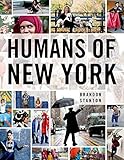
- Worth the splurgeHumans of New York — Brandon Stanton~$25
That's the whole case. Reading the book first isn't nostalgia — it's the only way to get the original experience before someone else's interpretation becomes the only one available to you. Right now, a handful of books people read for fun, and books people read to improve their lives, are either headed for a screen or already being flattened into five-minute video summaries. Here's what's worth reading now, before that happens.
The ones already circling Hollywood — read these first
Matt Haig's The Midnight Library is the most obvious entry here, and the most urgent. It's been optioned, developed, shelved, and re-developed more than once, with directors and actors attached and quietly detached depending on the year you check — the normal life cycle of a bestselling novel with obvious cinematic bones. A library between life and death, a woman testing every version of the life she didn't live. A film version is a matter of when, not if. The book works because Nora Seed's spiral is rendered entirely in prose: her regrets, her math-teacher precision about her own failures. A movie can show you a library full of infinite doors. It cannot show you the interior monologue that makes the concept land emotionally instead of just visually. Read it now, while the cast in your head is still yours.
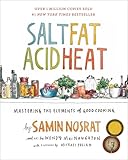
Salt, Fat, Acid, Heat by Samin Nosrat is the cautionary tale in the other direction — proof of what happens when you watch the adaptation first and never circle back. Nosrat's Netflix docuseries came out in 2018; most people watched it, loved it, and considered themselves done. But the show is a highlight reel of the book's thesis. The book is the actual education: the why behind every technique, the annotated recipes, the diagrams that explain what "enough salt" actually looks like across a dozen dishes. If you only watched the show, you got the trailer. The book is the film.
Self-help and business books get adapted too — just not into movies
It isn't only novels that get compressed into something smaller. Nonfiction gets adapted constantly, just into a different medium: a twelve-minute YouTube summary, a LinkedIn carousel, a TikTok series reading you the chapter titles over stock footage. The book's actual argument — the nuance, the caveats, the specific story that makes the idea stick — gets replaced by the three bullet points that fit in a thumbnail. Same phenomenon as a movie adaptation, just quieter.
James Clear's Atomic Habits is the clearest example — by far the most "summarized" book of the last decade. Every productivity account online has done a ninety-second version of "the four laws of behavior change," stripping out the mechanism: why identity-based habits outlast goal-based ones, how habit stacking works in practice. Read the real thing and you'll notice how much of what circulates online is a diluted, occasionally wrong, version of what Clear actually wrote.

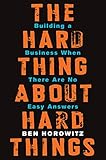
The same happens to The Hard Thing About Hard Things, Ben Horowitz's brutally honest account of running a company through near-collapse. Silicon Valley has become one of the more reliable sources of biopic and prestige-drama material, and a book this candid about the psychological toll of leadership is exactly the kind of source that eventually gets a screenplay treatment. Even if it never does, the book already exists as the antidote to LinkedIn's sanitized version of entrepreneurship — he describes what it actually feels like to almost lose everything, the part any adaptation would be tempted to cut for pacing.
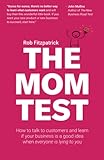
Rob Fitzpatrick's The Mom Test has quietly become one of the most recommended startup books, which means it's also one of the most poorly summarized. The title alone gets treated as the whole lesson — "don't ask your mom if your idea is good" — when the real value is in the specific scripts and the concrete examples of conversations that go wrong in ways founders don't expect. Reading a summary will leave you thinking you understand customer discovery when you've actually just memorized a title.
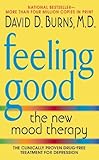
David Burns' Feeling Good is the oldest book here and the one most likely to get reduced to a listicle — "10 cognitive distortions you need to know" — stripped of the worksheets and case studies that make cognitive behavioral therapy techniques actually work outside a therapist's office. The compressed internet version is closer to a horoscope than a treatment plan.
Brandon Stanton's Humans of New York is the odd one out, in the best way: it started as a format built for screens, and the book is the rare case where print is the deeper cut. The captions online are excerpts. The book collects the fuller stories, sequenced deliberately, building an emotional arc a scrolling feed never lets you feel.
Why the book always wins the mental-image war
There's a specific, irreversible thing that happens the first time you see a casting announcement for a book you love: you start picturing that actor whether you want to or not. Faces are sticky in a way abstract description isn't, and once a concrete face gets attached to a character you've only imagined, your brain quietly swaps it in. Read the book first and the character stays yours — built from the details the author chose, filled in by your own associations. No two readers build the exact same person in their heads. That's not a bug in reading. It's the entire point.
Adaptations also cut things, structurally and necessarily. A 400-page novel becomes a two-hour film, so subplots and internal monologue get compressed or deleted outright. Even a great adaptation is a translation, and translations lose something by definition. The book is the only version where you get the full argument and the full weight of a sentence the author spent a year getting right.
The casting problem is real, and it's not reversible
You can rewatch a bad adaptation and shrug it off. You cannot re-read a book and get back the mental image you had before the trailer. Once an actor's face is attached to a character, it's attached for good — every future re-read happens with that face in the frame, whether the casting was inspired or completely wrong. It's not that the movie is bad. It's that once it exists in your memory, the book-only version of the experience is gone, permanently, and there's no advance warning about which books are about to lose that window. The Midnight Library is losing it slowly, over years of development-hell headlines. Other books lose it overnight, the moment a streamer announces a deal.
How to actually finish the book before everyone's talking about the movie
None of this matters if the book sits on your nightstand for eight months. Pick one title from this list and finish it before starting a second — stacking three "should read" books at once is how none of them get read. Set a genuinely small daily target, ten or fifteen pages, rather than an ambitious one you'll abandon by week two. And treat an announced adaptation as a deadline, not a reason to wait — "I'll read it before the movie comes out" reliably becomes "I saw the movie and never read the book," because the urgency evaporates the second the trailer drops. Every book on this list is under 400 pages and finishable in a week of ordinary reading. The only real obstacle is starting before the casting news does the deciding for you.
Frequently asked questions
Is The Midnight Library actually being made into a movie?
It's been in and out of development for years, with different directors and actors attached at different points and no confirmed release date. That uncertainty is exactly the argument for reading it now — once a specific actor is cast, your own mental image of Nora Seed is effectively overwritten.
I already watched the Salt, Fat, Acid, Heat show. Is the book worth reading anyway?
Yes, more than almost any other title here. The Netflix series is a beautifully shot highlight reel of the book's ideas, but the book contains the actual technique explanations and reasoning the show only gestures at. Most people who loved the show have never opened the book.
Do self-help books really get "adapted" the same way novels do?
Not into films, usually, but into something arguably more diluted: short-form video summaries and "key takeaways" threads that strip out the nuance and evidence that make the original argument convincing. Reading the source is the only way to get the actual reasoning instead of a repackaged bullet list.
Does it actually matter if I see the movie first?
For your own experience of the book, yes. Once a specific actor's face is attached to a character you'll always picture them that way on future re-reads. You can still enjoy both — just read the book first if you want your own version before someone else's becomes permanent.
Which of these should I start with if I only have time for one?
The Midnight Library if you want fiction with an adaptation clock actually running, or Atomic Habits if you want to finally read the book behind the summaries you've already half-absorbed online. Both are fast reads that reward reading the whole thing.
How long does it actually take to read one of these before a movie catches up?
Every book here is under 400 pages and finishable within a week at 10-15 pages a day — a realistic pace, and fast enough to beat almost any adaptation timeline that isn't already in theaters.