Wine openers are one of those purchases where people dramatically overthink it — or don't think about it at all and end up wrestling with a $3 gas-station corkscrew on a Friday night, cork crumbling into the Cabernet. There are really only four types worth knowing: the waiter's corkscrew, the rabbit lever, the electric opener, and the air pump. Everything else is novelty gear that belongs in a white elephant gift exchange.
Here's the honest breakdown of what to buy, what to skip, and why the answer for most people is a $10 piece of steel that professional sommeliers have used for a hundred years.
The waiter's corkscrew: the $10 argument that's hard to beat
Every sommelier, every restaurant professional, and every serious home entertainer who's thought about this for more than five minutes uses a waiter's corkscrew — also called a wine key. It's a small folding tool: a worm (the spiral), a fulcrum lever, and a small blade for cutting the foil. It weighs almost nothing, fits in a pocket, and opens a bottle in about eight seconds once you've done it a dozen times.
The best one on the market for everyday use is the Pulltaps Double Hinged Corkscrew. It has a double-hinge lever that makes removing corks nearly effortless — the first hinge gets the cork halfway out, the second hinge finishes it without any tearing or crumbling. It works on natural cork, synthetic cork, and long corks from older bottles. It's the same tool used in fine dining restaurants across the country. It costs around $10.
The argument against spending $100 on a gadget when this exists is a strong one. If you open wine occasionally and want something reliable that fits in a kitchen drawer and never needs batteries, the waiter's corkscrew wins every time. The learning curve is two or three bottles. After that it becomes automatic.
Electric wine openers: worth it for arthritic hands (and honest laziness)
Electric openers get a bad reputation for being unnecessary gadgets, and for most people, that's fair. But there's one use case where they're genuinely the right tool: anyone with arthritis, limited hand strength, or wrist pain. Twisting a corkscrew — even a good one — requires grip and torque. An electric opener removes that entirely. You place it on the bottle, press a button, and the cork comes out in about five seconds.
They're also genuinely convenient if you're opening multiple bottles at a party and don't want to be the person performing the same ritual six times in a row. Recharging takes about an hour and a full charge opens roughly 30 bottles. For holidays, dinner parties, and anyone who opens wine several times a week, an electric opener earns its keep.
The Rabbit Electric Wine Opener is the most recommended model consistently. It's the same brand that makes the lever corkscrew below, the foil cutter is included, and the build quality is noticeably better than the generic $20 electric openers that strip the cork or jam halfway through.
The Rabbit lever corkscrew: speed without batteries
The Rabbit lever — also called a rabbit-style or Ah-So lever — is the one that looks like a little metal rabbit with two handles that go down on either side of the bottle neck. You clamp it on, pull the lever up, push it down, and the cork comes out. Start to finish, three seconds. No twisting, no technique required, completely foolproof.
It's a genuinely great tool for people who open wine regularly and don't want to bother with technique — and it works equally well for guests who've never used a corkscrew in their life. The downside is size: it's a countertop object, not a pocket tool. It also doesn't fit well in a drawer, and the novelty wears off. But for households that drink wine multiple times per week and have the counter space, it's excellent.
It also makes a legitimately good gift. The lever corkscrew is the classic "wine lover gift" that people actually use — paired with a nice bottle and a set of wine accessories, it lands well every time.

What to skip: foil cutters, air pumps, and novelty openers
A few things that look useful in a wine accessories display and are considerably less useful in practice:
Standalone foil cutters: Every decent corkscrew already has a foil blade built in. A separate foil cutter is a solution to a problem you solved when you bought the opener. Skip it.
Air pump openers: These work by pushing a needle through the cork and pumping air underneath it until the pressure pushes the cork out. They're genuinely clever in concept. The problem: they don't work reliably on older or crumbly corks (which is exactly when you most need a reliable tool), they require a specific pumping technique, and they can shatter thin or damaged glass if the pressure builds wrong. We've seen it happen. For synthetic corks, they work fine. For natural corks on a bottle that's been sitting in a cellar, avoid them.
Winged corkscrews: The butterfly-style opener with two handles that rise as you turn — it looks intuitive but it's actually one of the worst openers to use. It requires significant downward force, it frequently tears corks, and it doesn't work well on longer corks. Almost every frustrated wine-opening experience someone describes involves one of these. If you own one, donate it and get a waiter's corkscrew.
Novelty corkscrews: The ones shaped like a naked person, a race car, a cactus. You already know.
Synthetic cork vs natural cork: does your opener matter?
This comes up more than you'd expect. Synthetic corks — the plastic or composite ones that look like cork but aren't — are increasingly common in wines under $20. They're harder to remove than natural cork because there's more friction and less give. A cheap or worn corkscrew will struggle; a good one won't.
Natural cork, especially in older bottles, has the opposite problem: it can be crumbly, dry, and fragile after years in a cellar. A thick, aggressive worm that forces its way in can tear older corks apart. For bottles you've been saving — anything over ten years old — go slow, use a quality worm, and pull steadily rather than jerking. The double-hinge waiter's corkscrew is ideal here because the two-stage pull is gentler than the single-motion lever.
Screw caps, for what it's worth, are not a sign of inferior wine. Some excellent wines use screw caps because they provide a better seal for wines meant to be drunk young. If your bottle has a screw cap, congratulations — you don't need any of this.
The single best pick — and the gifting answer
If you're buying for yourself and opening wine maybe once or twice a week: the Pulltaps waiter's corkscrew. Learn it in one evening, use it forever, spend $10. It will outperform gadgets costing ten times more.
If you have arthritis or wrist issues, or you're opening many bottles at once: the Rabbit Electric Opener. Press a button. Done.
If you're buying a gift for a wine lover: the Rabbit Lever Corkscrew, ideally bundled with a bottle they'll enjoy. It photographs well, it's recognizably "a wine thing," and unlike most wine-adjacent gifts, it's something people actually keep on the counter and use for years.
While you're here: two tools that quietly elevate wine service. A good decanter lets a young red breathe for 30–45 minutes — more aroma, softer tannins, better balance. The Chemex carafe doubles beautifully as a wine decanter: same elegant glass, same wide mouth, and it goes from kitchen to dinner table without looking like a science experiment.

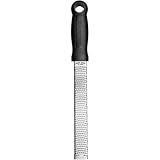
Second, the Microplane zester. Citrus zest transforms a glass of wine into a pairing experience — a few strips of lemon peel over a Sauvignon Blanc is a minor revelation. The Microplane is also the most useful kitchen tool for pasta, baking, hard cheese, ginger, and chocolate. If you don't own one, fix that now; it's the most-reached-for tool in a well-stocked kitchen after a knife and cutting board.
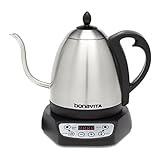
The Bonavita kettle rounds out the wine-friendly kitchen: precise temperature control for tea to pair with dessert wines, and the same attention to detail that makes coffee better also makes hosting feel more considered.
Frequently asked questions
Do I really need an expensive wine opener?
No. A $10 waiter's corkscrew — specifically a double-hinge model like the Pulltaps — outperforms most gadgets costing $50–100. Professional sommeliers use them because they work, not because they're cheap. Spend more only if you have specific needs: arthritic hands, very high volume, or gifting.
What's the best wine opener for someone with arthritis?
An electric opener, without question. The Rabbit Electric Opener requires no grip strength or wrist rotation — you just press a button and the motor does the work. It opens a bottle in five seconds and the charge lasts 30 bottles. This is the one case where the 'unnecessary gadget' is genuinely the right tool.
Does a wine opener work on synthetic corks?
Yes, but you need a good one. Synthetic corks have more friction than natural cork, so cheap or worn corkscrews struggle. A quality worm (the Teflon-coated kind) cuts through synthetic cork cleanly. The electric opener is actually ideal for synthetic corks since the motor provides consistent torque.
Is the Rabbit lever corkscrew a good gift?
It's the classic wine-lover gift that people actually use. It's distinctive-looking, clearly purposeful, and delivers a genuine quality-of-life upgrade over a basic corkscrew. Pair it with a bottle of wine for a reliable host gift or birthday present in the $50–60 range.
How do I open a bottle with an old, crumbly cork?
Go slowly. Use a thin, sharp worm and don't drive it all the way through — stop when just a half-inch remains in the bottle, or you'll push fragments into the wine. Pull with steady pressure, not a jerk. If the cork breaks, use a wine strainer when pouring. And if it crumbles badly, push the remaining piece into the bottle and use a strainer — that's fine. The wine is still good.