Airlines mishandle a few million bags a year. Most come back within a day or two. Some don't come back at all, and when that happens, the airline's own tracking system is often the last place you'll get useful information — it tells you the bag is "in transit" right up until someone admits it isn't. A $25–30 tracker tucked into a side pocket closes that gap. It won't get your suitcase off a plane in Denver and onto the right connection, but it will tell you, in real time, whether your bag is sitting in Denver at all — which is more than the airline app will tell you for the first 24 hours.
This is a small, cheap category of gear that punches way above its price. Here's what's actually worth buying, how the tracking networks differ, and the battery and legality questions people email us about most.
The honest quick answer
If you have an iPhone, buy an Apple AirTag. If you have an Android phone, or you want one tracker that plays reasonably nice with either ecosystem, buy a Tile. That's genuinely most of the decision. Everything else in this article is nuance for people who want to understand why, plus the battery and airline-rule questions that actually matter once you own one.
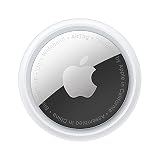
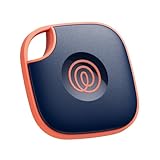
Apple Find My vs. Tile vs. Samsung Galaxy Find — the network is the whole product
Here's the thing nobody explains clearly when you're standing in the airport gift shop trying to decide: a luggage tracker's Bluetooth range is only about 30–100 feet on its own. Once your bag is more than a room away from your phone, the tracker is invisible to you — unless it can "ping" off a stranger's phone and relay the location anonymously. That relay network is the actual product. The little plastic disc is just the antenna.
Apple's Find My network is enormous — every iPhone, iPad, and Mac running a recent OS version quietly and anonymously participates, whether the owner has ever heard of AirTags or not. That density is why an AirTag left behind in a hotel in a mid-size city will often report its location within hours. It's the largest crowd-located network on earth, full stop.
Tile's network is smaller because it only counts people who have the Tile app installed and Bluetooth scanning turned on — a much smaller population than "everyone with an iPhone." Tile has partly closed this gap by joining Apple's Find My network for its own devices and by integrating with Amazon's Sidewalk network (which piggybacks on Echo devices and Ring cameras), so coverage is better than it used to be, especially in suburban areas with a lot of Amazon hardware.
Samsung's Galaxy Find network works the same way, but the crowd is every Galaxy phone running Android with the SmartThings Find network enabled. If most of your travel happens through airports and cities with a lot of Samsung users — which, globally, is most places — this network is bigger than people assume, even though it gets less press than Apple's.
The upshot: buy the tracker that matches the phones around you, not just your own phone. An iPhone owner traveling through Western Europe or the US gets the best coverage from an AirTag. An Android owner is better served by a Tile or a Samsung SmartTag, matched to whichever ecosystem — Google's or Samsung's — their phone actually uses.
Battery life: what "up to a year" actually means
Every tracker on the market quotes battery life somewhere between 8 months and a year, and that number is real under normal conditions — but "normal" assumes the tracker is mostly sitting still, only occasionally broadcasting. A tracker that's actively being searched for constantly, in cold cargo holds, or one that's part of a bag that gets tossed around a lot, will drain faster. Realistically: budget for a battery swap once a year, mark the date somewhere you'll see it (a calendar reminder works fine), and don't assume a tracker is working just because it worked last trip. Both the AirTag and the Tile Mate use user-replaceable coin-cell batteries — no soldering, no sending it back to the manufacturer, just a $2 battery from any drugstore.
One genuinely useful habit: check your tracker's battery status in the app a day or two before a big trip, not at the gate. A dead tracker in your checked bag is just dead weight — it won't hurt anything, but it also won't help you.
Do you actually need one, or is this paranoia dressed up as prep?
It's cheap insurance, not paranoia. The math is simple: a tracker costs $25–99 one time. A mishandled bag costs you hours on hold, a scramble to buy replacement clothes and toiletries in a city you don't live in, and — if it's genuinely lost — the value of whatever was inside, which airlines cap and slow-walk reimbursing. You're not buying a guarantee your bag won't get lost. You're buying the ability to know where it is and to hand a gate agent a specific location instead of a shrug. Airline staff have told plenty of travelers, on the record and off, that a passenger who can say "my bag's tracker shows it's still in Charlotte" gets a faster, more useful response than one who just says "it didn't come out."
It's also just useful off the road — same tracker finds your keys, your kid's backpack, the tote bag you swear you set down somewhere in this house.
Checked-bag legality: the lithium battery question, answered honestly
This is the question we get the most, and it deserves a real answer instead of a shrug. Luggage trackers use small lithium coin-cell or button-cell batteries — the same category found in watches and key fobs — and those are treated very differently from the large lithium-ion batteries in laptops or power banks. Per TSA guidance, devices with these small, contained lithium button batteries are permitted in checked baggage, unlike spare (uninstalled) lithium batteries or higher-capacity lithium-ion devices, which have separate carry-on-only rules. In practice, this means an AirTag, Tile, or similar tracker clipped inside a checked suitcase is not a TSA violation.
Where it gets murkier is airline-specific policy, not TSA policy. In 2022, Lufthansa briefly told customers it would deactivate any tracking device found in checked luggage, citing a German aviation safety rule about devices that transmit a signal and can't be manually powered off mid-flight. The airline walked the policy back within days after public pushback, but it's a useful reminder that "TSA allows it" and "every airline is thrilled about it" aren't the same statement. If you're flying internationally on a carrier you don't know well, a two-minute look at their website or a quick question at check-in costs you nothing and saves you a headache.
How to actually use one for lost luggage
Buying the tracker is the easy part. A few habits make it actually useful when you need it:
- Put it somewhere it won't get removed. A zipped interior pocket beats clipping it to the outside handle, where it can be torn off in baggage handling or, less charitably, pocketed.
- Name it something obvious in the app. "Checked bag — blue Samsonite" is more useful at 6am, half-asleep at a gate counter, than "Tracker 3."
- Share the location with the airline if they ask. Several major carriers now explicitly ask if you have a tracker and will use the coordinates to help locate a delayed bag — screenshot the map view, it moves the conversation along faster than describing your bag's color for the third time.
- Don't rely on it as your only ID. Keep a physical luggage tag with your name and phone number too. A tracker tells you where the bag is; it doesn't tell baggage handlers whose it is.
The bottom line
For most travelers, the decision really is as simple as the quick answer above: AirTag if you're an iPhone household, Tile if you're on Android or want cross-platform flexibility. Both are small enough to disappear into a suitcase pocket, both run on a battery you can replace yourself, and both are legal to check per TSA rules on lithium button batteries — with the caveat that individual airlines can have their own quirks worth a quick check before an international flight. Twenty-five to ninety-nine dollars is a small price for never again standing at an empty carousel with absolutely no idea where your suitcase went.
FAQs
Are luggage trackers legal in checked baggage?
Yes, per TSA rules. Trackers like AirTags and Tiles use small lithium coin-cell or button-cell batteries, which TSA permits in checked bags — unlike spare, uninstalled lithium batteries or larger lithium-ion devices, which have separate carry-on restrictions. That said, always check your specific airline's current policy before an international flight, since a handful of carriers have had their own rules about signal-transmitting devices in the hold.
Should I get an AirTag or a Tile?
Match it to the phones around you. AirTag if you (or the people most likely to be near your lost bag) use iPhones — Apple's Find My network is the largest in the world. Tile if you're on Android, since it works cross-platform and has grown its own network through Amazon Sidewalk integration.
How long do luggage tracker batteries last?
Roughly 8 months to a year under normal use for both the AirTag and Tile Mate, both of which use user-replaceable coin-cell batteries. Heavy use, cold cargo holds, or frequent searching can shorten that. Check battery status in the app before a big trip rather than assuming it's fine.
Will airport staff find my tracker and remove it?
No — trackers are small, passive, and not something baggage handlers are looking for or authorized to remove. The Lufthansa episode in 2022 involved the airline threatening to deactivate trackers found in checked bags over a transmission-safety rule, not physically searching for and confiscating them, and that policy was reversed within days after backlash.
Can a tracker actually help get my bag back faster?
Yes, indirectly. It won't reroute a bag itself, but it gives you and the airline a specific location instead of a guess, which speeds up the conversation with baggage services. Several major airlines now ask directly if you have a tracker on a delayed bag.
Do luggage trackers work internationally?
Generally yes, since they rely on other people's phones nearby rather than cell service or roaming. Coverage depends on the density of matching phones in that country — Apple's Find My network tends to have strong coverage almost everywhere due to sheer iPhone volume, while Tile and Samsung's networks vary more by region.