The creativity section of any bookstore is a minefield. For every book that actually changes how you work, there are fifteen that exist to make you feel inspired for forty-five minutes before you put them down and go watch television. The fluffy ones — the ones full of watercolor illustrations and bite-sized affirmations — are not useless, but they are not what this list is. These are the books that made me sit differently at my desk.
The one book to read before any other
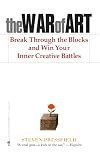
Steven Pressfield wrote The War of Art in 2002 and it has not been out of print since. The central argument is simple and devastating: there is a force that opposes creative work — Pressfield calls it Resistance — and it is universal, impersonal, and ruthless. It does not care that you have talent. It will manufacture anxiety, errands, phone calls, and perfectly reasonable justifications to keep you from sitting down and doing the thing. The book names the enemy. Naming it turns out to be half the battle.
The one that tells you what to do with other people's work
Austin Kleon's Steal Like an Artist makes the case that all creative work is derivative, and that this is not a problem — it is the whole point. Influence, remixing, building on what came before: these are not shortcuts or cheating, they are how creativity actually functions. The book is short, illustrated, and gives you immediate permission to start before you think you're ready.
The one about what stops you from going pro
Pressfield's follow-up to The War of Art is about the specific moment when you decide to stop being an amateur. The amateur waits for inspiration. The professional shows up anyway. The amateur lets fear determine the schedule. The professional works through it. Pressfield is blunt in a way that very few creativity writers are willing to be, which is part of why his books have a longer shelf life than the inspirational ones.

The one about giving yourself permission to make big things
Elizabeth Gilbert's Big Magic is the most accessible book on this list — accessibility, done right, is a craft. Gilbert's argument is that ideas are alive, that they go looking for people willing to act on them, and that the primary obstacle to creative life is fear. If you find The War of Art too harsh, start here. If you find Big Magic too gentle, follow it with Pressfield.

The one about building better habits (yes, it counts)
Atomic Habits is on this list because creative blocks are almost always habit problems in disguise. James Clear's argument — that behavior change happens at the system level, not the motivation level — is directly applicable to anyone trying to write every day, paint every week, or make music after a full-time job. The chapter on identity-based habits is the most practically useful thing I have read about creative consistency.

What to skip: the fluffy inspiration category
There is an entire genre of creativity books that feel useful while you are reading them and evaporate the moment you close the cover. They are usually full of prompts, illustrations, and the word "journey." The dividing line I use: does the book make an actual argument, or does it just make you feel something? Arguments stick. Feelings from books are gone by dinner.
Which creativity book should I read first?
The War of Art by Steven Pressfield, and it isn't close. It is the shortest, the most direct, and the most honest about the specific mechanism that stops creative people from finishing things. Read it in one sitting.
Is Big Magic too soft to be useful?
Not if you read it as a complement to Pressfield rather than a replacement. Gilbert is writing about the texture of creative life — the fear, the mystery, the permission — not about the discipline of showing up. Both things are real. Both books are useful.
Is Atomic Habits really a creativity book?
Not technically. But if your creative problem is "I never actually sit down and do the work," it is more useful than any of the books explicitly marketed as creativity books. Clear's system for building identity-based habits is the most actionable thing I have read on creative consistency.
What is the difference between Turning Pro and The War of Art?
The War of Art names the enemy (Resistance) and describes how it operates. Turning Pro is about the internal shift that defeats it — the decision to treat your creative work as a profession rather than a pursuit. Read The War of Art first.
Are there good creativity books for people who don't think of themselves as artists?
Big Magic and Steal Like an Artist are both written for people who aren't sure they belong in the conversation. Neither one requires you to be a professional artist or have a project already underway.
How do I avoid reading creativity books as procrastination?
One book at a time. One chapter, then work. Annotate in the margins what you intend to do differently, not just what struck you. Start with The War of Art — one of its central chapters is about exactly this trap. Pressfield saw it coming. He wrote it to make you stop reading and start working.