Let's be honest about who this article is for: people who bake maybe once a month, more often during the holidays, and who have gotten burned (sometimes literally) by the wrong equipment. You're not trying to become a pastry chef. You just want cookies that don't stick, a cake that bakes evenly, and to stop zesting your knuckles into every dish. That's it. Here's what actually moves the needle.
The good news is that most of the baking gear aisle is unnecessary. Novelty bundt pans, electric frosting dispensers, decorating turntables — none of it matters until you're baking professionally. What does matter is a small set of tools that show up in every serious recipe, and that even the laziest home baker actually reaches for. Here's the short list.
The foundation: a kitchen scale changes everything
Baking, unlike cooking, is chemistry. A quarter cup of sifted flour and a quarter cup of packed flour weigh different amounts, and that difference is the reason your cookies spread into puddles half the time. A kitchen scale eliminates this entire category of error. You're weighing ingredients, not guessing at volume measurements, and your results are consistent every single time.
Serious bakers measure everything in grams. You don't have to go full pastry chef about it — but even just using a scale for flour and butter will noticeably improve your results. A decent digital scale costs $12. It's the highest-leverage piece of equipment on this entire list. Most recipes from serious sources like NYT Cooking or King Arthur include gram measurements alongside cups for exactly this reason. Follow the grams.
The silicone mat: retire parchment paper forever
Parchment paper is fine. A Silpat is better. The Silpat is a silicone baking mat that does everything parchment does — non-stick surface, even heat distribution — but lasts for thousands of uses, never tears, and costs $25 once instead of $8 every few months. It's the kind of upgrade that feels small until you have it, and then you feel vaguely irritated every time you bake somewhere that doesn't have one.
Cookies don't stick. Pastry doesn't slide. Cleanup is rinsing it under warm water. The Silpat fits a half-sheet pan (the standard size used in most home ovens). If you're baking anything that goes on a sheet pan, this is the mat to use — full stop.
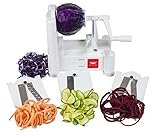
The Microplane zester: the most versatile $15 tool in the kitchen
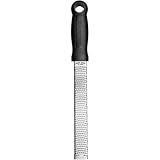
The Microplane zester is technically not baking-specific, but it shows up in more recipes than almost any other tool on this list. Lemon zest, orange zest, freshly grated nutmeg, Parmesan on pasta — all of it. The fine-toothed blade removes only the flavorful outer peel without touching the bitter white pith underneath. Knuckle-threatening box graters do not do this reliably. This tool does it perfectly every time.
One thing people don't realize: fresh zest has a flavor that bottled zest extract can't replicate. A single tablespoon of fresh lemon zest in a pound cake or cookie dough makes a difference that's immediately obvious. This tool is why your baking suddenly tastes like it came from somewhere good. Buy it before you think you need it — you'll use it constantly.
The bench scraper: the tool every recipe assumes you have
A bench scraper is a flat metal blade with a handle that you use to divide dough, lift pastry off a floured surface, scrape your cutting board clean, and transfer chopped ingredients into a bowl or pan. Bread recipes and pie crust recipes especially assume you own one. Without it, you're using a spatula or your hands for tasks that require a rigid flat edge, and something always gets stuck or misshapen in the process.
Good bench scrapers cost $8–12. The best ones have a measurement ruler stamped along the edge — useful for portioning rolls or dividing dough evenly — and a comfortable rubber grip. It also doubles as a pastry cutter for cutting cold butter into flour in a pinch. If you bake bread or make pie crust more than once a year, this is a tool you'll reach for constantly, and you'll wonder how you managed without it.
The Lodge cast iron skillet: for skillet cakes, cornbread, and more
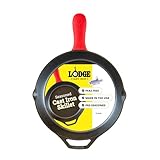
Most baking happens in baking pans. But a cast iron skillet is the one crossover tool that earns its place in the baking section because of what it does to skillet cookies, cornbread, deep dish pizza, and upside-down cakes. The Lodge 10.25" is the definitive entry-level cast iron skillet — made in the USA, pre-seasoned, and the same tool used in professional kitchens for decades. Put it in a 425°F oven with a little butter and pour in cornbread batter. The bottom will have a golden, crackling crust that no baking pan can replicate.
The skillet is also not single-purpose. It handles stovetop and oven cooking equally well, sears proteins at high heat, goes from burner to oven without issue, and lasts indefinitely with minimal care. If you're going to own one piece of dual-use bakeware, this is it.
What to skip — the baking gear you don't need
The baking section of any kitchen store is full of things that look useful and aren't. Here's the real skip list for the occasional baker:
- Stand mixer (unless you bake weekly): A stand mixer is a $300–500 appliance that takes up permanent counter real estate. Unless you're making bread dough or cookie batter more than once a week, it's not worth it. A hand mixer ($25–40) handles everything a stand mixer does for occasional bakers at a fraction of the cost and zero counter footprint.
- Novelty baking pans: Shaped pans, character pans, and specialty molds — all single-use novelties collecting dust in drawers. A standard 9x13 and a muffin tin cover almost every recipe. Add a 9" round for layer cakes. That's the full set.
- Silicone baking pans: Silicone molds and pans for cakes and muffins have inconsistent heat distribution compared to metal. Things bake unevenly and don't brown properly on the bottom. Use silicone for mats and trivets, metal for anything you actually bake in.
- Flavored extracts beyond vanilla and almond: Butter extract, caramel extract, imitation banana — they smell promising in the bottle and taste unmistakably artificial in the finished product. Fresh zest, real citrus juice, and real vanilla outperform them every time.
- Elaborate cookie decorating kits: Genuinely fun if you enjoy the process as a hobby. Not necessary for baking excellent cookies that people actually want to eat.
The supporting cast: a few tools that fill the gaps
Once you have the core tools, a couple of additions cover the edge cases most occasional home bakers eventually run into — situations where you're suddenly improvising with the wrong equipment mid-recipe at 9pm on a weeknight.

The pantry upgrade that matters more than most tools
Brown butter. Melt butter in a light-colored pan over medium heat, stirring until the milk solids turn golden and it smells like toasted hazelnuts. Substitute it 1:1 for regular melted butter in any chocolate chip cookie, blondie, or banana bread recipe. The difference is dramatic and costs nothing extra. No equipment required — just attention and three extra minutes over the stove.
The second pantry upgrade: good vanilla. Not imitation — real extract. The flavor difference in cookies, custards, and anything egg-forward is significant and immediately obvious to anyone eating the result. One bottle lasts a year. This is the $12 that does more for your baking than a $50 gadget from a kitchen store. Get the tools, then get good ingredients. In that order.
Do I need a stand mixer to bake well at home?
No. A stand mixer is genuinely useful if you make bread dough or cookie dough weekly — kneading and creaming butter at scale is exhausting by hand. For occasional baking, a hand mixer handles most recipes and costs $25–40 instead of $300+. Many professional bakers mix pie dough and some cookie doughs entirely by hand, preferring the tactile feedback. Start without the stand mixer. Add it only if you find yourself actually needing it.
What's the most important baking tool for a beginner?
A kitchen scale, without question. Baking is chemistry, and volume measurements (cups) are imprecise because the same cup can hold different amounts of flour depending on how you scoop it. A scale makes your measurements exact and your results consistent. It costs $12 and removes the single biggest variable in home baking. Nothing else on this list comes close to the value-to-impact ratio of owning a scale.
Is a Silpat actually worth it over parchment paper?
Yes, over time. The Silpat costs about $25 and lasts for thousands of uses. Parchment paper runs $8–12 for a box of 100 sheets. Beyond economics, the Silpat distributes heat more evenly and the non-stick performance is more consistent. Cleanup is easier — rinse and wipe — and there's zero waste. If you bake cookies or sheet-pan anything more than a few times a year, the Silpat pays for itself and then becomes invisible infrastructure. You just always have it.
What pans should I own if I only bake occasionally?
Three pans cover 90% of baking scenarios: a half-sheet pan (18x13"), a standard 9x13" cake and brownie pan, and a 12-cup muffin tin. Add a 9" round cake pan if you make layer cakes. A springform pan if cheesecake is in your regular rotation. That's it — everything else is specialty equipment for recipes you may never actually make.
Why does my baking come out different every single time?
Three most common culprits: measuring flour by volume instead of weight (use a scale), not knowing your oven's actual temperature (most home ovens run 25–50°F hot or cold — an $8 oven thermometer tells you the truth), and accidental ingredient swaps like butter vs. margarine or different-fat milks. Fix the scale first. Then buy an $8 oven thermometer. Those two changes alone solve most consistency problems home bakers complain about.
Is cast iron actually good for baking?
Excellent for specific applications. Cast iron retains and radiates heat in a way that gives cornbread and skillet cookies a caramelized, slightly crispy exterior that metal baking pans simply can't replicate. Also great for deep dish pizza and upside-down cakes. Where it's not ideal: delicate layer cakes and anything needing an even, gentle rise — cast iron's heat is intense and can over-brown the bottom before the center sets. Use it for rustic bakes and you'll reach for it every time.